NEWER ARTICLES OLDER ARTICLES

|
|

G20 South Africa
G20, COP30, and More Mickey-Mouse Multilateralism to Come
Patrick Bond (Originally published by Znet. Feel free to share widely.) 24 November 2025
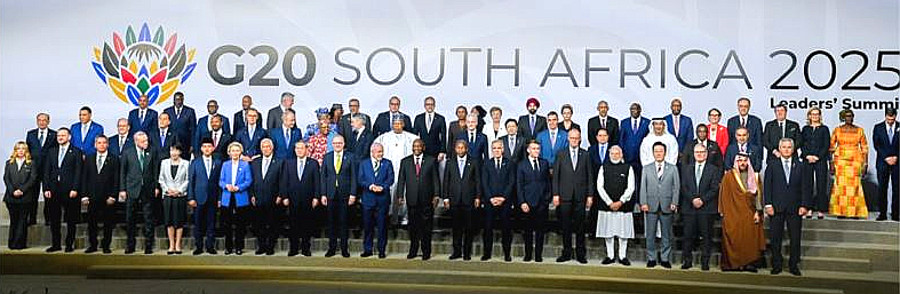
The third weekend in November offered the world two disastrous days for solving polycrisis problems, starting in the Brazilian Amazon city of Belém at the United Nations climate summit (‘COP30’) on November 22, just as South African President Cyril Ramaphosa hosted (most of) the Group of 20 leaders in Johannesburg. The G20 comprises 19 of the world’s major economies plus the European Union and, in 2023, the African Union was added (tokenistically).
The body was formed in 1999 as a finance ministers’ club at a Berlin meeting, at a time of nervousness about economic crises in several middle-income countries, including South Africa. But it was in 2008 that the G20 graduated to a heads-of-state annual meeting, due to deregulated U.S. banking rapidly degenerating, starting with real estate speculation, leading to Bear Stearns and Lehman Brothers collapsing. U.S. President George W. Bush was told by his financial managers that the coming global meltdown would urgently require new funding sources, especially from middle-income countries with large surplus dollar reserves.
As the G20’s first major act, South African finance minister Trevor Manuel led a committee to grant the International Monetary Fund (IMF) nearly $1 trillion worth of new funding, approved by the G20 in an April 2009 London emergency meeting. That session also coordinated central banks’ low interest rates and money printing, termed Quantitative Easing (‘QE’), so as to flood liquidity into financial markets and thus avoid a repeat of the 1930s Great Depression.
More
Has SA’s G20 Presidency Delivered for Africa and the Global South?
SABCNews 23 November 2025
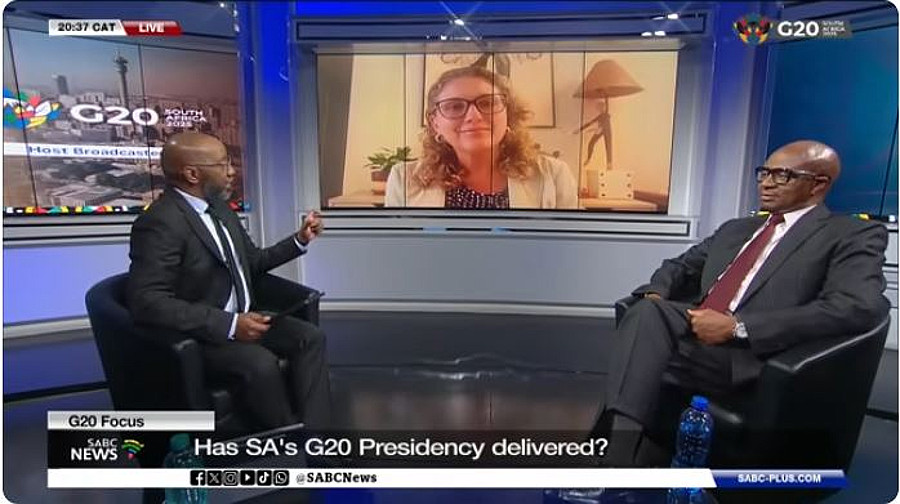
SABC: South Africa has just concluded the much-awaited and historic G20 Summit on African soil. Heads of state or their representatives from 18 economically powerful nations converged at Nasrec, Johannesburg. Despite last-minute hiccups over whether SA will emerge with a statement or a declaration, fortunately, common sense won the day. Now, we are left with understanding what has happened and what it means for all of us. Has South Africa’s G20 Presidency delivered for Africa and the Global South? Joining in the discussion is former Ambassador to Portugal and former Brand SA CEO, Dr. Kingsley Makhubela, and joining from Brazil is Professor Ana Garcia, from the Federal Rural University of Rio de Janeiro. For more news, visit sabcnews.com and #SABCNews on all social media platforms.
Transcript …
Ana Garcia: Good evening to everyone there. It’s great to be here speaking from Rio de Janeiro. I just arrived back from South Africa. I think that the leaders’ declaration reflects the place that Africa has reached in this G20. It’s the first declaration where you see really African issues, African initiatives, African philosophy. So everything is very in being central in the declaration itself, and it’s the second year of the participation of the African Union as a full member of the G20. So I think that is significant. The G20 this year has stressed a few of the traditional classical G20 topics such as the reform of the International Monetary Fund, issues around financial stability, financial monitoring. That’s the regional topic of the G20; that’s why the G20 was created and has strengthened, and also moved beyond the traditional issues around energy, climate. I would mention two things that I think are really important. One is the framework on critical minerals. I think this is key for the Global South and it’s key for the future of energy transition and social-environmental issues for communities. And the other issue is inequality. South Africa has delivered an extra report about inequalities that was produced by main specialists. And I think this is a key topic that needs to be further developed and implemented.
SABC: So, Prof., let me stick with you for a moment. You mentioned the infusion of the word Africa, and we take it for granted, right, that when you are talking about issues that affect the African continent, sometimes in these international documents you don’t necessarily need to mention the continent itself. But is it your point that the text matters and the mention of the word Africa matters as well? I mean, the extraordinary inclusion—you talk about African philosophies. Ubuntu features there as a philosophy quite a number of times. In fact, in one of the themes it talks about—this is on food security—Ubuntu approaches on food security and nutrition and excessive food price volatility. Is that what you’re talking about?
More
G20 and the civil society elite: spectacle instead of meaningful action
Luke Sinwell (The Conversation) 17 November 2025
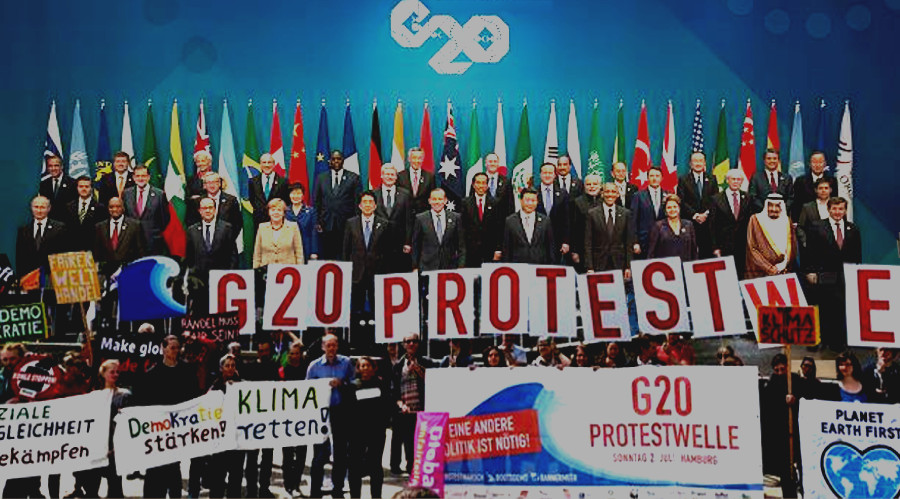
Behind the talk of fighting inequality at the group of 20 most powerful economies in the world, the G20, lies a carefully staged show – one that manages dissent rather than redistributes power.
Inequality is at the top of the G20 agenda this year, with South Africa holding the presidency. President Cyril Ramaphosa has said that if the G20 wants to tackle major global economic challenges, it must act fast to reduce inequality.
Well-funded non-governmental organisations like Oxfam have praised this stance, saying that the G20 is:
giving a voice to people crushed by inequality. They are showing that another world is possible: ruled not by and for billionaires, but by and for the rest of us instead.
More
The G20 fumbles food politics, pleasing agribusiness
Patrick Bond Patrick Bond (University of Johannesburg Centre for Social Change) 17 November 2025
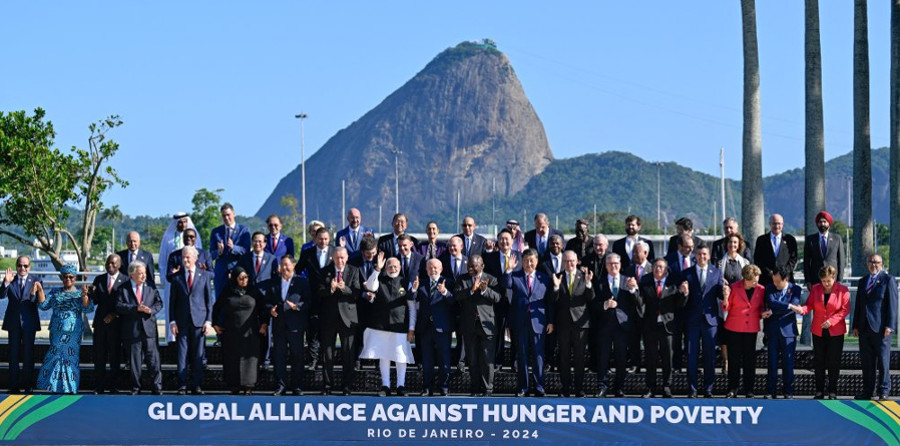
The spirit of ‘solidarity-equality-sustainability’ was already infused into G20 rhetoric in 2024, in Rio de Janeiro. In a statement on 18 November 2024, Cyril Ramaphosa beseeched fellow leaders, that the G20 “must be capable of combating the use of hunger as a weapon of war, as we are now seeing in some parts of the world, including in Gaza and Sudan.”
That’s the rhetoric, to be sure. But a class war is underway in South Africa, the world’s most unequal country by income and wealth. And Ramaphosa knows the food weapon well, just as his brother-in-law Patrice Motsepe must know how electricity produced by coal that he has for nearly two decades supplied to the furnaces that fuel the Israel Defense Forces, gives their soldiers the energy required to impose the current process of mass starvation on Gaza. (Notwithstanding several protests at Motsepe’s offices and those of his former Glencore partners, Cyril Ramaphosa will say and do nothing about this specific South African contribution to the worsening genocide in Gaza, of course.)
A few days before Ramaphosa’s remarks in Rio, on 13 November 2024, the lead minister within his Presidency – Khumbudzo Ntshavheni – vocally advocated starvation as a tactic against thousands of underground informal-sector miners about two hours’ drive southwest of Johannesburg: “We are not sending help to criminals. We are going to smoke them out.” Ntshavheni knew the consequences, because on the SA Police Service (SAPS) worked with the SA National Defense Force (SANDF) to starve those same mineworkers, and on November 2 had bragged to the media, “SAPS and members of the SANDF blocked communities in and around these abandoned mining shifts in Orkney from delivering food parcels, water and necessities to these illegal miners.”
More
Ramaphosa, the G20 and the Empty Promise of a Just Transition
Charlize Tomaselli (Amandla) November 17 2025
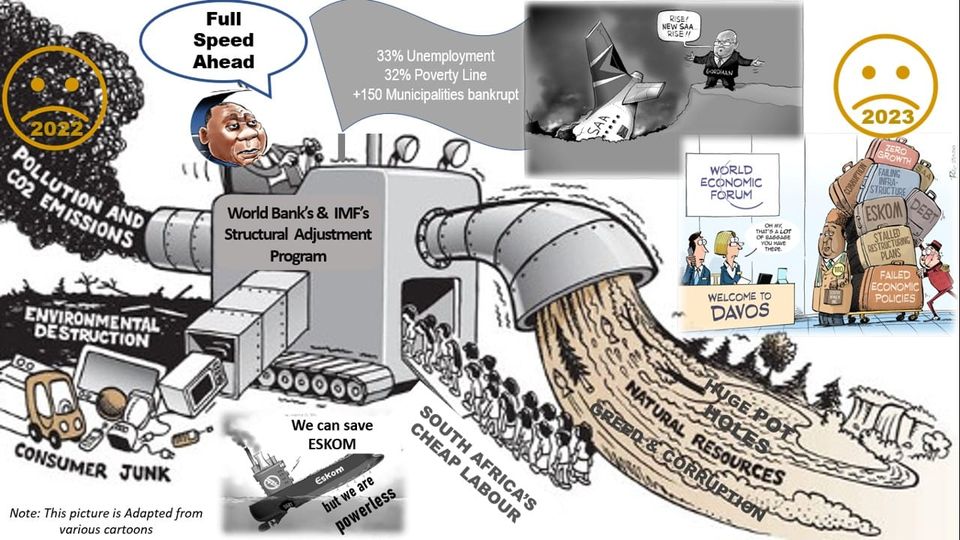
Can a man who once urged police repression against striking mineworkers now claim to lead Africa toward a people-centred, justice-driven future for its minerals? This is the question hanging over South Africa’s G20 presidency.
In November, the world’s most powerful economies will gather in Johannesburg, with President Cyril Ramaphosa as host. South Africa has billed the summit as an opportunity to reshape global debates on energy, minerals, and development. The themes are noble: solidarity, equality, and sustainability. Ramaphosa himself has spoken about breaking Africa free from resource colonialism, building industries that add value locally, and creating green jobs for the future.
On the surface, it sounds transformative. Yet scratch the veneer and the contradictions quickly emerge. South Africa remains locked into the same extractive model that defined the apartheid era; a minerals-energy complex built on exporting raw materials, while communities are left with poisoned rivers, broken land and little in return. The Just Energy Transition Investment Plan, celebrated internationally, is already unravelling. The Komati coal-to-renewables project collapsed, workers and communities have been sidelined, and coal is still being championed as a “critical mineral” by Ramaphosa’s own energy minister, Gwede Mantashe.
More
CIVIL SOCIETY TO G20: SOUTH AFRICANS DEMAND A JUST, PEOPLE-CENTRED ENERGY FUTURE!
Green Connection, Extinction Rebellion, Project90By2030 and SboNdaba Dance 17 October 2025
Before the G20 Climate and Environmental Sustainability Working Group Ministerial Meeting kicked off at the Cape Town International Convention Centre (CTICC) yesterday, to discuss a range of technical papers on biodiversity, land degradation, drought and water sustainability, chemicals and waste management, as well as climate change, air quality and oceans a group of small-scale fishers, community activists joined The Green Connection, Extinction Rebellion, Project90By2030 and SboNdaba Dance in a symbolic “Tug of War for Mama Africa”.
The group aimed to send a clear message before the opening ceremony to South Africa’s Minister of Forestry, Fisheries and the Environment, Dion George, and the rest of the G20 Environment Ministers, that citizens are watching and expect these ministers to uphold good governance, deliver justice and equity, and put people and the planet before profit.
“This year marks ten years since the Paris Agreement was adopted, yet we’re still struggling to secure the commitments needed to meet its targets. Meanwhile, Africa and the Global South continues to suffer this injustice, bearing the brunt of a crisis we did not cause,” says The Green Connection’s Community Outreach Coordinator, Neville van Rooy. “The G20 exists to foster international cooperation on the world’s most pressing economic and environmental challenges. Africa therefore expects genuine commitments to good governance, inclusive participation, and a just energy transition that protects livelihoods and restores harmony with nature.”
Small-scale fishers from Elands Bay in Western Cape, Max Kwatsha says, “I do not support what these oil and gas companies want to do in our waters. Yesterday was also World Food Day, which is about “building a more sustainable and equitable food system for everyone”. But how can we do that when oil and gas exploration could destroy our fishing grounds? And if the oceans are destroyed, how will we feed our children? We depend on the ocean to live, not on empty promises from people who only want to take. The G20 ministers must remember this when making their decisions.”
More
Links
BRICs from Below
https://bricsfrombelow.yolasite.com/
Committee for the Abolition of Illegitimate Debt
https://www.cadtm.org/
Jacobin
https://jacobin.com/
Z Network
https://znetwork.org/
|
Thanks for visting the G20 From Below Website. If you want something published here or other enquiries mailto:Brics-from-below@protonmail.com
Please Visit the BRICs from below website. The BRICs from below website was established in 2016 to news and analysis on worker and community protests in the BRICS countries and against the activities of BRICS based multinationals especially in Africa. The G20From Below website was set up in to 2025 to extened this work to the G20 countries.

Introducing BRICS from above, BRICS from the middle and BRICS from below
BRICS FROM ABOVE
Heads of state, Business Forum, elite allies
*BRICS as anti-imperialist (ANC & Pretoria rhetoric – “Talk Left, Walk Right”, e.g. national-liberation tradition, foreign ministry on global geopolitics, finance minister on IMF reform, sports minister on FIFA)
*BRICS as sub-imperialist (Pretoria relegitimising world capitalism, lubricating neoliberalism in - and exploiting - Africa, intensifying class war against SA’s poor/workers/women/nature on behalf of global/local capital, ensuring maximum greenhouse gas emissions alongside BASIC/US no matter local/continental/global consequences, and playing “deputy sheriff” role to imperialism)
*BRICS as inter-imperialist (Pretoria's potential support for a new internet delinked from US, promotion of Putin v Obama in September 2013 at G20, and mainly backing Russia in Crimea/Ukraine conflict - as well as earlier episodes where SA lined up with China in UN e.g. in relation to Burma)
BRICS FROM THE MIDDLE
Academic Forum, trade unions, NGOs
BRICS advocates (most of Academic Forum, Johannesburg & Pretoria “think tanks” and others who suffer persistent “failure of analytical nerve”)
*wait-and-see (most NGOs and trade unions - as well as “Third Worldist” intellectuals - who wish for BRICS to become “anti-impi” at UN, Bretton Woods Institutions, Development Bank, Contingent Reserve Arrangement, etc)
*critics (those associated with brics-from-below network who consider BRICS to be “sub-impis” and sometimes also “inter-impis”)
BRICS FROM BELOW
Grassroots activists whose visions run local to global
*localist (stuck within local or sectoral silos, including myriad “popcorn protests” - even some against BRICS corporations or projects - that are insurgent, unstrategic, momentary, at constant risk of becoming xenophobic, and prone to populist demagoguery)
*nationally-bound (most activists who are vaguely aware of - and hostile to - BRICS yet so overwhelmed by local, national and sectoral battles, they fail to link across borders - even BRICS hinterlands)
*solidaristic-internationalist (“global justice movement” allies aspiring for joint campaigning against common BRICS enemies such as Vale, China Development Bank, DBSA, Transnet/mega-shipping, fossil fuel corporations and other polluters, coming BRICS Development Bank)
JEALOUS PRO-WEST CAPITALISTS
Most white organic intellectuals of capital connected to Old Money, multinational-corporate branch plants, Business Day, northern-centric big biz, Democratic Alliance and their ilk.
|