 |
|  |

|
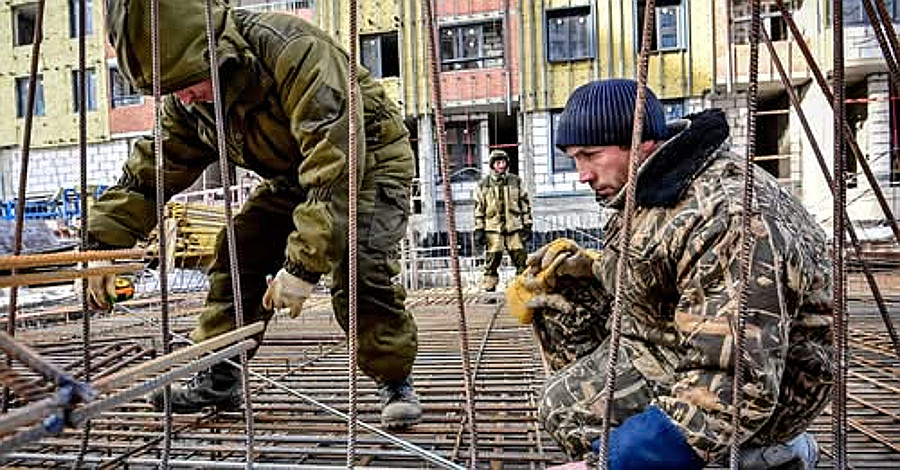
Russia's trade unions under pressure This benefited not only employees in the arms industry and related sectors. To retain their workforce, civilian companies were also forced to enter the wage race with the arms industry and the military. While the wage increases were extremely uneven and accompanied by extreme exploitation, not to mention the fact that the workers literally had to bleed for it, after decades of neoliberal policies, even such a "redistribution of wealth" might have seemed like a blessing to some. Recently, however, the illusion of "military Keynesianism" seems to be fading. Inflation-adjusted wage growth slowed in 2025 and came to a complete standstill in 2026. Some are already calling for stricter spending. For example, Oleg Deripaska, one of Russia's most influential oligarchs, recently raised the idea of introducing a six-day week and a twelve-hour workday . A key indicator of the looming crisis is the growing wage gap. This is considered the main cause of protests in workplaces: approximately 40 percent of labor disputes result from it. More labor disputes are therefore likely in the future. In 2025, the Zabastkom project recorded 350 cases in which employees stood up for their rights. The vast majority of these (274 cases), however, were limited to appeals from the workforce to the authorities, a typical form of labor disputes in recent years. Nevertheless, more radical forms of collective action have not completely disappeared: eight conflicts involved strikes, twelve involved collective resignations (which can also be considered a form of strike), another eight involved demonstrations, and one involved a highway blockade. As politician and trade unionist Oleg Shein explains in his article on the Rabochaya Politika portal , the workers are demonstrating a remarkable capacity for coordination and self-organization despite the increased risks. For example, a recent strike by taxi drivers employed by the online provider Yandex Go took place simultaneously not only in several regions of Russia, but also in Armenia, Belarus, Kazakhstan, and Uzbekistan. It remains to be seen to what extent these mostly spontaneous protests can stimulate union building. On the one hand, unions rarely participate in such actions. This is due both to the precariousness of the particularly conflict-ridden sectors (construction, services, platform work) and to the inactivity of union leadership and the caution or limited objectives of the workers themselves. On the other hand, if the crisis intensifies and affects additional sectors of the economy, it could at least breathe new life into the somewhat less bureaucratic elements of the fractured Russian trade union landscape. The “old” trade unions The Russian trade union movement is characterized by a split between the "old" trade unions, which emerged from the Central Council of Trade Unions of the USSR, and the "new," independent trade unions. The former are united in the Federation of Independent Trade Unions of Russia ( Federatsiya nezavissimykh profsojuzov Rossii, FNPR), while the majority of the latter are in the aforementioned Confederation of Labour of Russia (KTR). In the Soviet Union, trade unions, although formally considered social organizations, were in practice something like social welfare offices . That's why even today many people expect holiday vouchers and New Year's gifts from trade unions rather than support in protecting their labor rights. The capitalist transformation of the country in the 1990s was accompanied by mass impoverishment, catastrophic deindustrialization, and social chaos. The "old" trade unions lost their authority over the administration of state funds and, it seemed, could have merged into a normal Western-style umbrella organization. But that didn't happen. The old trade union bureaucracy, which traditionally acted as a loyal, paternalistic force towards the state and employers, also proved useful to the new giants of the Russian economy, many of whom were descendants of the same nomenklatura milieu. In the early 2000s, the FNPR, under the leadership of Mikhail Shmakov, concluded a cooperation agreement with the ruling United Russia party, began issuing statements of support for Putin , and also endorsed the new labor code, which effectively banned strikes . This temporarily secured the FNPR certain privileges and a degree of leeway within the authoritarian system. However, these recognized unions paid for their inactivity and unwavering loyalty with a shrinking social base. Opinion polls regularly show that Russians are extremely skeptical of trade unions and poorly informed about their activities . The FNPR's stated membership figure of 19 million (compared to 54 million in 1993) is disputed by Russian experts from trade union circles. "The FNPR's own website reveals that the figures are inflated. For example, there's a map illustrating union organization rates by federal district. According to figures from the state statistics agency Rosstat for each federal district, the number of employed persons is only 13 million instead of 19 million," notes one of our interviewees, all of whom wish to remain anonymous for security reasons. The “new” trade unions The history of the "new" or independent trade unions began with Perestroika. Dissatisfaction with the Soviet system, including the official unions, was widespread at the time, and as state control was loosened, many workforces began to organize themselves. This led to the formation of unions such as those for seamen , air traffic controllers , and pilots , which form the core of the Confederation of Russian Labour (KTR ). Even under Putin, grassroots-based industry associations joined the KTR, including the Interregional Workers' Alliance ( MPRA ), primarily active in the automotive sector , as well as Uchitel (teachers), Deistviye (medical professionals), and Novoprof (food industry and service sector). Independent trade unions more frequently seek direct confrontation with employers, organize more collective actions, and, in better times, felt free to publicly criticize the government. The ideological spectrum of these unions has always been diverse, ranging from neutral or pro-Kremlin positions to a spectrum of leftist ideas or even sympathies for Alexei Navalny (as seen, for example, in the Alliance of Doctors and the Alliance of Teachers, unions that were dissolved by the regime in the early 2020s). The new unions often managed to compensate for their limited legal scope for action through creativity and successful self-promotion in the media. For example, a trademark of the MPRA became the “Lesik Fan, ” named after a union activist—a clever method to circumvent the insurmountable legal hurdles to strikes. [1] This tactic was developed during the labor disputes at the Ford plant near Saint Petersburg. Although known for its militant stance, the KTR remained a relatively small organization compared to the FNPR's bureaucratic apparatus. Until recently, it claimed two million members, but the accuracy of this figure is questionable. Currently, the umbrella organization's official website lists only 14 member organizations, without providing any information on their membership numbers. There are numerous reasons why the new trade unions continue to be overshadowed by the old ones – such as the need to build their own structures from scratch and overcome employer resistance, the lack of legal protection for activists, and the fragmentation of post-Soviet society and its deindustrialization, accompanied by the spread of precarious employment. The large-scale invasion of Ukraine has added a crucial new element to this long list: the growing fear of state repression among the Russian population. Effects of the war The purge of the public sphere, first of open opponents of the war and then of any initiatives not entirely under state control, has posed existential questions for both the new and the old trade unions. The FNPR supported the war of aggression without hesitation and withdrew from the International Trade Union Confederation (ITUC) after the latter strongly condemned the invasion. The FNPR's May Day rallies in 2022 were held under the telling slogan : "Za мир! Za труд! Za май!" (For Peace! For Work! For May!). This combined the nostalgic Soviet slogan "Peace, Work, May" with the symbol of the Russian intervention – the Latin letter Z. However, even unconditional loyalty to the Kremlin and the oath of allegiance to Russian imperialism could not prevent the umbrella organization from losing influence and independence. The fact that the former pact between the Kremlin and the FNPR no longer exists is demonstrated by a series of criminal proceedings initiated by the Prosecutor General's Office with the aim of nationalizing union property. These include several sanatoriums in the Caucasus Mineral Waters spa region, the Palace of Labor in St. Petersburg, and the sports complex in Moscow's Krylatskoye district. The corruption allegations raised in this context apparently played a decisive role in the 2024 change of power at the top of the organization . Instead of the then 75-year-old Shmakov, who was relegated to a purely decorative position, Sergei Chernogayev was elected chairman of the FNPR. “He was part of the top management of Russian Railways [the state-owned monopoly in the rail sector], where he was responsible for social issues [...]. Furthermore, Chernogayev is a graduate of the ‘Governor’s School ,’ where future regional leaders are trained. He is currently in the process of replacing Shmakov’s people,” reported another source from trade union circles. Appointing a career civil servant to head the FNRP made the association even more compliant. While the FNRP was previously able to negotiate concessions in the Trilateral Commission on Employment Relations , it now prefers to "keep a low profile." As a result, openly anti-worker initiatives—such as the proposed law to increase the overtime limit from 120 to 240 hours per year or the legalization of so-called platform work—hardly encounter any resistance anymore. But even this doesn't protect the association from reprisals. Local branches of industry-wide unions are increasingly being forced out of companies. This happens particularly often in the arms industry, where unions are practically banned. Furthermore, unions in agricultural holdings, where they previously, albeit tentatively, made certain demands, are coming under massive pressure. The KRT issued a cautious statement regarding the invasion of Ukraine in the early days of the war, calling on the parties to make peace and negotiate. However, the organization avoided naming those responsible (the text is currently unavailable on the KTR website, as even moderate criticism of the so-called special military operation is considered dangerous). Some leaders and activists within the organization, such as its then-vice president Oleg Shein, unequivocally condemned the Russian aggression. Shein was subsequently labeled a "foreign agent" and forced to leave the country. Nevertheless, the new trade unions remained largely untouched by repression for a long time. Unlike numerous non-governmental organizations that were declared "foreign agents" or "undesirable organizations," the KTR trade unions remained legal, participated in the Trilateral Commission , and even received minor subsidies from the state budget. Strict self-censorship and an almost exclusive focus on legal issues became prerequisites for its survival. While the KTR previously positioned itself as a decidedly political umbrella organization with social democratic leanings, proud of its international connections, today its website contains not the slightest reference to political matters. Dry legal topics dominate: court rulings, overviews of legislative amendments, rules for calculating various payments, and the like. According to experts, this is not only due to the fear of possible reprisals, but also to the desire to prevent a split within their own ranks, where there is a mixed mood regarding the war. Some actions by the new unions can be interpreted as veiled criticism of militarism. For example, activists from the teachers' union Uchitel spoke with students in various regions of the country about labor rights—within the framework of the new school subject "Conversations about Important Things," which is actually intended for the military indoctrination of young people. In this way, they drew attention to low wages in the education sector instead of engaging in propaganda. On the other hand, individual grassroots organizations of the KTR are participating in volunteer projects to support the army on their own initiative. The pervasive fear within Russian society naturally affected people's willingness to join the new trade unions or remain members of existing ones. However, until the attack on the KTR in April, the situation was at least not entirely bleak. “Here and there, membership numbers are stagnating, while elsewhere they're even increasing slightly. For example, new grassroots groups are emerging within the medical workers' union Dejstwije . These groups organize the most proletarianized segment of the medical workforce – nurses, paramedics, and ambulance crews. People who literally have nothing left to lose […]. Things aren't completely at a standstill, but overall it's about survival and maintaining the existing structures. Sometimes, that means in a significantly reduced form,” explained one of our interviewees. Labor disputes also increased in so-called platform work. Last year, for example, two waves of taxi driver strikes swept across the country; in addition, there was more activity among the unions of courier services and shipping platforms. What is pushing trade unions to the brink of collapse is primarily the fact that collective action has become virtually impossible. Legally conducting strikes has been almost entirely out of the question since the first decade of this century . The labor code passed at that time made the process extremely difficult and, moreover, completely prohibited strikes for employees in numerous sectors, including transportation and the housing and municipal services industries. "Legal" strikes have been extremely rare in Russia ever since – Rosstat records between zero and a single such action annually. The new unions have always been very good at circumventing restrictions – one only has to think of the "Lesik fan." But in recent years, both union leaders and rank-and-file workers have been forced to proceed with extreme caution. Amidst the general war paranoia, any collective action can be interpreted as "extremist" by the security services. Since 2022, the most common form of industrial action has therefore been collective complaints to the authorities or video messages to those in power, in the hope of bringing the boss to his senses. Freedom of assembly was effectively abolished in Russia during the pandemic. The temporary bans on demonstrations introduced in Moscow and several regions became permanent, even though all other anti-COVID measures had long since been lifted. Penalties for participating in unauthorized gatherings are now extremely high. For example, Kirill Ukraintsev, an activist with the independent Kurjer (Courier) trade union (not affiliated with the KTR), was imprisoned for almost a year and a half for calling on striking delivery drivers from the company Mail.ru to assemble in front of the company headquarters. While authorities used to react less sensitively to demonstrations and vigils without political demands, now any protest, even those for workers' rights, can be brutally suppressed. "Today, workers at a construction site in Arkhangelsk spontaneously stopped work because their wages hadn't been paid. The OMON arrived and arrested two workers who had barricaded themselves on a construction crane," one of our interviewees cited as a recent example. What future awaits the trade unions? The FNPR will hardly be able to prove its usefulness to the system again, because the regime now views any civil society initiative, even if it is loyalist and supports the war, as a potential threat. The "old" unions could continue to exist pro forma for a long time, especially in the public sector. Occasionally—as in the case of the recent strike at the road construction company Smolenskawtodor—their grassroots organizations are even able to mobilize the workforce for action. However, this is unlikely to develop into a trend. As far as independent trade unions are concerned, their activities are increasingly reduced to providing legal support to their members. "There is a great risk that trade unions will mutate into purely human rights organizations. With the decline of more or less independent media, bias in the judiciary, and the authorities ignoring international pressure, trade unions are becoming increasingly ineffective with this new orientation. For a trade union, this means its death," emphasizes a Russian expert. The future of independent trade unions depends on their success in transforming their activities into collective ones – our interviewees are convinced of this. Union members are organizing flash mobs on social media, collecting signatures for petitions, and filing mass lawsuits – thus turning individual legal action into a protest. Mass resignation submissions by the workforce are also being discussed as an option, with the stipulation that these will be withdrawn once certain demands are met. In contrast, another – and unfortunately increasingly plausible – scenario for the future is the violent liquidation of the trade unions. The attack on the KTR in April may have been just the beginning. The official reason for this was a conflict between the leadership of the Federal Union of Air Traffic Controllers and one of its approximately one hundred local branches. A typical internal union dispute over responsibilities and the key points of a collective bargaining agreement at a company ended with the expulsion of the "rebellious" group from the union. A former union official subsequently filed a police complaint alleging fraud. According to the KTR's terse statement, searches were conducted at union premises as part of an investigation into an alleged fraud. The Kremlin-affiliated Telegram channel Baza wrote in this context of an "embezzlement" of donations intended for the army (although the umbrella organization remains neutral on this issue, some of its member organizations pursue such "charitable" purposes). Former KTR Vice President Oleg Shein emphasized on Facebook that the sum in question was a negligible 52,000 rubles (around 500 euros), which the grassroots organization, now expelled from the federation, intended to use to purchase medication for Russian soldiers. The released fragments of investigative videos from the KTR office and the revealing tone used by propagandists leave no doubt that the security services are pursuing more than just the unions' internal asset disputes. Videos circulated on pro-government Telegram channels in which a police officer accuses the KTR chairman of acting in the interests of foreign donors. The evidence presented is said to be old publications once funded by USAID. Connections to the Friedrich Ebert Foundation and the Rosa Luxemburg Foundation are also mentioned in this context. In light of the attacks on other institutions important to Russian civil society on the same day – the newspaper Novaya Gazeta and the human rights organization Memorial – the regime's message is unambiguous. “All these actions share a common logic – the logic of destroying those last structures that still recalled democracy (and thus the complexity of Russian society, which cannot be reduced to the model of a totalitarian unity). While Memorial embodied the memory of the [Stalinist] repressions and thus called into question the absolute moral authority of the state […] and Novaya Gazeta, with its investigative research, undermined the sanctity of power in the present, the independent trade unions, by their very existence, remind us of class antagonism, of the deep division in society that Putinism seeks to reduce to a total ‘national unity’,” commented the historian and political philosopher Ilya Budraitsky on the events. [1] To this end, several demands are formulated and a series of strikes are planned in response to each demand. Once a strike is prohibited by a court order, the union informs the company of the next strike only in the evening – outside of court hours. Since a new court order is not issued for one or two days, the protest can continue even though the previous individual strikes have already been declared illegal. (Translator's note) https://www.rosalux.de/news/id/54826/russlands-gewerkschaften-unter-druck? Back Azamat Ismailov is an independent journalist and trade union activist who had to leave Russia for political reasons in 2022. In Germany, he is involved with the Federal Association of Russian-Speaking Leftists (BAG Russischsprachige Linke). Translation by Kontrast Translation Collective. |
|
||||||
|
|||||||