 |
|  |

|
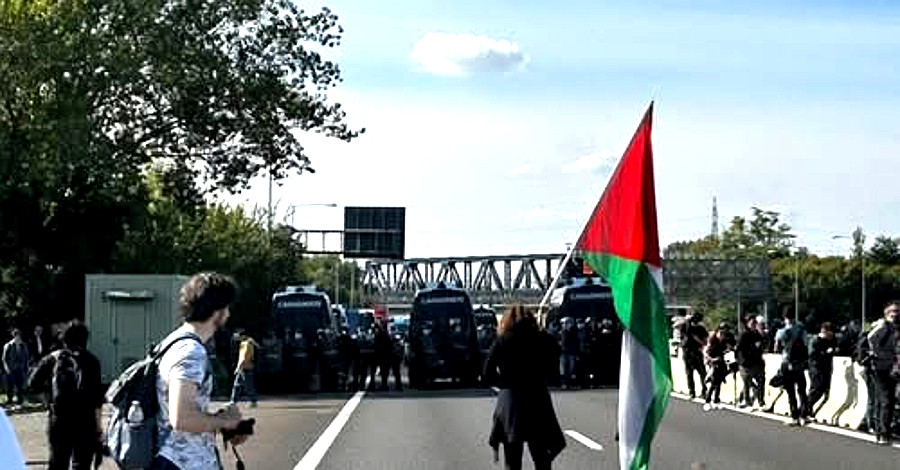
Liberation Day: Italy prepares for mass protests against Meloni Last year, Giorgia Meloni, who claimed to defend the most conservative values of the Catholic Church, succeeded in banning all demonstrations on Liberation Day, using as a pretext the funeral of Pope Francis, for which she had decreed five days of national mourning. It is no coincidence that the abolition of April 25th has always been a political objective of the Italian Social Movement (MSI), the neo-fascist-inspired party in which the president was active in her youth and whose party, Brothers of Italy , has adopted the symbolism of Mussolini's tricolor flame, albeit transferring it to a purely parliamentary context. April 25th in Italy represents a significant moment in the history of the class struggle in the country. While opposition to fascism had been fueled, in particular, by the great workers' strikes of 1943, 1944, and 1945, and by working-class activists who dreamed of much more than a mere restoration of pre-Mussolini bourgeois democracy, the outcome of the war was stolen from the fighting masses: those who had led the Four-Day Battle of Naples in September 1943, liberating Naples from fascist occupation, independent of imperialist forces, and rebuilding, under Nazi fire, the workers' organizations by reviving the methods of the Bienno Rosso (Red Biennium). These victories were stolen by the policies of the trade union and political bureaucracies and by the return of the Italian bourgeoisie to the fold of the Allies. April 25th is, therefore, an ambivalent sign of victory against fascism, as well as of the frustrated hopes of the revolutionary resistance. Following last year's setback, the celebrations, which take place throughout Italy, are unfolding this year amidst a political crisis, after three years of Meloni's government, which has largely survived thanks to the passivity of the union bureaucracies and the opposition. This precarious balance has been disrupted by the Blocchiamo Tutto movement. With the return of the masses to the political scene, including certain dynamics of class struggle, the upcoming mobilizations take on particular significance. In fact, since the strikes of autumn 2025 and the Blocchiamo Tutto movement, the emergence of widespread popular protest against the ruling class and the current system has been accompanied by a return to politics on the part of millions of Italians. Large sectors of the population, without a tradition of recent struggles, have chosen to take to the streets alongside young people and workers against austerity policies, rearmament, the rising cost of living, undignified wages, the genocide in Palestine, and, more recently, the imperialist war waged by the United States against Iran, as seen in the "No Kings in Italy" demonstration held in Rome at the end of March. Meanwhile, the resounding electoral defeat in the constitutional referendum and the low turnout at the "European Patriots" rally, an event of the reactionary international in which Jordan Bardella also participated and which turned out to be a political failure for Matteo Salvini's League, with no less than three counter-demonstrations that paralyzed the city of Milan, made Giorgia Meloni's fragility even more evident, giving concrete form to the hypothesis of a political crisis within the government. Donald Trump's main ally in Europe is adopting a defensive posture, confirmed by the immediate suspension of the five-year defense agreements between Italy and Israel. This represents an attempt by the Italian prime minister to distance herself, at least partially, from the genocidal policies of the Israeli-American axis, especially in the face of growing public pressure and following the recent disputes between the White House and the Vatican—an exchange in which Meloni was forced to side with Pope Leo XIV in the face of criticism from the US president. While in the United States Trump signed executive orders designating the Antifa movement as a "terrorist organization guided by an ideology of political violence," in Italy the mobilization is consolidating around key demands: rejection of the current government's repressive and authoritarian measures, which criminalize dissent with heavy fines and years in prison; opposition to the intensification of militarization and rearmament policies, as well as the reintroduction of mandatory military service; opposition to increased social control and political surveillance of activists and journalists; and opposition to the closure of numerous social centers in Milan, Turin, Bologna, Rome, and Naples. Underlying all of this is the rejection of war as a comprehensive paradigm for resolving the crisis, as well as the geopolitical instability caused by the situation in the Middle East, which is why four out of five Italians say they are deeply concerned about the situation. The movement's potential strength, in the face of internal divisions within the right-wing coalition, is fueled by the evident difficulties Trump and his allies face in halting the slow but inexorable decline of US imperialism, both economic and military. At a time when the US president's political credibility is beginning to falter and imperialism is suffering a defeat in Iran, the reactionary international is entering a profound crisis, from Orbán's defeat to Milei's crisis, after launching offensives increasingly disconnected from the true balance of power on the far right. As the perpetrators of genocide sink deeper into a protracted crisis, and the new flotilla to Gaza could reignite the energy of workers' and youth movements, April 25th looms as a high-risk date for a weakened Meloni. And that would be excellent news. https://www.laizquierdadiario.com/Protestas-del-25-de-abril-en-Italia-una-fecha-de-alto-riesgo-para-una-Meloni-debilitada?utm_campaign Back |
|
||||||
|
|||||||