 |
|  |


|
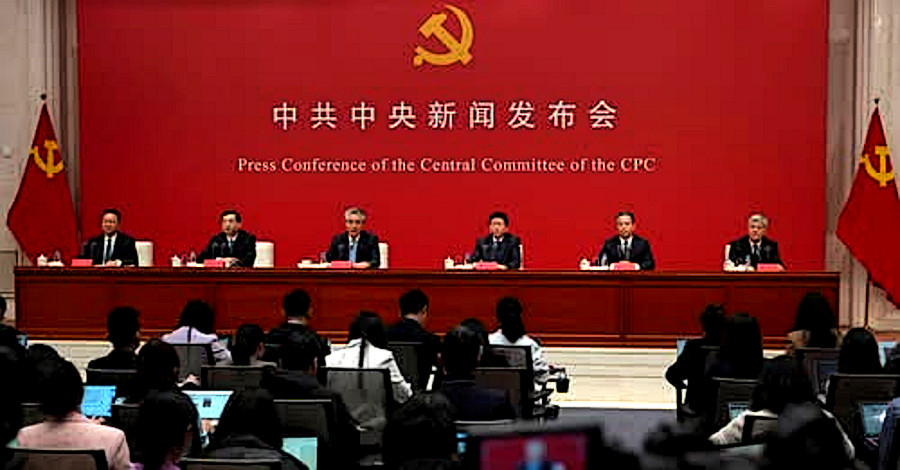
Another leadership purge in China amid intensifying global conflict The Central Committee that met this week comprised just 279 members—162 full members and 117 alternate members—of the 376 members who were installed in 2022. No explanation was provided for the absence of more than a quarter of the committee’s original membership—significantly higher than the tally of “empty chairs” at the last plenum. The meeting continued the purge of top party bodies by confirming the expulsion of a record 33 Central Committee members from the party—24 full members and nine alternate members. These including two members of the powerful 24-member Politburo—Ma Xingrui, former Xinjiang party secretary, and Zhang Youxia, former senior vice-chairman of the Central Military Commission. No details were provided of the alleged “grave violations of discipline and the law” against any of the 33. A shuffling of positions on the Central Committee elevated 10 alternate members to full membership but left the same number of “empty chairs.” Zhang Shengmin was promoted to the position of senior vice-chairman of the Central Military Commission last year. At this week’s Central Committee he was elevated to the Politburo the first such promotion to the Politburo between party congresses since 1994. China’s military—the People’s Liberation Army (PLA)—has been a particular target of Xi’s purge as he confronts the aggressive US-led military build-up, provocations and preparations for war throughout the Indo-Pacific. While attempting to reach an accommodation with Trump, Xi is also engaged in an arms race with the US and refashioning the military for war. Xi chairs the Central Military Commission—the third of the powerful posts that he holds along with those of president and party general secretary. The seven-member body is denuded with only two remaining—Xi and Zhang Shengmin, who has been Xi’s right-hand man in purging the military. Of the 33 expelled from the Central Committee, 16 were top military officers. Zhang Youxia, who had previously been regarded as a close ally of Xi, and Liu Zhenli were both Central Military Commission members until being put under investigation in January. An analysis by the Asia Society Policy Institute entitled, “The Limits of Xi’s Control: What to Watch at China’s Fifth Plenum,” published on October 19, concluded: “Of 44 uniformed officers elected as full Central Committee members in 2022, only Zhang Shengmin and Dong Jun have neither been purged nor disappeared. Only 12 of 23 military alternates appear to still be performing their duties. Altogether, just 20.9 percent of the original military officers in the Central Committee appear to remain in good political standing.” The expulsion of Central Committee members is only the tip of the iceberg. The report of the Central Commission for Discipline Inspection for 2025 released in February stated that disciplinary inspection and supervision organs nationwide had filed 1.012 million cases, detained 47,000 people, and imposed Party disciplinary and administrative sanctions on 983,000 people. The CCP has just over 100 million members. While focussing on the military, Xi also confronts a worsening economic and social crisis within China. Economic growth continues to slump. Official figures for the third quarter showed just 4.5 percent, largely propped up by exports. That brought growth for the first nine months of 2026 to 4.6 percent—just within the target range of 4.5 to 5 percent. The figure is less than half China’s growth rate in the 1990s and 2000s. In his speech in January to the Central Commission for Discipline Inspection, Xi expressed his concern that his directives were simply not being fully implemented. He called in particular for greater supervision of his key policies, including investment of advanced technology and manufacturing, and reining in huge local government debts. One indication of the social tensions being fuelled by slowing economic growth is the continuing high levels of youth unemployment. The jobless rate for 16 to 24-year-olds was 18 percent in September, marginally below 18.9 percent in August. In 2023, the government stopped publication of youth unemployment figures, which had climbed to well over 20 percent, only restarting their release after changing the methodology to mask the real extent of the youth joblessness. The Central Committee communiqué released this week is full of praise for Xi, hailing “Xi Jinping Thought on Party Building” as an important new addition to party doctrine that gives “fundamental guidance and a guide to action” for strengthening the CCP. In reality, the plenum provides a small glimpse into the party’s opaque inner workings, which are fractured and riddled with discontent and outright corruption. In the face of a mounting crisis at home and abroad, Xi holds the party together by balancing between various factional interests and meting out severe discipline to those he regards as a threat. https://www.wsws.org/en/articles/2026/10/31/hehl-o31.html Back |
|
||||||
Thanks for visting the G20 From Below Website. If you want something published here or other enquiries mailto:Brics-from-below@protonmail.com
|
|||||||