UK: Outsourcing companies rake in £6bn profits from public services last year
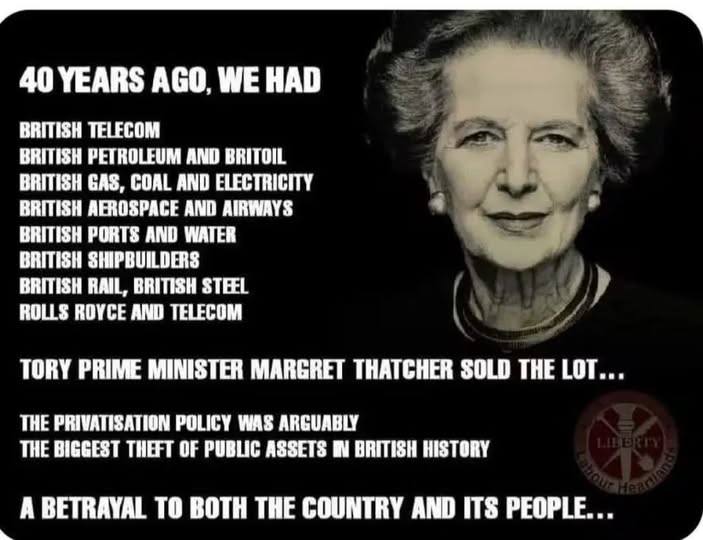
Ceren Sagir (The Morning Star) 25 September 2026
G4S, Serco, Mitie, Sodexo and others made vast profits ‘at the expense of workers’ rights, accountability and service quality,’ Common Wealth warns
‘Every pound of taxpayers’ money that lines the pockets of profiteers is a pound less for vital services’ – Unison general secretary Andrea Egan
OUTSOURCING companies extracted £6 billion in profits from public services last year, while more than one million workers are employed in the outsourced “para-state” on low pay and poor working conditions, a damning report has found.
The study, from Common Wealth and commissioned by the RMT and Unison, examines the scale of the outsourcing industry and its impact on public services and workers.
It warns that government outsourcing has “channelled public money into private profit at the expense of workers’ rights, democratic accountability and service quality.”
Bringing services back in-house should be the default across the public sector, the Back In-House report says.
Despite growing criticism of outsourcing in recent years, it found that for every £10 spent by the public sector, £1 goes on outsourced services.
In 2024-25, the public sector spent an estimated £129bn on outsourced public services — 11 per cent of all public spending.
Outsourcing was promoted as a way to introduce competition, improve service quality and reduce costs.
In reality, the report argues, it has produced concentrated markets where outsourcing conglomerates focus more on extracting profits than serving public needs.
Between 2019-20 and 2023-24, the six largest outsourcing companies — G4S, Serco, Mitie, OCS, Sodexo and ISS — made £34bn in revenue and £1.5bn in operating profits from public contracts.
Using those firms’ operating profit margins, the report estimates that private companies made £6bn in total operating profits from public service contracts in 2024-25.
“Where outsourcing has allowed services to be delivered more cheaply, reductions should be understood as a false economy in which private companies offer workers worse pay and conditions to cut their own costs,” the report says.
The research estimates that between 1.12 million and 1.32m people are employed in publicly funded but privately run services.
“Outsourced workers tend to have lower wages and more insecure working arrangements than those directly employed in the public sector,” it notes.
“This means that the government is complicit in trends towards in-work poverty that have seen the proportion of non-retired people living in households that receive more in benefits than they pay in taxes increase from 30 per cent in 1977 to 46 per cent in 2024.”
The report says the Labour government’s talk of ending the era of “outsourcing by default” needs to be backed by action.
Insourcing, it argues, can improve co-ordination, provide better security for workers delivering vital services and offer better value for money when public funds “are not siphoned off as profits for outsourcing companies.”
The study calls for reform in procurement legislation to drive insourcing across the public sector and for public bodies to work with their recognised unions to develop insourcing strategies.
Unison general secretary Andrea Egan described insourcing as a “no-brainer,” adding: “Every pound of taxpayers’ money that lines the pockets of profiteers is a pound less for vital services.
“Huge swathes of precious cash are being siphoned from the NHS, social care and local communities. All while budgets are being squeezed ever tighter.
“The way to get better value for money and improve services is to bring public contracts back in-house.”
Reacting to the report, PCS general secretary Fran Heathcote said it “lays bare the human and financial cost of outsourcing.”
She said: “Public services should exist to serve the public, not generate profits for private companies at the expense of workers and service users.
“PCS stands alongside RMT and Unison in calling for a clear programme of insourcing, bringing services back in-house, protecting workers’ rights and ensuring public money is invested in the services people rely on.”
Labour MP Andy McDonald said the government had “made an important start” to its promise of the “biggest wave of insourcing in a generation,” but that the research showed the “real cost of decades of the outsourcing obsession.”
He said: “The new Public Interest Test should be extended across the public sector, so that before an essential public service is outsourced there is a proper assessment of whether that is genuinely better for taxpayers, workers, and service users than public provision.
“Insourcing should become the default with a new procurement act mandating public bodies to conduct public interest tests, looking at costs and wider social and economic impacts.”
https://morningstaronline.co.uk/article/outsourcing-companies-rake-ps6bn-profits-public-services-last-year-study-shows?
Back
|
|

|
Thanks for visting the G20 From Below Website. If you want something published here or other enquiries mailto:Brics-from-below@protonmail.com
Please Visit the BRICs from below website. The BRICs from below website was established in 2016 to news and analysis on worker and community protests in the BRICS countries and against the activities of BRICS based multinationals especially in Africa. The G20From Below website was set up in to 2025 to extened this work to the G20 countries.

Introducing BRICS from above, BRICS from the middle and BRICS from below
BRICS FROM ABOVE
Heads of state, Business Forum, elite allies
*BRICS as anti-imperialist (ANC & Pretoria rhetoric – “Talk Left, Walk Right”, e.g. national-liberation tradition, foreign ministry on global geopolitics, finance minister on IMF reform, sports minister on FIFA)
*BRICS as sub-imperialist (Pretoria relegitimising world capitalism, lubricating neoliberalism in - and exploiting - Africa, intensifying class war against SA’s poor/workers/women/nature on behalf of global/local capital, ensuring maximum greenhouse gas emissions alongside BASIC/US no matter local/continental/global consequences, and playing “deputy sheriff” role to imperialism)
*BRICS as inter-imperialist (Pretoria's potential support for a new internet delinked from US, promotion of Putin v Obama in September 2013 at G20, and mainly backing Russia in Crimea/Ukraine conflict - as well as earlier episodes where SA lined up with China in UN e.g. in relation to Burma)
BRICS FROM THE MIDDLE
Academic Forum, trade unions, NGOs
BRICS advocates (most of Academic Forum, Johannesburg & Pretoria “think tanks” and others who suffer persistent “failure of analytical nerve”)
*wait-and-see (most NGOs and trade unions - as well as “Third Worldist” intellectuals - who wish for BRICS to become “anti-impi” at UN, Bretton Woods Institutions, Development Bank, Contingent Reserve Arrangement, etc)
*critics (those associated with brics-from-below network who consider BRICS to be “sub-impis” and sometimes also “inter-impis”)
BRICS FROM BELOW
Grassroots activists whose visions run local to global
*localist (stuck within local or sectoral silos, including myriad “popcorn protests” - even some against BRICS corporations or projects - that are insurgent, unstrategic, momentary, at constant risk of becoming xenophobic, and prone to populist demagoguery)
*nationally-bound (most activists who are vaguely aware of - and hostile to - BRICS yet so overwhelmed by local, national and sectoral battles, they fail to link across borders - even BRICS hinterlands)
*solidaristic-internationalist (“global justice movement” allies aspiring for joint campaigning against common BRICS enemies such as Vale, China Development Bank, DBSA, Transnet/mega-shipping, fossil fuel corporations and other polluters, coming BRICS Development Bank)
JEALOUS PRO-WEST CAPITALISTS
Most white organic intellectuals of capital connected to Old Money, multinational-corporate branch plants, Business Day, northern-centric big biz, Democratic Alliance and their ilk.
|