 |
|  |


|
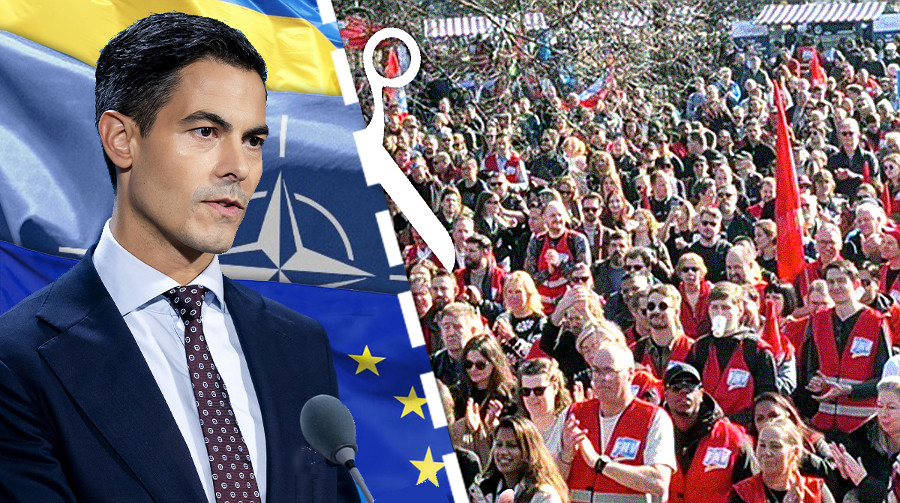
Dutch strike wave: welfare not warfare! The current Dutch government is a particularly enthusiastic participant in the all-European race to rearm. Since Jetten’s three-party coalition scraped into power against the far right last year, it has abandoned all its promises of reforms – including to tackle the housing crisis by building ten new cities – in favour of getting the country ‘war-ready’. Publicly, they claim this is necessary because Russia will attack NATO within the next few years. Privately, like the rest of the Europeans, they are desperate to prove their worth to America – while preparing for a world where it no longer defends their interests. To “build a European pillar within NATO”, Jetten’s coalition is budgeting for a massive rearmament programme, stretching over the next decade. By 2035, they want to raise defence spending to €41 billion a year and expand the armed forces by half, reintroducing conscription if not enough people volunteer. To buy them time, they are investing €3 billion a year in prolonging the destruction of Ukraine – triple what they have allocated to resolving the housing crisis. The money to finance these lavish handouts to arms monopolies is to be taken directly from the welfare state. The coalition has prepared a €6.5 billion austerity package, which includes cutting benefits for the unemployed, disabled and permanently incapacitated; increase the cost of medical care; reduce support for energy bills and household help; raise the pension age from 67 in line with life expectancy; and, to top it all off, force Dutch citizens to make a ‘freedom contribution’ – a literal war tax! Who pays? After all, as the last Dutch Prime Minister put it, “Freedom is not free.” Someone has to pay. The ruling class aren’t going to do it. The coalition hasn’t even mentioned a wealth tax. They want to keep the Netherlands an attractive place to invest. The state could. Unlike its bankrupt neighbours, the Dutch debt-to-GDP ratio is only 44 percent. But with prices rising and risks mounting, it wants to preserve its advantage – and its reputation for fiscal discipline. After all, borrowing to buy social peace can only postpone the date of payment. Eventually, the cost will have to be bourne by one of the classes with interest – as workers across the rest of Europe are currently finding out. Instead, the poorest and most vulnerable have been selected to foot the bill. For ‘freedom’, they are expected to work till they die, get sicker and poorer, and pay tribute to Rheinmetall and Lockheed Martin. But this is a price their bosses are willing to make them pay. As Chancellor Merz put it, speaking for the ruling class of the continent: “What is the point of the most generous child care allowance if we are losing our freedom and peace in Europe is under threat?” The Netherlands paralysed Dutch workers are furious. They hate the government. Six months in and 70 percent of the country is dissatisfied. Trust in politics has fallen to a new low. Like the rest of Europe, they are facing a cost-of-living crisis and skyrocketing energy bills after years of wage stagnation and austerity. Now they are being told they have to tighten their belts to defend a country in which they can't pay their rent or afford groceries. They are not taking this lying down. In March, thousands of civil servants struck against the government’s pay freeze. The same month, 700 dockworkers unanimously voted to paralyse the country's ports for at least five days to force the government to retreat on the attacks. Before they could go out, the three main unions issued their own ultimatum, threatening coordinated action unless the austerity measures were abandoned. The very threat of this – backed by a four-hour transport strike – was enough to force the coalition to abandon key austerity measures, like raising the pension age. What a demonstration of the potential power of the working class! Yet as 70 percent of the cuts still stand, or have merely been postponed, the strikes went ahead. This week's mobilisation is the broadest in decades. It has brought out dockers, public transport workers, hospital staff and nurses, builders, metal workers and civil servants. It shut down the port of Rotterdam, which is the biggest port in Europe. It is supported by 78 percent of Dutch people – a much more powerful mandate than Jetten’s. If this army were brought together into a general strike against austerity and war, it could easily bring down the government and all of its plans. But that is not the intention of the union leaders. They have hardly said anything about militarism. Instead of striking together, they have organised the sectors to come out one by one, with the last strike falling on budget day. The dockers were only out for seven hours. Their strategy is designed only to strengthen their hand so they can make a deal, as is tradition. Newly appointed FNV leader Hans Spekman admitted as much on stage at a union rally: “As far as I'm concerned, nobody has to leave. But they do have to do something else… and then we will work together.” Prepare for class war! The minority government is so weak that it may be forced to ditch its plans entirely come budget day. But such a victory would only be a temporary reprieve. Cuts and rearmament are ultimately necessary for the Dutch capitalist class. Sooner or later, they will return for their pound of flesh. Future confrontations are inevitable. The same is true all across Europe. In Britain, Starmer’s Chancellor was brought to tears on live TV after a Labour Party revolt undermined planned cuts to disability benefits. In France, Macron has burned through four prime ministers in his attempts to force through austerity. Belgium has exploded into two general strikes for the same reason. In Germany, Merz has already faced mass anti-conscription protests. But now he and the bosses are preparing a devastating austerity package to fund the construction of the “strongest army in Europe”. In their desperate, doomed attempt to maintain their position in the world, the declining powers of Europe have no choice but to attack the conditions of the working class. We need to get serious: we are at war – not against Putin, but against our own warmongers and capitalists. To defend their standard of living, their pensions, and hospitals, Dutch workers need much more than demonstrative, single-file actions. They need a general strike against every cent cut from public services and spent on the war machine. That would force the ruling class to its knees. It would bring into the field the millions of people who have already proved they are willing to fight against the crimes of European imperialism. And it would set a revolutionary example to the rest of the European workers, showing who really runs the continent. https://marxist.com/dutch-strike-wave-welfare-not-warfare.htm? Back |
|
||||||
Thanks for visting the G20 From Below Website. If you want something published here or other enquiries mailto:Brics-from-below@protonmail.com
|
|||||||