 |
|  |


|
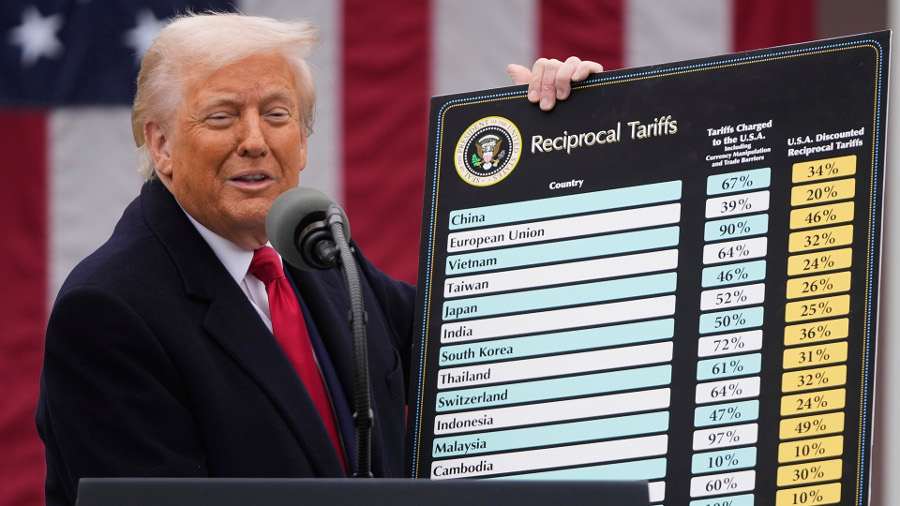
US imposes new 12% tariff on South African exports Patrick Bond: Thanks for having me, Thabiso. Greetings to all your listeners. Power987: I mean, what are we to make of this? Because this is a Trump administration navigating so many treasury paths, I suppose, with the November elections coming and with most Americans really not supporting the war in Iran and many other issues. The economy, I mean, the hundred dollar mark that was reached today when I checked earlier on in terms of the oil price and many other issues. And yet, we are where we are. I mean, as a country, should we really give up on him? Or did those engagements work? You have now a U.S. ambassador whom we were told that perhaps he will begin to have proper discussions with the U.S. and at least, you know, deal with such issues. But it seems as if when you take one step forward, later on, it translates into three steps backwards. That’s a good way to put it, Toby. Patrick: I think the main thing on this is there’s an erratic and unreliable character: not just Donald Trump, but his trade minister. His name is Jamieson Greer. And he’s been playing around with different fixes to the Supreme Court knockdown of that big 30 percent tariff that we faced since last August. And that was considered an emergency measure for the national security. And the Supreme Court laughed at that and said, ‘There’s no emergency.’ And it affected, for example, some of the same areas where we have Afrikaner farmers. It’s so ironic that in areas like wine, table grapes, fruits, where there are predominantly Afrikaner farmers who are subject to a genocide, according to Donald Trump and Elon Musk, and they’re the ones that Trump’s hitting the hardest with the tariffs that started last year, but now they continue. The 10 to 12.5 percent increase. Because the Supreme Court in the U.S. said, you can’t do these ridiculous high amounts. Just put it at 10, which is a generic tariff that is running out today. And so, he made some of them, like South Africa, 12.5%, but for no obvious reasons. The crucial point you’re making about the forced labour provisions, that if you have products that are coming from South Africa to the U.S., but they’ve got some Chinese imports that are especially subject – in western China, where the Uyghur population is – to forced labor, and that’s often solar and batteries and things that are part of the new economy that are predominantly made in that part of China. Then you could be subject to further restrictions. That doesn’t really apply to anything I know of from South Africa. There are, of course, automobiles. That’s a big hit that we’ve had. We had, for example, in 2024, 25,500 cars going to the U.S. Last year, only 6,500, so a huge cut there because of a 25% tariff and another 25% tariff on aluminum. The only benefit of today’s announcement is that steel seems to be now down to 10%, and it was at 25%. So, I think that might stimulate the very sick steel industry of ours: ArcelorMittal and a few others. And I think overall, we just have to look at Donald Trump as absolutely unreliable and to question the deals that were being done by Parks Tau, our trade minister, and Alastair Ruiters, the main trade investment ambassador. They were able to get a U.S. company called Alcoa to come to Richards Bay to take over from BHP Billiton. And there’s some talk of Exxon, the big oil company, ExxonMobil, coming to Richards Bay. But that’s for natural gas, for methane gas. That doesn’t necessarily help us because it raises this climate impact because gas is 85 times worse than CO2 over a 20-year period. You see, it’s a mixed bag. And it just means I think we shouldn’t be as connected to the U.S. while Trump is in power – because they’ll just punish you for any good reason or bad reason. Power987: What happened to the Roelf Meyer effect? Has it gone pear-shaped? Patrick: There’s no apparent effect of Rolf Meyer in Washington yet, but things happen behind the scenes. I think you mentioned Brent Bozell, the U.S. ambassador to South Africa, and he came with his own mission that he laid out in October last year when he was testifying to become the ambassador, in the U.S. Senate. And he said very openly, ‘I want to get the South Africans to drop their court case in the International Court of Justice against Israel on genocide.’ Ironically, at the same time that he was doing that, South Africa had become the only coal supplier. And that’s President Ramaphosa’s brother-in-law, Patrice Motsepe, along with Glencore, which was Ramaphosa’s main business partner before he went back into the government in 2014. That means there’s, again, ‘talk left, walk right.’ Or you can sort of say there’s a strange hypocrisy. And it seems that Brent Bozell isn’t too worried anymore about this court case. It’s not really going anywhere in the ICJ. And the response from Israel, when they hear about anything in that ICJ, is ‘Hague Shmague,’ in other words, to heck with that: ‘We don’t care about what happens in the International Court of Justice.’ And actually, right now, Marco Rubio, the U.S. Secretary of State, is trying to actually disassemble an International Criminal Court where Benjamin Netanyahu faces an arrest warrant. So things are really in a fluid situation. And even Brent Bozell smiles a lot, but still behind the scenes, makes these comments. He was called, démarched, as they call it, the démarche of Brent Boesel, for saying that Black Economic Empowerment has to go, and Afrikaners are under pressure, all of that nonsense that they’re going to bring. Because they basically supported the apartheid system. Bozell himself called Nelson Mandela a terrorist back in the 1980s. And it’s that sort of mentality I don’t think we’re ever going to see the end of. Power987: What does this say for our economy? Patrick: You know, we’ve been so export oriented, and it hasn’t delivered the goods. We’ve had more capital-intensive equipment that goes into the production of cars. And it’s very robotic at the moment. I think China, with its two new factories in Coega – the Beijing Auto Industrial Corporation and First Auto Works – along with the big German, Japanese, and U.S. car companies, they’re not really doing anything that we could say creates jobs for exports. And the more we get into AI production, and the more the African Continental Free Trade Agreement disappoints, we’ve really seen no progress there, for a whole series of reasons. The South Centre in Geneva has put out a good critique of the way that’s been implemented. You know, I think the economy has had this export orientation since Cecil Rhodes consolidated the diamond trade. And we really have missed the local production, local consumption, labour-intensive areas like clothing, textiles, footwear, appliances, electronics. We used to do all of that about 35 years ago. Liberalisation meant that all of that was wiped out, and Chinese imports have taken over. And I think, you know, when you see the terrible xenophobia in the society, the afflictions of poor and working-class people, it’s really overdue to change the economic structure away from the minerals-intensive, metals-intensive exports, and make more use of local production. It’s just so sad that the electricity that’s so expensive, we have so much of it in surplus, because the smelters have shut down, because of Chinese imports, but we’re not finding ways to get that to ordinary people, into labour intensive production, or household electricity. That’s the tragedy, isn’t it? That the power structure here just won’t give the masses of people a break. Power987: Let’s leave it at that. Thank you so much, as always, Prof, for your time and your insights. We really appreciate it. Patrick: Thank you so much. Power987: Thank you so much, Professor Patrick Bond there talking to us about the 12.5% tariffs imposed by the US, which kicked in South Africa, among 60 economies that are affected by this particular move. You’ve been listening to Power 987 podcast. For more podcasts, visit power987.co.za or subscribe wherever you get your podcasts. https://omny.fm/shows/power-drive/us-imposes-new-12-tariff-on-south-african-exports#description Back |
|
||||||
Thanks for visting the G20 From Below Website. If you want something published here or other enquiries mailto:Brics-from-below@protonmail.com
|
|||||||