Protests erupt against the PIE Amendment Bill across South Africa
Siphesihle Buthelezi (IOL News) 16 June 2026
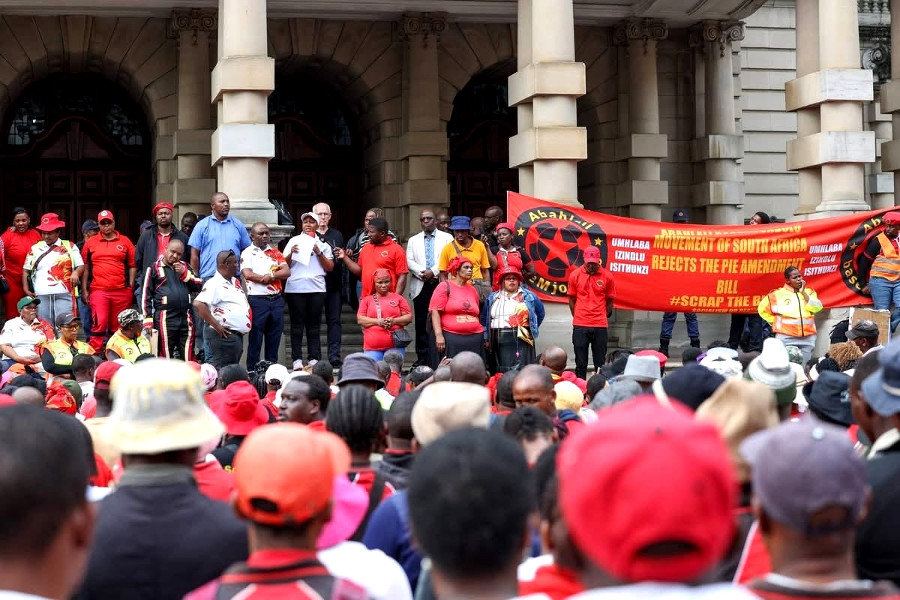
Shack dwellers' movement Abahlali baseMjondolo has intensified its opposition to the proposed Prevention of Illegal Eviction (PIE) Amendment Bill, staging coordinated marches and protests in Durban, Johannesburg and Mpumalanga on Friday.
Joined by members of progressive trade unions and left-wing organisations, the movement said the demonstrations were aimed at resisting what it described as an attempt by the Government of National Unity (GNU) to criminalise poverty, land occupations and grassroots struggles for land reform.
Hundreds of supporters gathered in Durban, marching from Curries Fountain to City Hall, while protesters in Johannesburg marched from Jeppe Park to the Gauteng Legislature, where a formal submission opposing the Bill was handed over. In the Pixley ka Isaka Seme Municipality in Mpumalanga, activists held a picket in solidarity with the nationwide action.
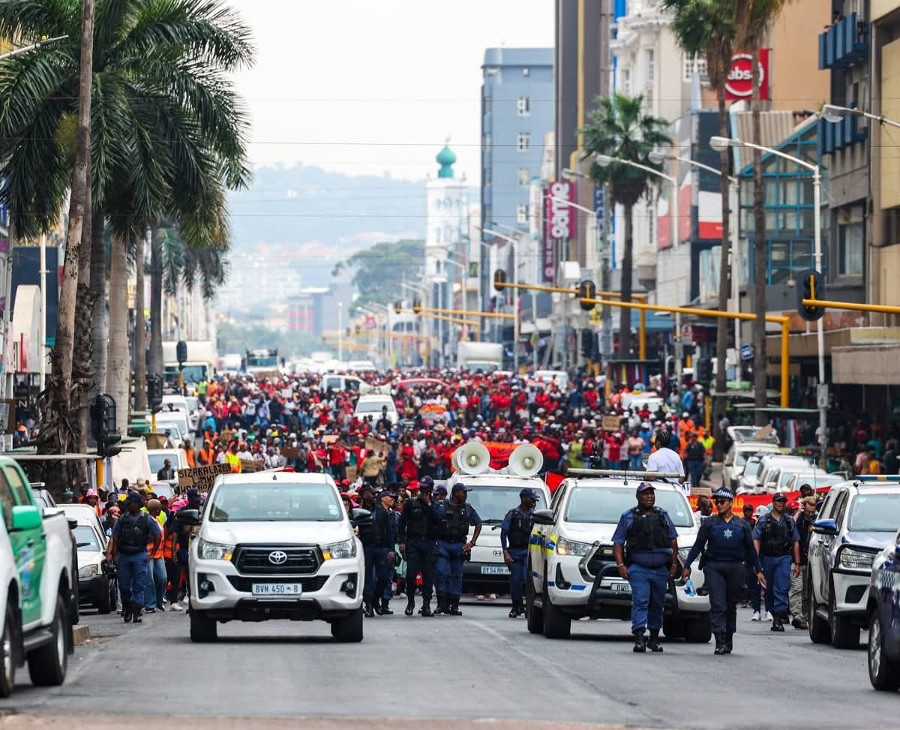
Abahlali baseMjondolo president S'bu Zikode said the proposed amendments would make it easier for authorities and private landowners to evict vulnerable communities while imposing severe penalties on those supporting land occupations and community-led land reform initiatives.
"If passed, this Bill would criminalise poverty and the self-organisation of impoverished individuals. It would make it easier to evict people into homelessness while exposing activists, community leaders and movements to imprisonment and fines of up to R1 million," Zikode said.
The movement argues that the proposed legislation undermines constitutional protections secured after the end of apartheid and rolls back gains achieved through decades of struggle by poor and landless communities.
AbM said it had spent months consulting residents in shack settlements and rural communities across several provinces, holding meetings and assemblies to discuss the implications of the Bill and mobilise opposition.
The organisation drew parallels between the proposed legislation and historical laws that enforced racial exclusion and land dispossession, including the Native Land Act of 1913 and apartheid-era Group Areas legislation.
"The PIE Amendment Bill is a new chapter in a long history of laws designed to exclude African people from access to land and cities," the movement said in a statement.
The proposed amendments have sparked growing concern among housing activists, who argue that the legislation could weaken protections currently available to unlawful occupiers facing eviction.
Human Settlements Minister Thembi Simelane has previously defended the need for amendments, saying they would create greater certainty regarding land occupation and contribute to a more stable environment for investment and economic growth.
However, the movement maintains that the Bill prioritises property interests over human rights and fails to address the country's deepening housing crisis.
Abahlali said South Africa continues to face severe socio-economic challenges, including high unemployment, widespread hunger, rising inequality and an escalating housing shortage. Informal settlements have expanded in many urban centres as families struggle to access affordable housing and land.
The movement warned that attempts to address these challenges through tougher eviction measures would only deepen social tensions.
"We refuse to have our aspirations for land and dignity criminalised," the organisation said. "We are the people of this land and we will continue the struggle for a society where everyone can live with dignity and security."
Abahlalo indicated that should Parliament approve the legislation, it is prepared to challenge the Bill in court, including approaching the Constitutional Court on constitutional grounds.
https://iol.co.za/mercury/news/2026-06-12-protests-erupt-against-the-pie-amendment-bill-across-south-africa/?
Back
|
|

|
Thanks for visting the G20 From Below Website. If you want something published here or other enquiries mailto:Brics-from-below@protonmail.com
Please Visit the BRICs from below website. The BRICs from below website was established in 2016 to news and analysis on worker and community protests in the BRICS countries and against the activities of BRICS based multinationals especially in Africa. The G20From Below website was set up in to 2025 to extened this work to the G20 countries.

Introducing BRICS from above, BRICS from the middle and BRICS from below
BRICS FROM ABOVE
Heads of state, Business Forum, elite allies
*BRICS as anti-imperialist (ANC & Pretoria rhetoric – “Talk Left, Walk Right”, e.g. national-liberation tradition, foreign ministry on global geopolitics, finance minister on IMF reform, sports minister on FIFA)
*BRICS as sub-imperialist (Pretoria relegitimising world capitalism, lubricating neoliberalism in - and exploiting - Africa, intensifying class war against SA’s poor/workers/women/nature on behalf of global/local capital, ensuring maximum greenhouse gas emissions alongside BASIC/US no matter local/continental/global consequences, and playing “deputy sheriff” role to imperialism)
*BRICS as inter-imperialist (Pretoria's potential support for a new internet delinked from US, promotion of Putin v Obama in September 2013 at G20, and mainly backing Russia in Crimea/Ukraine conflict - as well as earlier episodes where SA lined up with China in UN e.g. in relation to Burma)
BRICS FROM THE MIDDLE
Academic Forum, trade unions, NGOs
BRICS advocates (most of Academic Forum, Johannesburg & Pretoria “think tanks” and others who suffer persistent “failure of analytical nerve”)
*wait-and-see (most NGOs and trade unions - as well as “Third Worldist” intellectuals - who wish for BRICS to become “anti-impi” at UN, Bretton Woods Institutions, Development Bank, Contingent Reserve Arrangement, etc)
*critics (those associated with brics-from-below network who consider BRICS to be “sub-impis” and sometimes also “inter-impis”)
BRICS FROM BELOW
Grassroots activists whose visions run local to global
*localist (stuck within local or sectoral silos, including myriad “popcorn protests” - even some against BRICS corporations or projects - that are insurgent, unstrategic, momentary, at constant risk of becoming xenophobic, and prone to populist demagoguery)
*nationally-bound (most activists who are vaguely aware of - and hostile to - BRICS yet so overwhelmed by local, national and sectoral battles, they fail to link across borders - even BRICS hinterlands)
*solidaristic-internationalist (“global justice movement” allies aspiring for joint campaigning against common BRICS enemies such as Vale, China Development Bank, DBSA, Transnet/mega-shipping, fossil fuel corporations and other polluters, coming BRICS Development Bank)
JEALOUS PRO-WEST CAPITALISTS
Most white organic intellectuals of capital connected to Old Money, multinational-corporate branch plants, Business Day, northern-centric big biz, Democratic Alliance and their ilk.
|