 |
|  |


|
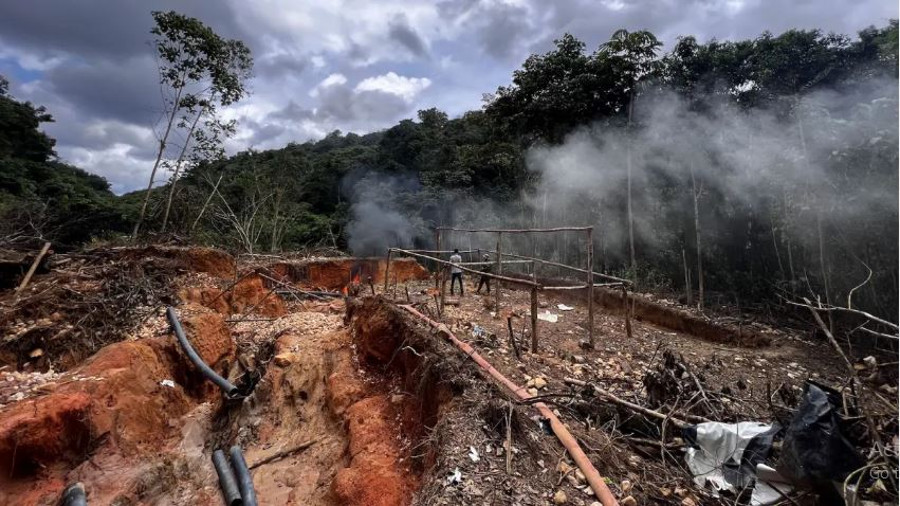
Trump threatens Brazil tariffs over deforestation To be sure, Trump hasn’t changed his mind about climate change, though his sudden concern over deforestation is still ironic. Instead, the U.S. Trade Representative (USTR) announced a wave of new tariffs on dozens of major U.S. trading partners under Section 301 of the 1974 Trade Act, alleging they failed to enforce bans on imports made with forced labor. The levies included an additional 12.5% import tax on Brazil, which was accused of six practices that unlawfully limit U.S. trade, including unfair and preferential tariffs, ethanol market barriers, as well as illegal deforestation. Illegal logging and land-clearing often rely on uncompensated labor, and the products that come from deforestation practices may have artificially low costs as a result of unfair labor practices, which undermine competition. The USTR’s investigation alleges Brazil violated its environmental laws, but does not explicitly mention climate change. The new duties under Section 301 come after the Supreme Court struck down tariffs imposed under the International Emergency Economic Powers Act. As the Trump administration looks for other ways to preserve the cornerstone of its trade policy, it imposed tariffs under Section 122, which allow temporary levies of up to 15%. Those 150-day tariffs will expire on July 24, raising the stakes for Section 301 tariffs to stick. “He’s running out of options,” Georgetown University government professor Marc Busch, an international trade policy and law expert, told Fortune. Trump’s tariff tensions However, Trump’s tariff policy has been largely unpopular with both U.S. companies and households. As tens of thousands of importers pursue refunds to recoup costs from more than a year of import taxes, Americans are growing increasingly skeptical of Trump’s affordability message. Busch noted that Democrats have consistently pushed against deforestation and suggested that as tariffs remain unpopular, framing them around ethical issues favored by left-leaning politicians could give them a boost, especially ahead of midterm elections. “The big question is, when is Trump satiated, and with what goal in mind?” he said. “And does this impact the narrative about affordability heading into the midterms?” To Busch, the USTR’s investigation into Brazil under Section 301 is discredited by Trump’s cooling trade relationship with Brazil. Last year, Trump imposed a 50% tariff on Brazil in response to its prosecution of former president and Trump ally Jair Bolsonaro, while the new president, Luiz Inácio Lula da Silva, has pushed back on Section 301 investigations. “Don’t read too much into it. See, this isn’t serious,” Busch said. “It’s just your standard kitchen-sink approach: You throw everything at Brazil because Trump is upset with Brazil, and you see what sticks. And you hope that what sticks gives you somewhere between a 10% and a 20% tariff as a remedy.” USTR did not respond to Fortune’s request for comment. America’s deforestation flip-flop There’s an added layer of irony to the Trump administration admonishing Brazil over deforestation in particular, Busch explained. The U.S. has been a staunch opponent of the European Union Deforestation Regulation (EUDR), which requires companies to prove that certain commodities, such as soy and wood, do not originate from land that has been deforested. The U.S. and more than a dozen other countries—including Brazil—have argued these metrics are difficult to measure, and audits are expensive. The EUDR has also effectively priced Brazil out of the European soy market because so many farmers can’t afford the audits. By accusing Brazil of illegal deforestation, the U.S. is not just contradicting its own stance calling out deforestation regulation, it’s also emulating a policy it has historically opposed, Busch pointed out. “You’re doing this to protect your market from certain imports,” he said. “And ironically, now the U.S. takes a page from the EUDR playbook and castigates Brazil for more or less the same thing.” https://fortune.com/2026/06/08/trump-climate-change-denial-brazil-tariffs-amazon-deforestation-section-301/? Back |
|
||||||
Thanks for visting the G20 From Below Website. If you want something published here or other enquiries Brics-from-below@protonmail.com
|
|||||||