 |
|  |

|
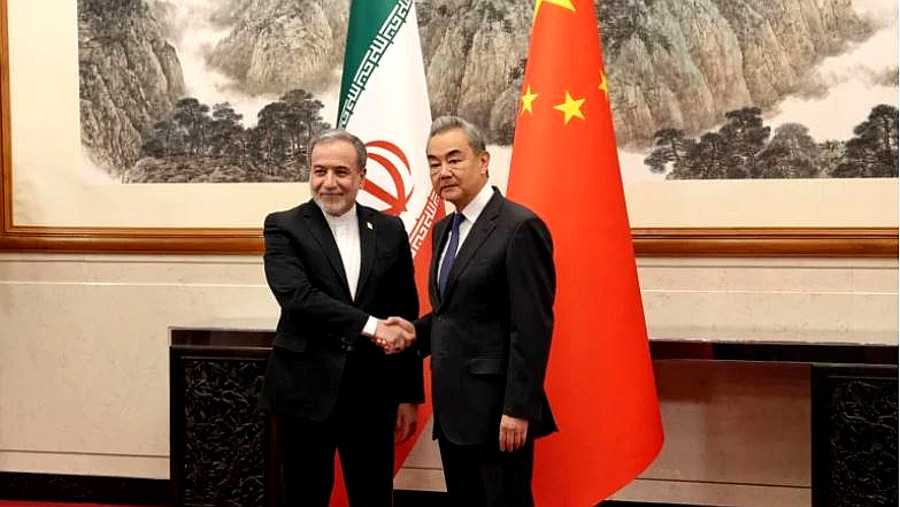
Araqchi's trip to Beijing: China's double game in the Strait of Hormuz The diplomatic developments come as the United States pressures China to persuade Iran to reopen the Strait of Hormuz. China, the largest buyer of Iranian oil, is concerned about energy disruption and used the trip for crisis management and coordination ahead of the Trump-Xi summit. Given that China is the largest buyer of Iranian crude oil and about 20 percent of its oil imports pass through the Strait of Hormuz, any disruption or even the threat of disruption in this waterway could directly affect global energy prices, Iran’s foreign exchange earnings, and Beijing’s economic stability. Trump’s temporary suspension of the “Freedom Project” is a positive signal, but the naval blockade continues and the draft Security Council resolution also puts heavy diplomatic pressure on Iran. We spoke with energy expert Masoud Delbari about the technical, economic, and strategic aspects of Araqchi’s trip. Iranian Foreign Minister Abbas Araqchi's visit to Beijing on May 5 and 6, corresponding to May 5 and 6, took place at a time when the United States announced that the military phase of Operation Epic Fury had ended and Donald Trump had briefly suspended Operation Project Freedom in the Strait of Hormuz. The trip — Araqchi’s first meeting with Wang Yi since the February clashes — came less than a week before Trump and Xi Jinping met, during which Wang Yi stressed the need for a comprehensive ceasefire. Meanwhile, the United States and Bahrain, supported by Saudi Arabia, the United Arab Emirates, Qatar and Kuwait, have introduced a new draft resolution in the Security Council that calls for an immediate end to Iran’s attacks, minelaying and toll collection in the Strait of Hormuz, disclosure of the location of the mines and cooperation to clear the waterway. The resolution is a modified version of an earlier draft that was vetoed by Russia and China. China, the largest buyer of Iranian oil and a country that receives 20 percent of its oil imports through the Strait of Hormuz, is very concerned about disruptions to this vital waterway. The temporary suspension of the Azadi project is a positive signal, but the US naval blockade continues. We spoke with energy expert Masoud Delbari about the impact of these developments on the oil market, Iran’s exports to China, and the stability of global energy prices. Iranian oil exports to China: Short-term opportunity? Referring to the importance of Iran-China energy relations, Masoud Delbari said that China is the largest buyer of Iranian oil and this relationship can be considered a strategic-semi-commercial partnership. He added that about 15 percent of China's imported oil comes from Iran and that Beijing does not have direct access to oil outside of US control in the Middle East and the Persian Gulf countries except through Iran and Russia. Delbari noted that since the beginning of the crisis, oil exports to China have been facilitated, and Iran's oil minister has confirmed this, but these facilities have been limited and largely covert. He outlined three possible scenarios, explaining that the first scenario is a short-term opportunity. According to him, the temporary halt to US operations has created a small window for Iran, and independent Chinese refiners (TIPOs) were looking for urgent shipments of Iranian oil even before the ceasefire, and the demand is still there. Delbari considered the second scenario to be structural constraints, stressing that the main problem is not the Strait of Hormuz, but the blockade of ports. He pointed to statements by shipping company Hapag-Lloyd that it still considers passage through the Strait of Hormuz possible, but that insurance and shipping companies are waiting for clarity on the situation. According to the energy expert, the third scenario is the yuan mechanism. He said Araqchi's visit to Beijing was likely to consolidate this mechanism, as the Chinese government has issued an order not to recognize US sanctions against Chinese refineries that buy Iranian oil. Delbari assessed this action as a sign of Beijing's creation of a parallel payment and trading system. Delbari went on to warn that despite these developments, the risk of disruption remains high. He listed his reasons as follows: the Strait of Hormuz has been effectively semi-closed since late February, Iran sees the Azadi operation as its policy of minimum pressure, and President Pezizkian has also considered it impossible to give in to unilateral US demands. In addition, the US sanctions on forty Chinese shipping companies and tankers have put direct pressure on oil transport channels to China. In the final analysis, Massoud Delbari emphasized that this situation is only a pause and a limited opportunity, not a fundamental change. According to him, for a sustainable revival of oil exports to China, three factors must be realized simultaneously: the actual opening of the Strait of Hormuz, the complete cessation of US operations, the lifting of the blockade of ports, and the institutionalization of the yuan system or the lifting of sanctions on Chinese refineries. He added that China has been severely affected by the crisis and considers the opening of Hormuz essential for its economy, and this need was the main reason for Araqchi's trip to Beijing. Delbari predicted that if the negotiations through Pakistan are fruitful, oil exports could gradually recover, but the risk of disruption will remain high until there is a fundamental change in the US maritime blockade policy. China's Role in the Strait of Hormuz Crisis: A Strategic Trader? Massoud Delbari went on to say that Trump is betting that the Chinese president needs the Strait of Hormuz to remain open, and in return, Xi Jinping is betting that Trump is willing to make real concessions to reach an agreement. In his opinion, this is exactly the scene we are witnessing now. Delbari added that the Trump-Xi Jinping meeting is scheduled for the 14th and 15th of this month (next week), and the issue of Iran is at the center of the meeting. Referring to the Chinese perspective, he said that an advisor to the Chinese Foreign Ministry emphasized that the current situation is in China's favor, because Iran has not been defeated in this war and still maintains its strategic leverage, and China also has its real leverage. The energy expert explained that before the war, about a third of China’s oil imports passed through the Strait of Hormuz. He added that even conservative estimates at the height of the crisis showed that about 13 million barrels per day of global supply had been affected, forcing China to tap its strategic reserves. The World Bank had also predicted that energy prices would rise by about 24 percent and transportation costs by 31 percent by 2026, leading to global inflation, slowing economic growth and putting direct pressure on China’s economy as the world’s largest manufacturing powerhouse. Delbari saw the most optimistic scenario as China using its economic influence over Iran to pressure Tehran into a nuclear deal and reopen the Strait of Hormuz. In return, China expects the United States to reduce trade tariffs, recognize the China-Iran oil pipelines, and, most importantly, establish a long-term, stable relationship with Washington around which to shape its foreign policy. He warned that for Iran, this situation is both an opportunity and a trap. On the one hand, Beijing is defending Chinese refineries against US sanctions and keeping the oil purchase channel open, but on the other hand, the closer China gets to a deal with Trump, the more pressure it will put on Iran to give in, because China cannot support Iran and reach a grand deal with the US at the same time. Delbari listed three key variables for Iran's foreign exchange earnings: price (Iranian oil is sold at a steep discount and at an unfavorable yuan exchange rate), volume (constraints due to the blockade of ports), and risk (the possibility of complete closure of the channels with any escalation of tensions). He concluded by emphasizing that China is pursuing a dual policy: it has refrained from directly criticizing Trump so as not to muddy the waters, while at the same time taking advantage of the Hormuz crisis to accelerate its energy transition. Delbari concludes that China is neither a real mediator nor an enemy of Iran, but a strategic bargainer. If the Trump-Xi summit produces a comprehensive agreement, Iran will likely have to accept tough terms in the nuclear talks because China is negotiating for its own greater interests, not Tehran’s. He sees the summit as a pivotal event on the 2026 diplomatic calendar that will determine oil prices, the fate of the ceasefire, and the formation of the next world order. https://www.radiozamaneh.com/888327 Back |
|
||||||
|
|||||||