 |
|  |

|
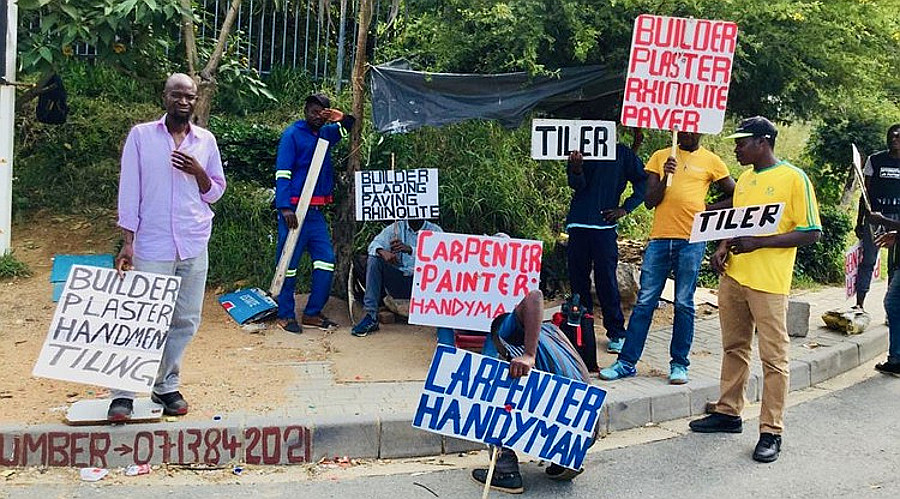
Mass unemployment by design The booklet produced by News24 and displayed at the conference notes how “rising unemployment and inequality lead to social instability, political radicalisation and criminality” and that, even though the state “lacks funds to create millions of jobs”, it holds valuable assets (physical and regulatory) that can help unlock them. The problem with this framing is that unemployment is reduced to a threat to the elite establishment, rather than a denial of dignity to millions of people. It also assumes, at face value, that the state should not invest in this problem directly, but rather that state assets should be unlocked for private capture of a special kind. There were some panels with useful insights, but the headlines emerging from the sessions were carefully crafted around claiming consensus for a particular narrative: BEE needs to be reworked; the unemployment problem will be solved if we remove corruption (in government); the country needs to put economics before politics; and removing taxes on capital and softening labour laws will lead to growth. 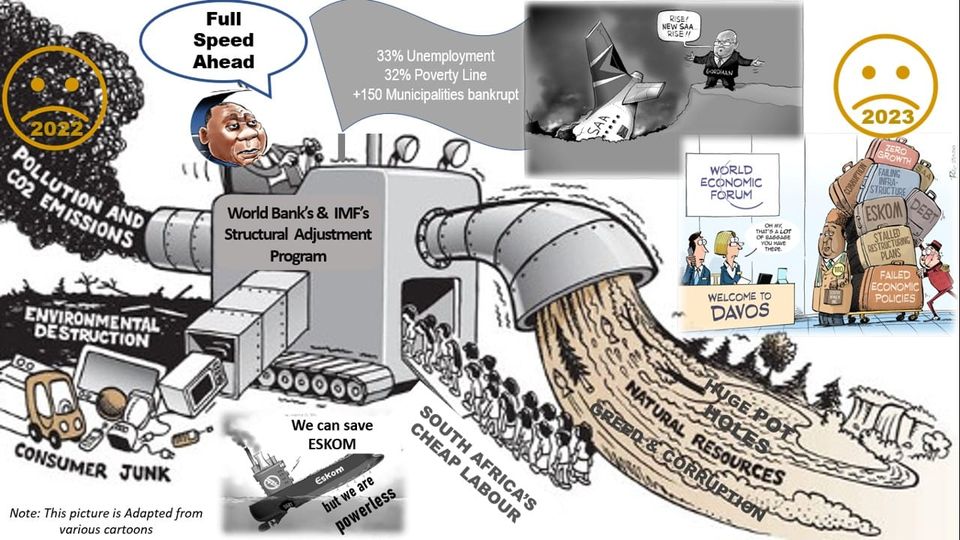
We have lived this experiment. For thirty years, the pro-business consensus has insisted, with varying degrees of government support, that the path to growth lies in shrinking the state, deregulating the economy, and waiting for the elixir of investor confidence to materialise. Operation Vulindlela, the government’s flagship growth initiative for clearing the path to the private sector, was lauded at the conference – unlocking, we are told, R500 billion in investment. Yet, despite massive investment, the needle on unemployment moved at an imperceptible pace from 42,6% in 2020 to 42,2% in 2025. If this is the road to ‘inclusive growth’, it is an admission that the growth plan is incapable of producing employment rates that define functional democracies. There was significant emphasis on corruption as an impediment to employment creation. It is true that it harms job creation, but it does not cause the high levels of joblessness. Corruption should be rooted out, but treating it as the cause of unemployment is a misdiagnosis and distraction. Inequality not even mentioned During one session at the conference, the panellists were asked to pick from a list the biggest constraints on economic growth in the country. Inequality was not listed, nor did it rank. When two-thirds of the population lives below the poverty line, the demand for goods and services is diminished. Yet the prevailing model remains uncontested: produce for export to high-income consumers in Europe, while consuming imports of goods at inflated prices we no longer manufacture ourselves. That such a framework could pass unchallenged at a conference on unemployment, opened by the President and convened by the media establishment, reveals it as a masterclass in intellectual and political insularity. Here was a gathering ostensibly dedicated to the most urgent crisis facing the nation, yet it proved incapable of even naming the structural inequality that sustains it. Not a single South African labour economist was listed among the speakers. Most glaring of all, the people this event claimed to serve, the millions of unemployed citizens, were not present. There was no room for debate or genuine interrogation; only an audience scattered with organised labour leaders sitting through curated takeaways, pre-approved and coordinated by the Naspers establishment. The role that the government plays as the single largest employer was actively hushed. Austerity, budget cuts, and tight monetary policy have undermined employment growth. President Ramaphosa spoke about the need to interrogate the problem of unemployment through a historical lens, but addressing distorted levels of ownership and genuine wealth distribution never materialised. Additionally, the President mentioned that 2.5 million job opportunities have been created since the implementation of the Presidential Employment Stimulus, but a closer interrogation reveals that funding for these programmes has been drastically slashed. 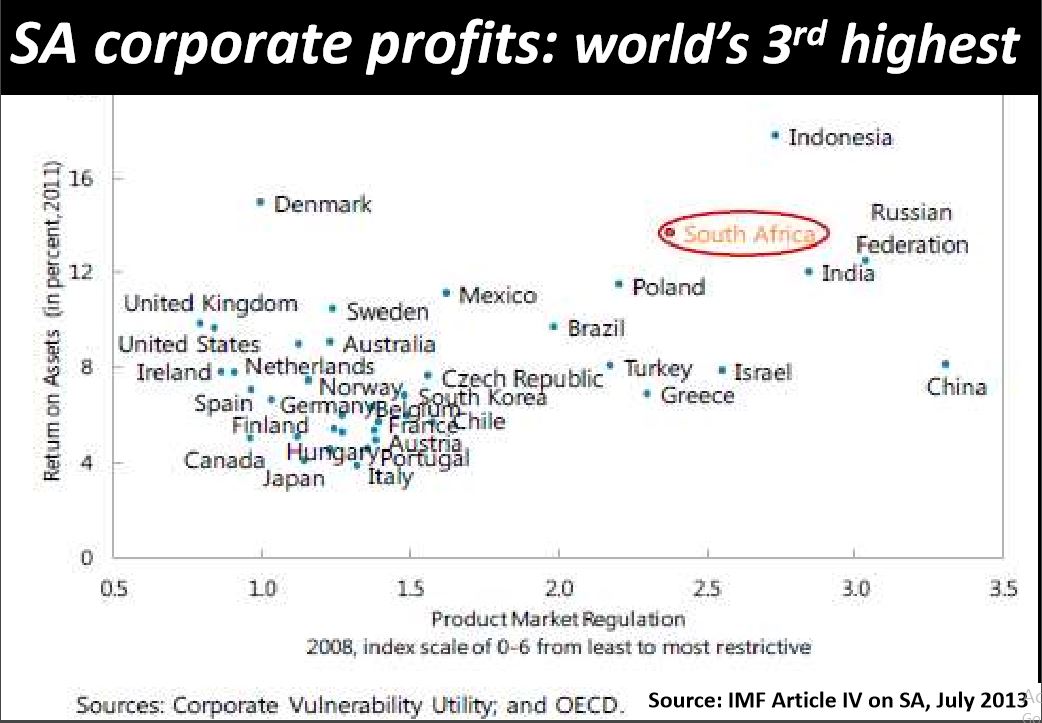
Meanwhile, corporates are hoarding R1,8 trillion of cash – idle capital that could be deployed towards job creation. Instead, the same investment strike that was supposed to vanish under the Government of National Unity (GNU) continues to squander inclusive growth. For more than a century, the economic establishment has conditioned itself to view the majority of people in the country as hewers of wood and drawers of water – a sensibility that resurfaces, open and unashamed, whenever debates turn to minimum or living wages. Though mining and agriculture no longer dominate the economic landscape as they once did, the holders of wealth continue to extract value through financialisation and offshore investments. The country finds itself with no industrial base to create labour-intensive jobs at scale, and many people continue to be landless without access to food and agricultural markets. Start by reversing austerity Maybe it’s okay that redistribution and the role of government as a creator of employment were not mentioned, because at least there were at least three passing references to the Springboks. The invocation of the national rugby team has become a convenient rhetorical shortcut for unity, a way to gesture at collective purpose while ignoring the redistributive work that actual unity requires. The private sector will not, on its own accord, deliver jobs at scale; nor will a jobs programme arise from a manufactured consensus crafted by the media establishment. It needs to start with rethinking the very economic architecture and orthodoxy that have failed to create jobs. There is a role for the private sector, but the continued investment strike has shown that shifting the mindset to investments in labour-intensive sectors needs to be more intentional. This can be achieved through prioritising investments of the Public Investment Corporation in companies that grow employment rather than industries that have shifted to financialisation. Public sector vacancies should be filled, austerity should be reversed, and the collective wealth and capital of the country should be directed into labour-intensive industries to build an industrial base at scale that meets people’s needs. https://www.amandla.org.za/mass-unemployment-by-design-rethinking-south-africas-manufactured-economic-consensus/? Back Aliya Chikte is the Economic Justice Project Officer at the Alternative Information and Development Centre (AIDC). Keywords: Corruption | Cyril Ramaphosa | Duma Gqubule | Government of National Unity (GNU) | naspers | Neil Coleman | News24 | Operation Vulindlela | Presidential Employment Stimulus | Public Investment Corporation | South Africa | Springboks | Unemployment |
|
||||||
|
|||||||