 |
|  |

|
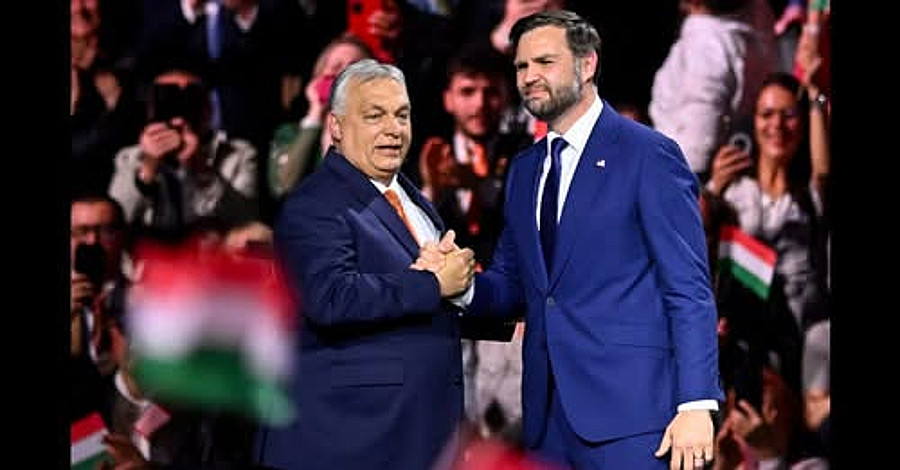
Hungary masses express hatred for Orbán A driving factor behind this result was the role of the youth. Polls carried out before the vote suggested that only 8 percent of voters between the ages of 18-29 backed Orbán, and only 22 percent of those aged 18-39. There are anecdotes of young people hiding their parents’ voting IDs, so that they could not potentially vote for Fidesz, and of young people telling the media that should Fidesz secure another term, they would leave the country. And the celebrations have not stopped at the borders of Hungary. Magyar’s victory has been praised across Europe as a resounding win for the forces of liberalism over right-wing populism, with Britain’s Keir Starmer heralding it as a “historic moment, not only for Hungary, but for European democracy”, and the EU’s von der Leyen saying that “A country returns to its European path. The Union grows stronger.” But beneath the surface of this seeming sea change, lies a very different story. What has electrified the nation, and led voters to turn out in record numbers, is not their deep love for Magyar, but their deep hatred for Orbán and Fidesz. It was not a question of voting for Magyar, but rather one of voting against Orbán. How has Viktor Orbán gone from winning record-breaking vote shares, to being electorally crushed, in the space of just four years? Economic decline For a period, Orbán was able to balance himself between the EU and Russia, with relative success. Hungary benefitted from both EU subsidies in the tens of billions, as well as cheap Russian oil and gas, alongside Russian investment. For example, Russia invested €10 billion into the Paks II Nuclear Project. But this merely masked deeper issues for the Hungarian economy. As the world economy spiralled deeper into crisis, and events like the war in Ukraine poured further fuel on the fire, the Hungarian economy began to stagnate. Hungary has some of the highest cumulative inflation since 2020 in the EU; prices in Hungary have increased by 57 percent in the past six years, almost twice the average EU rate of 28 percent. A keystone of Orbán’s programme has been to strengthen the native Hungarian capitalist class, through heavy state intervention, and handing control of state industries to allies of the government. These efforts have borne little fruit. In a nationalistic bid to reduce Hungary’s need for migrant labour, Orbán sought to drive up fertility rates. Through tax breaks and interest-free loans, the Hungarian government has spent around 5 percent of its GDP on this endeavour… and it has totally failed. In 2011, the fertility rate was 1.6 births per woman, in 2025 it was 1.3. These low fertility rates, combined with Orbán’s crackdown on immigration, has led the population of Hungary to fall by 500,000 people since 2011. This has only further compounded its economic woes, with a significant shrinking of the working-age population. Over the past decade, Hungary’s healthcare system has also experienced a decline. Over 8,500 doctors have left the country over the last ten years, in search of better wages and working conditions, to the point where Hungary has just 3.5 doctors per 1,000 inhabitants, below average for the EU. In the field of education, it is a similar story. Over the last decade, there has been a sharp decline in the number of teachers in the country, stemming from lower numbers of applicants, and existing teachers leaving the country. The number of applicants to teaching-related degrees has halved since 2022, and pedagogical university courses have a dropout rate of up to 50 percent. And finally there is the question of corruption. Orbán’s government won the title of being the most corrupt member of the EU four years in a row. This is particularly prevalent in the field of public procurement, in which government contracts have consistently been handed to those very close to Orbán’s inner circle. Whilst the economy was growing, and life on the whole was generally improving, many in Hungary were happy to look the other way. But as the cost of living began to rise, wages began to stagnate, and living conditions generally became worse, discontent towards Orbán swelled. It is no surprise that the pent up anger at the system has been particularly strong amongst the youth. For somebody who is around the age of 18, the government of Viktor Orbán is all you have ever known. Being educated in schools with insufficient staff, watching your parents struggle to make ends meet, in a country where infrastructure is crumbling, and watching state officials get fat off of public money in the meantime, cannot help but stir up a deep feeling of rage in the minds of the youth. Enter: Magyar This is the backdrop in which Péter Magyar and the new party Tisza rose to prominence. Magyar was a member – and at one point government minister – of Fidesz for most of his life. In 2024, there was a scandal surrounding the government giving a pardon to the deputy-director of the Kossuth Zsuzsa Children’s Home, who had been covering up sexual abuse there. This hit particularly close to home, considering that a consistent theme in Fidesz’s political material is that it is the only party that can protect the children, and foster ‘Christian values’. Sensing an opportunity, Magyar left Fidesz and embarked on a long campaign across the country, rallying against corruption. Ever since its ‘refounding’ in 2024, with Magyar at the top, Tisza has acted as a focal point for much of the accumulated anger against Fidesz. How has Magyar managed to win the hearts and minds of the Hungarian electorate? By performing the simple trick of not being Viktor Orbán. Tisza has also very deliberately kept its name from association with any other political parties, as it is not just Fidesz that is discredited, but the whole lot of them. Magyar is seen by many as a ‘dark horse’, he is relatively new to the political limelight, and not much is known about where he stands. Many are also sceptical about his long stint as a Fidesz insider. The consensus amongst many voters is that, whilst not being fans of Magyar either, their hatred of Orbán after 16 years of rule was enough to ‘hold their noses’ and vote for the ‘lesser evil’. For instance, a 26-year-old IT worker interviewed in Budapest said that: “My point of view is that we just need to get rid of this regime after sixteen years. I don't particularly like Magyar as a person. His political views don’t necessarily align with mine. But he is the best chance we have right now.” Elected with a large enough majority to change the constitution, and easily enact many of his policies, all eyes are now on Magyar to solve the problems facing the Hungarian people. But Magyar will not enjoy the conditions of relative stability and growth of his predecessor. For one, the world economy is in a much worse state than it was before, particularly with the mass instability caused by the US and Israel’s war against Iran. With the Strait of Hormuz closed, and oil prices skyrocketing as a result, inflation – which is already high in Hungary – is only going to increase. Furthermore, closer ties with the EU brings certain conditions. Hungary’s annual budget deficit is amongst the highest in the EU, reaching around 5 percent in 2026, and so there will be increased pressure from Brussels for spending cuts, in order to bring it in line with the EU standard. Hungary also imports over 80 percent of its crude oil and natural gas from Russia. Should Hungary be thrust into a position of conflict with Russia, on account of its closer standing with Europe, they would sit in a very vulnerable position. Orbán without Orbán The truth is that there is not much substance that differentiates the programme of Magyar and that of Orbán. His campaign played largely on opposition to corruption. Some have even drawn the comparison between Magyar in 2026, and Orbán himself in 2010, when he started his 16-year stint in office. Both ran fiery populist campaigns about modernising the country, and tapped into the anger of the Hungarian workers at the corruption and economic mismanagement of the outgoing government. In fact, Magyar has at times tried to outflank Fidesz to the right, once criticising Orbán for being too soft on immigration. On the question of Ukraine, for example, many articles have praised Magyar’s election as a new turning point in the Ukraine War, as Orbán has repeatedly vetoed EU assistance to Ukraine. But again, this is not the whole story. It is true that Magyar has promised to stop blocking the current €90 billion EU package to Ukraine, but he has also stated that he will continue Orbán’s policy of not offering any Hungarian money for this endeavour. Magyar also said at a press conference the day after the election that he is opposed to fast-tracking Ukraine’s EU membership, and that he could not see it happening “in the next ten years”. Furthermore, on the question of Hungary’s economic ties to Russia, whilst promising to reduce its reliance on Russian oil and gas, in the same breath Magyar stressed that “you cannot change geography”. Trump humiliated The other main question raised by this election result is the impact on the relations between the USA and Europe. Orbán has been a long-term ally of President Trump, and his right-wing populist rhetoric is often seen as the ‘precursor’ to Trump’s own MAGA movement. Orbán’s Hungary has been consistently backed by the US, despite the EU’s consternation, and accusations of ‘electoral interference’. Orbán’s vetoes of EU aid for Ukraine’s war effort have been welcomed by Trump, who wants the war to end as soon as possible. In the run-up to the 2026 election, Trump endorsed Orbán on six different occasions, and even flew in Vice President JD Vance in the final days of the campaign, to bolster Fidesz. Many report, however, that Vance’s presence actually damaged Orbán’s standing in the polls. The election result is therefore a major humiliation for Trump, who has stayed uncharacteristically quiet on the matter since Sunday. The defeat of Orbán highlights the fact that right-wing populists can ride a wave that brings them into office, but once in office, sooner or later, they lose their shine and start to be seen for what they really are. This does not bode well for Trump, who is also past his peak of popularity. For Trump, to look at Orbán is like looking in a mirror, and seeing himself in the not too distant future. And the same applies for all the other right-wing populists across Europe, from Farage in the UK, to the AfD in Germany, and many more. Where is the left? A question that arises looking at the result – in which a right-wing party has lost to another right-wing party – is this: where is the left? Prior to the election, the Hungarian Socialist Party (MSZP) had just ten seats in parliament, and last Sunday it didn‘t even field any candidates, in order to bolster Magyar‘s vote. The MSZP was in power for much of the 2000s, and thoroughly discredited itself in the process, overseeing attacks against the working class through austerity measures. This came to a head in 2006, when a leaked recording of the Prime Minister admitting that the government had lied about the economy to get elected, triggered the largest protest movement Hungary had seen in decades. It was against the discredited ‘socialist’ government that Orbán managed to get into power in 2010. But after 16 years, it had become evident to the bulk of the electorate that he had failed to solve any of the issues that he set out to. Magyar has inherited the same conditions as Orbán, and they are only set to worsen. Due to resting on the same capitalist system as Fidesz, Tisza is just as incapable of solving the problems facing Hungarian workers and young people. There is a deep politicisation taking place in Hungarian society, illustrated by the 80 percent turnout. Right now, the accumulated anger at the establishment has been expressed by the accidental figure of Magyar, but this is down mainly to the absence of any viable alternative on the left. In Tisza, people are expecting a full ‘regime change’, a ‘revolution’, as it has been described. They will not get this. Having come into office at a time of deep crisis of the capitalist system as a whole, Magyar will have to carry out what capital asks of him. He will be under pressure to cut public spending. Thus he will not have the resources to improve the healthcare system or the education system. He will fail to bring down inflation. He will not bring any respite for the working masses. It took 16 years for Viktor Orbán to be discredited, it will not take Magyar nearly this long. The discrediting of Orbán is the first step on the road to a deepening of class consciousness. The next period will prepare the discrediting of Magyar. Space will therefore open up on the left. The question is: what will fill that space? The only way out of the present impasse is for a genuine workers’ party to appear on the scene, one that will have at the heart of its programme the nationalisation under workers’ control of all the major economic resources of the country. Such a party needs to be built. https://marxist.com/hungary-masses-express-hatred-for-orban-but-does-magyar-have-the-answers-they-seek.htm Back |
|
||||||
|
|||||||