 |
|  |

|
The US Israel War on Iran and the Effect on Africa So South Africa's done a great deal with gold. We still have a huge amount of gold. Below me was half the world's historic gold as recently as 1970. And so gold has stayed up. I mean it was at $5,400/ounce and it went down to 4700. So as the anticipated dollar strengthening occurs, there's less demand for gold and then we'll see probably some of the pressures on the currency. We've already gone from 16 Rand to the dollar to 17. 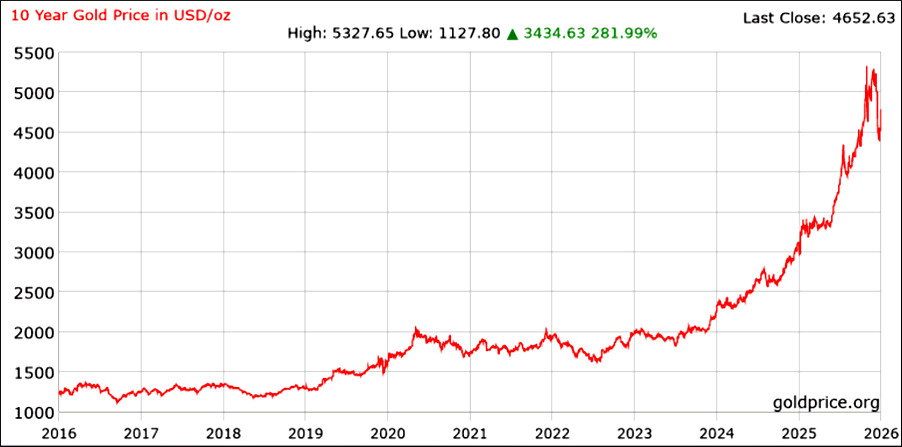
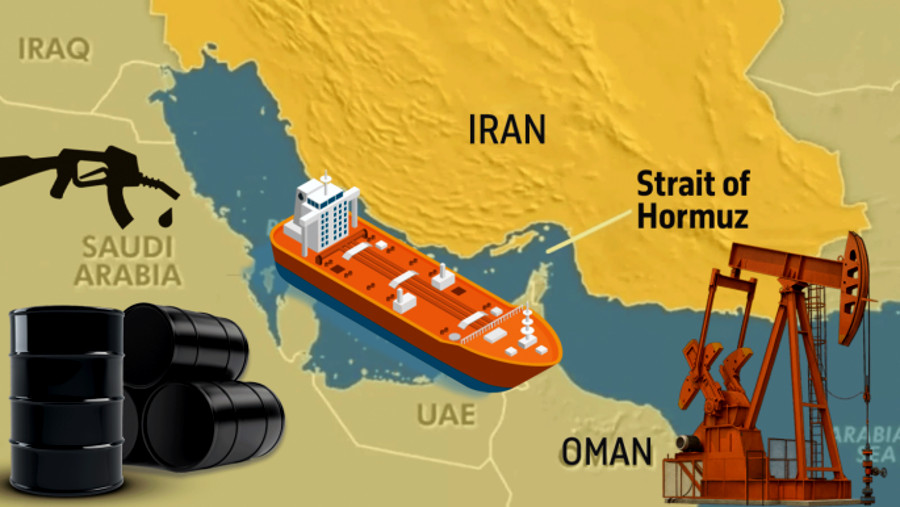
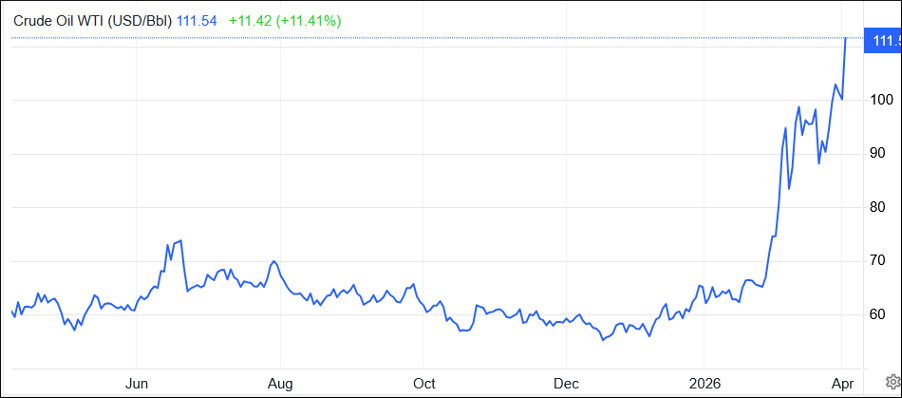
What all this means, Steve, is multiple pressures, higher interest rates, and a very flat economy. Usually, we're running about 1% growth. We have about 1.3% population growth. So, what we're really looking at here is probably some tense times. And I think the overlap of what the Chinese have done with their extraordinarily productive economy and major financial pushes from the state into manufacturing, is to swamp our clothing and textiles recently, and also steel, aluminium, the automobiles. So we're seeing massive imports that have displaced local production. And I think I'd blame Trump for that, because the Chinese did lose 20% of their market in the United States. So they're displacing that by exporting elsewhere. So that in turn has meant the trade unions who are often pro-China and pro-BRICS, they're now saying, ‘No, we need to actually strong tariffs.’ The National Union of Metal Workers are the main example. So like, say, a Shawn Fain at the UAW promoting the Trump tariffs last April, without a sense of international labor solidarity, we probably will run into the same problem here. So it's a quite a dire situation And then of course we've got the traditional support for Israel, from the big coal companies Glencore and African Rainbow Minerals. And there's a big push this week to put in legal documents to the state, and to the coal companies’ export terminal, to try to stop those. There are about four ships. They carry about 170,000 tons of coal from Richard's Bay to the two big Israeli power plants. And we get a sense that if the war continues, if Iran targets, say, the Heifa refinery or the offshore Leviathan gas field, well, Israel will need much more of the South African coal. And that's of course the big irony, the tragedy of Cyril Ramaphosa – himself a coal tycoon who was connected to Glencore – and his brother-in-law Patrice Motsepe who may well replace him as the president: there's a big move in that direction from the South African bourgeoisie and the chattering classes. Well, Glencore and African Rainbow Minerals are the main – the only, in fact – suppliers of coal to Israel, now that the Colombians have stopped. All of these, we put together, and say, there should be many opportunities in this context for us to really fight hard and raise our consciousness and build a big internationalist movement and fight the US embassy and the consulate here in Johannesburg. But we haven't really got it up and running. But I think there are some better days ahead as we begin to consolidate all of these campaigns that I've mentioned. Steve: And what is the position of the labor movement in South Africa and Africa in regard to the attack on Iran by Israel and the United States? Patrick: Well, there's a generally strong solidarity movement in principle and there have been some pretty well attended protests – 500 or so at a time – at the US consulate here and the metal workers have had, for example, a major defend-Venezuela protest. It's a bit tragic there, because of course the Venezuelan president who replaced Nicholas Maduro, Delcy Rodriguez, doesn't seem to want to have solidarity. She's happy to, for example, have the first shipment of oil that came out of Venezuela go to Israel, although it didn't ever dock there because the Haifa port was, I think, being threatened at the time. But that's one of the terrible ironies. So, of course, the next big solidaristic push here is for Cuba, because Cuba is so important to the South African, Namibian and Angolan struggles against the white South African army. The Cubans in 1988 helped the Angolans fend off white South Africa, which took quite a few casualties. There were enough deaths in white South African army fatigues, and the coffins came back here, so that the pullback in 1989 from Angola, and then Namibia getting its independence in 1990, and then South Africa's independence in 1994: we can certainly attribute to Cuba to some substantial extent and so there's an attempt to to pull some of that solidarity. But you know, these are mostly old-timers who will do this, people like myself, who really can remember the incredible importance of Cuba. I think those are going to be the terrains of solidarity, but we can't do much more than protest at the US consulate. We haven't been able to put pressure on the South African government sufficiently, who are themselves quite frightened by the United States, for example, to do more to help Iran defend itself. And of course, then, there's the other ambivalence, which is that the Iranian government's own attacks on its own protesters as recently as January, with thousands killed, also make people on the left rather wary. The unions are in and out of this, but they're suffering their own crises and those include de-industrialization. NUMSA, the metal workers going down from about 350,000 to 280,000 members at present. Quite substantial hits to the industrial workforce and most of the unions are really just staggering around, quite punch-drunk. Steve: And one of the effects of immigration to the United States that Trump has made, this fascist, racist president, is to bring in Afrikaners. I think everyone else from Africa, blacks and brown people are being excluded, but Afrikaners have been given a welcome. And I understand that some of them recently have returned to South Africa, unhappy with their environment for them in the United States. Patrick: Yes, don't forget their enormous privileges over the years. Even though there have been some working-class Afrikaners who've lost some of those privileges and many of course who are state apparatchiks, they no longer can have civil service jobs as easily. But Afrikaners – and especially English-speaking whites of course, traditionally, about 3 million Afrikaners, 2 million English speaking whites – some of them have taken the gap, and we don't really know how many there are, because they leave without saying. But let's say it's even 4 million instead of 5 million, the whites are still very much at the commanding heights of the economy and even the middle-class whites have servants and swimming pools. So I think one of the crucial things, is that this attempt to paint Afrikaners as being subject to genocide simply hasn't caught on. And only a few hundred actually went, and I think many of them as you say are having troubles. And it's to your point that the rest of the continent – black Africans, especially from countries like Senegal which won the African Cup of Nations, with a controversy with Morocco about who actually holds that cup right now – but they can't send their citizens to the U.S. to celebrate the Senegalese playing in the World Cup and to cheer, because they have to pay a $15,000 bond that is a down payment to the U.S. embassy, to say, ‘hey, we are coming back and the $15,000 is our proof that we'll be coming back.’ So it's an extraordinary set of pure racist techniques from Marco Rubio and the immigration authorities to say we don't want black Africans but those white Afrikaners who've had all the advantages during apartheid, and are by no means suffering any kind of genocide, well they're still welcome. They were, I think, attempting to get about 53,000. I think that was the number that I saw as to the potential Afrikaner refugee status, being given green cards. But I think it'll be in the hundreds, probably, by the time the dust shakes out there. Steve: And the future of of Africa and South Africa, if this war continues, and it is a quagmire: the United States thought it would be a quick war, in and out, and they'd overthrow the regime. If this war continues, the inflation rises internationally and the oil continues to be shut down in the Strait of Hormuz, what would be the effect on Africa? Patrick: Well, the most important effect for the continent is again on food and fertilizers. The food prices already going up, with the gas prices going up. And actually availability problems because on the east side, most of the oil would be coming from the Persian Gulf, but South Africa has a fair bit of oil coming from Nigeria and Angola on the west side. So that's not affected. And then I think defaults, we'll see as we did in 2020 to 2023, as interest rates rose especially when the Fed put them up in 2022. We saw the likes of Ethiopia and Ghana and Zambia declare bankruptcy, as they couldn't pay their foreign loans. And that's inevitable. You know, the G20 was held here last November in Johannesburg. And it was meant to have, as a major measurement of it success, the cancellation of African debt. If you recall back in 2020 when COVID hit then there was a very very strong hit to the finances of African countries. And then there was a sort of delay on debt payments. That ran out and there's been no subsequent successes. What we can say after the G20 last November is that South Africa's chair position actually led to a failure, because they put in charge a man – Trevor Manuel, who actually was himself in conflict of interest because the institutions he works for, like Rothschild's Bank, also had high levels of portfolio debt – and so Cyril Ramaphosa, the president, got somebody comfortable, a former finance minister from the elite classes. And they, of course, didn't really do anything at all about the African debt. So more bankruptcies, more suffering. African states are really getting hollowed out. And in turn, I think Steve, like we saw for the last half of last year: Kenya again in 2025 from June-July, again Gen-Z rises up with big protests. Then we saw it move to Zambia, against a neoliberal president and then Tunisia where the trade unions were leaders. Then it moved over to Morocco and then Madagascar. In the Madagascar case an actual overthrow of a government. And then earlier this year Tanzania. So these uprisings of protesters – mainly youth, and they really have little to lose, in spite of intense repression, especially the Tanzanian government killing thousands earlier this year. We probably will see a fair bit more of these so-called IMF riots where the IMF basically says, ‘get rid of the subsidies,’ or there's just no more money left in the fiscus to pay for basic state services. What I hope from that, Steve, will emerge – and we're trying to engage with leaders of movements from around the world from our University of Johannesburg Center for Social Change – would be some lessons. How do you take IMF Riots – that anger at having austerity – and make movements out of them. I think the most successful would have been the Brazilians in the 1980s and when those debt crises occurred and then you get CUT, the big trade union federation. You get the Movement of Landless Workers. You get community movements and social movements. And unfortunately, in most of the African continent, those IMF riots have had a sort of popcorn feature. They pop up and then they fall back without much left over. And I think that's going to be the challenge in the period ahead: to make sure that as African uprisings occur, that they better link up and that they have – like the Kenyans showed us really in June of 2024 – that you can also link the problems. You're not just after your bad president, but you see the president's following IMF orders from Washington. And then you protest at the IMF. And those are the sorts of connectivities that I'm hoping organized labor will begin to also chime in on, because at this stage when you've got an uprising in Africa – with the exception, as I say, of Tunisia and of course Egypt, back in the Arab Spring, the North African uprisings with those exceptions – labor has been a little bit more like a labor aristocracy: sitting around and not actually getting involved in the protests. It's hard to think of African workers in a labor aristocracy situation, but sometimes they are dedicated at that stage to the ‘class snuggle’ instead of the class struggle. And our unions in South Africa are sometimes guilty of that. Steve: Well, I want to thank you very much. We've been talking with Patrick Bond. He's a professor of political economy at Johannesburg University and has been quite involved in internationalism and linking the struggle of the African working-class and people to the struggle internationally against capitalism. So, thanks for joining us on this show. Patrick: Always great to be with you. We always say at the end of our gatherings, Amandla Awethu!, power to the people. https://www.youtube.com/watch?v=OM2dM1P3pj0 Back |
|
||||||
|
|||||||