 |
|  |

|
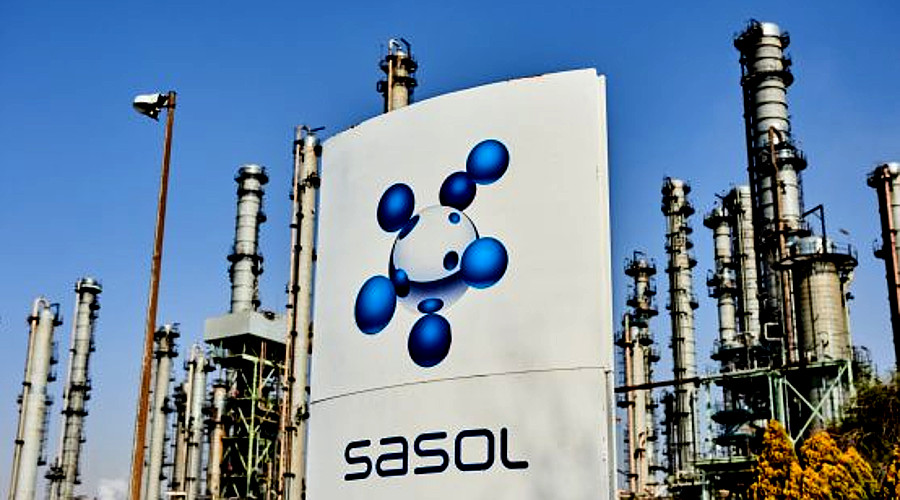
The ‘petro-dollar’ and why Africa must boost its energy refining capacity Patrick Bond is a distinguished professor of the University of Johannesburg. He joins us for this conversation. Thank you very much, Professor, for your time. Of course, this is not limited to just the economic impact, but there have been casualties. And so we must start this conversation by acknowledging the importance of that as well. But as we have this discussion today, it’s day 2 of the war. How should we understand this moment? Is there a historical parallel? Because we’re told we’ve never seen something like this before. Patrick Bond: Thanks for having me, Dudu, and greetings to all your listeners. It is an extraordinary time because of the potential for energy and financial market and more general economic dislocations. And these are, of course, added to thousands probably of deaths already per 150 and not just Ayatollah Khamenei, but the son also injured in the recent attacks. And we probably will see more retaliations in the mining of the Strait of Hormuz. And if that’s not done in a very careful and systematic way, and if Trump does try to end the war, as he’s hinting, soon, those mines could still disrupt even after hostilities have ceased. Mines in that Strait of Hormuz where about 20% of the oil comes through. So it’s strategic reserves for every country. China’s probably most immediately affected, but they seem to have first put a ban on their own export of refined oil. So they may be safe for another few days. But I think all of us will see the implications as soon as the regulatory system kicks in and puts up our own petrol prices here in South Africa. That’s the first. Then comes food, another inflation. And then, of course, interest rates typically would follow. Money Web: Let’s look at this economic dislocation and visit history, taking a particular look at the Gulf Corporation Council, namely Bahrain, Kuwait, Oman, Qatar, Saudi Arabia, and the United Arab Emirates. They have over time managed to dodge the proverbial bullet, attracting glowing reports from the likes of the IMF and the World Bank. What is their economic importance? How do they fit in the global financial system? Patrick:Well, they’ve certainly got huge financial reserves because of the decades of oil and gas extraction and the ability of a petrodollar regime to ensure that the funds that they do accumulate and that they have surpluses, then end up in U.S. dollar denominated – especially in New York – banking deposits and then other related investments. They have a huge chunk of U.S. Treasury bills. But we don’t know how durable this dollar will be. And there’s going to be a new Federal Reserve chair who’s coming in, Kevin Warsh, who’s replacing an outgoing chair and a board that had some struggles with Trump over how quickly to lower interest rates because of the coming November election. And if Trump doesn’t show some economic activity – and he’s just had a terrible jobs report of 70,000 net losses over his presidency – and if we don’t see the economy improving in the U.S., he’ll lose a huge chunk of his House of Representatives and possibly even the Senate. So both of the parts of his parliament would then change and then he’d be subject to impeachment and many, many problems he foresees. So he’s doing a lot, especially aggressive international activity. Cuba may be next. Now, the big question is whether the oil price, which has galloped up and down over $100, and then with Trump rumoring that he would make it a short war back down to the $85 range. Now, if it doesn’t actually, and you can’t count on Trump, of course, he’s probably the greatest con man in world history. And if you can’t count on him actually ending the war, as he promises soon, then this economic problem will backlash all around the world. I mean, for our purposes, it does show, again, that we should have been much more rapidly moving away from imported petrol, especially for automobiles to take advantage of our wonderful solar and wind and pumped storage facilities and actually get a large fleet of inexpensive electric cars. And we’ve failed to do that. And that’s the number one use of petrol: for transport. About 60 percent of the world’s oil goes into transport. We should be replacing that with electric vehicles. And then the second use is for energy. We certainly have had a need in the past for diesel backup, but now we have such huge surpluses of electricity because our smelters are all being outcompeted from the Chinese side. So our electricity demand at a very, very low level. I think only about two thirds of what typically was required in January because of these smelters and some of the deep mines being turned off. Even at the same time, gold is up. Platinum went up for quite a while. It’s a little bit lower now. Money Web: So it’s quite a mixed picture, isn’t it? It is. It’s a very, very mixed picture. You asked the question, and I’d like for us to look at our local context in a few moments. But you asked the question as you were laying out the foundation of how durable the dollar is. And you mentioned the petro-dollar regime. What is the petro-dollar regime? One. Number two, has it benefited the main players that we have discussed, right, in the Middle East and the United States? Or maybe the question being, whom has it benefited the most? Patrick: Well, certainly the U.S. with its dollar sovereignty, that is the ability to print dollars and to have a huge flow of funds, even though the U.S. has caused this particular crisis with the unprovoked attacks, terrible attacks on that first day, killing 165 children, something that Trump and Pete Hegseth, his defense minister – or ‘minister of war’ – they have not even acknowledged properly. And so what we’re seeing then is the dollar, again, strengthening, is what happens during many crises. What I would say is that in 73, when the OPEC oil-producing exporting cartel got together, the sort of deal that was arranged was that with all that surplus that the exporters were able to get after they pushed the oil price up very, very high in 1973, it also went up again in 1979 during the Iranian Islamic Revolution, and that in turn, again, centralized massive amounts of funds in New York that are owned by Arabs. And then they’ve been buying, particularly, the Treasury bills, especially Saudi Arabia, probably more, I think, China’s got still a little bit more, Japan as well. But in other words, they’re a huge chunk of the purchasing power. And the Treasury, the U.S. Finance Ministry, needs that in order to keep running what are now these historic debts, and especially if they’re spending more than a billion dollars a day in prosecuting this war. But I think the biggest question is whether de-dollarization will finally kick off, if people are so fed up with the United States. As his own vice president once put it, J.D. Vance, said, this is America’s Hitler, and there may be at some point a real move away from it. Everybody in the world is absolutely infuriated that Trump has started this with no plan, no clear objectives, and then the Iranians having basically one way to fight back, which is close the Strait of Hormuz. You know, they’ve also destroyed a fair bit of the U.S. military and Israeli military capacity in the radar systems. And so a lot of what’s happening there is flying blind. The west coast of that gulf, of course, having, as you say, Dubai and Qatar, Kuwait, Bahrain, and Iraq, and so many parts of that area are getting hit by Iran, and that will put maybe a permanent dent on their reputations, and certainly has done massive damage to the airline industry, which uses those three hubs, Dubai and Abu Dhabi and Doha, as major sites. The biggest airport in the world is Dubai, and it’s just been off for the last 12 days. So when you put all of this together, I think Trump really is seen as a chaotic, erratic, and unreliable leader of the western world. And maybe we’ll see, even after the dollar is strengthened, now as a hedge, but we’ll see more concerned approaches perhaps from Brazil, Russia, India, China, South Africa, although they’ve been very, you know, hesitant to do so, to have an alternative to the dollar. I must say the ability of Trump to split the BRICS is something few had anticipated to take India out. India, the Prime Minister Modi visiting Israel just before the war started, a big talk at the Knesset, the Parliament, as well as Egypt and, well, not Ethiopia, they send troops to Israel, they’re very loyal to the West in some respects, but certainly Egypt and UAE and Indonesia join the so-called Board of Peace, which is Trump’s way of end-running the UN Security Council. So I think due to the geopolitical mess and the fact that the BRICS expanded in ways that they didn’t really necessarily anticipate a sort of potential that Donald Trump would come and just split them right down the middle like this. And, of course, BRICS is being hosted by India this year, and that may mean, you know, very little gets done if, indeed, India has lurched quite decisively to Trump and to Israel. Money Web: And he has responded, Donald Trump, that is directly to the BRICS group, calling it a little group fading fast and also threatening tariffs. When we take a look at the demand for oil and coming back to our local context that you touched on a little bit earlier on, how should we understand the continent’s dependence when we have Libya, Angola, the Republic of Congo, Algeria, Nigeria, Egypt, South Sudan, among others? And according to OPEC, India, that you mentioned a few moments ago, other Asia, the Middle East and Africa are said to be the primary sources of long-term oil demand growth according to the OPEC World Oil Demand Outlook. And so how should we understand this? Well, we might also add Mozambique is a huge exporter of methane gas, that’s still partly under threat. The guerrillas of the Al-Shabaab movement in northern Mozambique, Cabo Delgado province, still having foiled Total and its $20 billion liquefied natural gas processing plant in Palma. It’s not up and running yet. Now, those are some of the major exporters. But of course, you have to say, well, who and what companies particularly are taking advantage? We have one big oil company, which was a state company, Sasol. Now it’s private. And it does produce some substantial share of our oil. I think it’s close to 20% by squeezing coal and squeezing Mozambique gas in the Secunda operation. It’s the number one point source of carbon dioxide emissions on Earth. So it’s a very inefficient way, isn’t it, to create our liquid petroleum. We ran out of our gas, out of Mossel Bay. We’ve maybe seen some potential offshore drilling, but the courts have said that that’s actually ecologically – and for Transkei residents also, spiritually – prohibited at the moment. So the Constitution Court is supposed to decide on that. But yes, I think the crucial question for all of the countries you mentioned: who’s controlling? And it is actually the majors, that is the U.S. and Western European big seven oil companies. And they probably lined up with lots of customers and are licking their lips at this very high oil price. Although some of them are going to be hurt, of course, because they’re also part of the processing of the Gulf oil. Money Web: I’m interested in what you said about them licking their lips and shaking, possibly, or like bringing their hands together and doing this movement. When you rub your hands together and you lick your lips and you see something tantalizing, because that then switches something on in my mind to ask then in the midst of all of this, right? In the midst of all of these shocks, what have been dubbed as shocks and all of this disruption to the likes of the Straits of Hormuz, the price of oil was in the triple digits yesterday. And then it came back down, as you rightfully mentioned, to the $80 mark. Who benefits from all of this disruption? Patrick:Well, it’s certainly oil companies. And I think we can go back to the last time this happened, when Vladimir Putin illegally invaded Ukraine and the energy markets were in chaos. And, of course, the other factor there was that the major gas supply from Russia to Europe was disrupted in an explosion of the Nord Stream pipeline. So, yes, at that point, we saw in 2022 the barrel price going up to $120. You know, some of the projections, given that this is the first time the Strait of Hormuz has been closed in this manner, that it could go to $150. That’s not necessarily unreasonable, if the war lasts and lasts. And the Iranians, I think in some ways, it’s in their interest to show that they can withstand the incredibly intense and brutal bombing of the U.S. and Israel for weeks still to come. And that would then create such havoc in the world economy that the Iranians would, I think, estimate that the pressure on the rest of the world, and especially from Saudi Arabia and UAE, these very, very loyal allies of the U.S. And they are just absolutely infuriated that not only are they getting hit militarily, but also that they just can’t get their goods out from that very narrow choke point at the Strait of Hormuz. So if we look at what happened to Africa in that earlier episode, which is maybe some sort of model, since the oil price – and our coal price jumped to $400 per ton from regularly around $100 – so there were big profits for a few companies. In our cases, that’s some of the big international firms like Glencore and South32, BHB Billiton, as well as our own Black Diamonds: African Rainbow Minerals and Exxaro and Thungela. So in some of these ways, we were seeing benefits coming back, but it really just goes to those shareholders and to a few billionaires, doesn’t it? And I think for the oil price, it’ll probably then put many of the poor African countries back into a terrible dilemma. They basically starve their citizens and of course, the impact of high oil prices means inflation, and then central banks all around the world put the interest rates up. And then what we saw last time, was African countries that had been great performers in the 2010s, like Ethiopia, Zambia and Ghana, actually going bankrupt, when these shocks hit. The prior one was, of course, COVID. So we will probably see more bankruptcies because regrettably, Dudu, as much as there was rhetoric, as much as Trevor Manuel was put in charge of dealing with the African debt, I must say our G20 last November was terribly disappointing. I think so many concessions were made to Donald Trump, even though he didn’t come. According to Ebrahim Rasool, former South African ambassador to the U.S., they basically took out all of the ambitious plans to cut African foreign debt. And African activists, the Gen Z movements have been asking for debt audits, see what part of the debt is corrupt. In our case, huge chunks for Medupi, Kusile, Transnet: all of those huge parastatal debts that were run up. You could question them, question the banks like the World Bank and BRICS Bank that made those loans, knowing that this massive corruption involved in Medupi and Kusile, the two big ones, or the locomotives from China that Transnet had gotten financing for. And actually, you have to deal with that one way or another, because right now it looks like a tsunami of terrible news: high oil prices, then high food prices, fertilizers not being available, and then interest rates following to bring down inflation. So it’s a mess in the weeks and months ahead. Money Web: To your knowledge, are there countries that have been procuring oil not using the petro-dollar tendering system? Patrick:Well, that’s the crucial question for switching away. And Saudi Arabia began that about two years ago with the petro-yuan. So that is the expectation that once the Chinese gain sufficient confidence that they don’t require a closed yuan or renminbi – the yuan and renminbi as interchangeable terms – but that is, that they have very tough capital controls, exchange controls. And those exchange controls have been extremely important for them, to control their own financial crises. You might remember about 10 years ago, early 2016, they were having fairly periodic and deep runs on their stock market and loss of capital flight. So they really tightened up, and that’s been I think the main barrier to not only the Chinese, but I think all of the BRICS saying, well, we actually can’t do a de-dollarization. For those of us in Johannesburg here, we saw in 2023 the topic came up when South Africa hosted the BRICS. But unfortunately, I think, it was led by Sim Tshabalala, the head of Standard Bank, and Lesetja Kganyago, the central bank governor, and finance minister Enoch Godongwana. They basically said no, we’re too tied into the dollar. Similar sentiments, in the Brazilian financial capital Sao Paulo, or in Shanghai, in Mumbai. And those are sites where you’d expect maybe a little bit less allegiance to the Western and to the dollar-centric world, and maybe they could get their act together. But with BRICS hosting by Modi this year, I don’t see much chance. Even when, last year, it was in Brazil – and the year before, it was Russia – we still didn’t see the courage of BRICS financiers and their top regulatory authorities to shake off that dollar. And I must blame ourselves, at least these white South Africans who in 1944 were so enthusiastic, that Jan Smuts was able to be a central player. He didn’t actually go to New Hampshire for the Bretton Woods conference, but his representatives there, because of course half the world’s gold was underneath us here in the Johannesburg area’s 200 kilometre radius, and the other half of the world’s gold was in Fort Knox, Kentucky, so they arranged that the dollar would be so central to the world system. I think our fingerprints were on that, in that terrible time of an alliance between South Africa and the U.S. And John Maynard Keynes, the British economist representing the debtors at that time, he was furious, and I think we look back and see the excessive, what they call the exorbitant privilege of the dollar. To come to your question, why is it that we can’t break away, and Saudi Arabia only tried very briefly to do a yuan-denominated oil sale. It may be doing more of them, but of course their oil’s all stuck now. Money Web: In closing up the conversation, Prof, what does this then say about the petro-dollar system? You touched on that de-dollarization quite extensively, what BRICS, a lot of people were hoping would happen with BRICS, but those hopes are fading fast, and so is it safe to say that this alternative system is going nowhere fast? Patrick: Yes, I think we’ll see in about two months when Kevin Warsh takes over the Fed, whether they move to tightening interest rates because of this inflationary surge brought by hopefully short-term oil price increase, and of course this is all dollar-denominated oil, and then the questioning, and if Kevin Warsh says, well, actually, first priority, get Donald Trump’s parliament, his Congress re-elected as Republican, then you’ll see lower interest rates. However, if he’s true to what Wall Street wants, which is why he was chosen instead of a couple of his competitors who were more loyalist and favoured loose money. I think if, indeed, he does move the interest rates up to deal with the rising prices in the US, which is their monetarist theory, then that spreads all around the world and we maybe go into quite a serious recession, maybe even depression. We have to hope we can all break free of the dollar because there’s just too much power in that Federal Reserve, and I hope more of our BRICS leadership, which hasn’t been really seen to date, might suddenly appear. Money Web: Is that power a bad thing? Patrick: Well, yes, the US dollar power has been abused. I mean, think of Paul Volcker, who set the interest rates up by about 18% in 1979. I happened to work at the Fed at the time, in the early 80s. And that caused the Third World Debt Crisis, massive underdevelopment in Africa. And then excessive money printing in 2008, 2009. The quantitative easing began, with very low interest rates, really the bailouts of their own institutions, which had been too quickly deregulated and were making lots of crazy real estate loans. And then we had the other QE episode, which was maybe needed, in 2020. That was for COVID lockdowns, and then they did quantitative easing again. But yes, I think to have so much power in a Federal Reserve, where you’ve got such a fickle presidential power to add to that, I think that’s very clearly a bad thing. And we need a new Bretton Woods conference and really reset the world financial system and monetary and currency systems on a much better footing. Let’s hope there’s somebody out there that might dream up the idea of a new Bretton Woods somewhere, maybe from Pretoria. But it’ll take a lot more ambition than I think our team has right now. Money Web: Absolutely, absolutely. Distinguished Professor of the University of Johannesburg, Professor Patrick Bond, always a pleasure. Thank you. Thank you very much for tuning in to the Business of Africa podcast, where we bring big and small business issues right to your doorstep. https://www.moneyweb.co.za/moneyweb-podcasts/the-business-of-africa/the-petro-dollar-and-why-africa-must-boost-its-energy-refining-capacity/ https://iono.fm/e/1657859 Back |
|
||||||
|
|||||||