 |
|  |

|
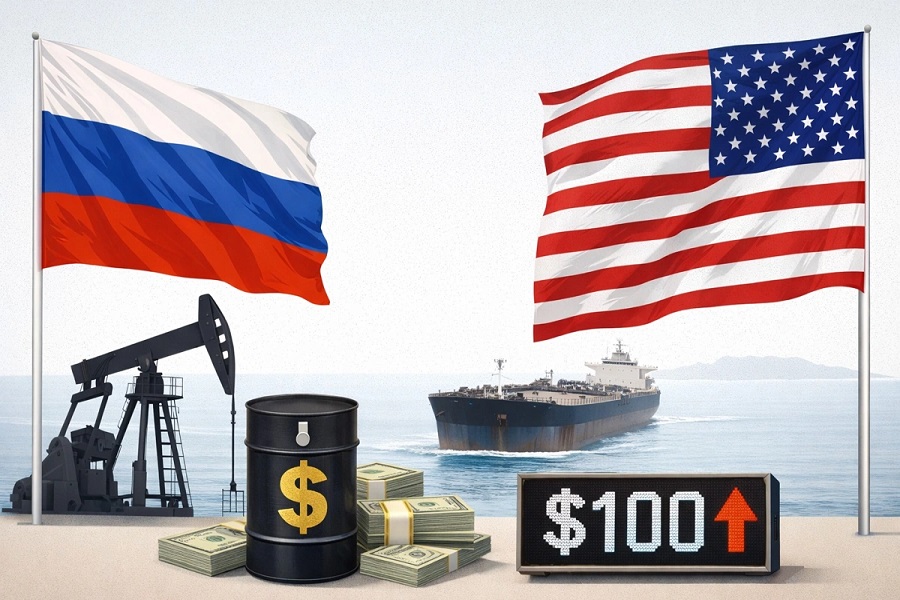
When War Pays Off Oil: Kharg, Hormuz, and Washington's Strategic Impasse Now the debate has gone even further. Axios and then Reuters have reported that the Trump administration is considering seizing or blockadeing Kharg to force Tehran to open the Strait of Hormuz. The mere fact that such an option is on the table is an admission of the failure of the initial logic of war. When airstrikes were supposed to force the enemy to retreat but did not, the idea of “limited territorial control” comes into play. But this option is no guarantee of ending the crisis. Even sources close to the US government have acknowledged that seizing Kharg will not necessarily bring Tehran the peace Washington wants. The reason is clear: controlling an island is not the same as controlling the entire dynamics of the war. You may take Kharg, but you still have Hormuz, missiles, mines, shipping insecurity, and a regional backlash. This is where Washington’s central contradiction is exposed. The same government that is thinking about occupying Kharg, the same government that is talking about sending in the Marines and more risky options, is suddenly suspending part of the sanctions on Iranian oil for 30 days, so that about 140 million barrels of oil loaded on ships can enter the market and prices can fall. The US Treasury Department has made it clear that the purpose of this short-term authorization is to reduce price pressure. Simply put, Washington wants to fight Iran and use Iranian oil to calm the market. This is a strategic contradiction. A war that was supposed to complete “maximum pressure” has now been forced to temporarily withdraw some of that pressure to prevent an energy shock. However, Iran has increased its control of 4% of the world's oil by 20% during this period. During this same period, Iran has exported its oil and earned about $1.5 billion. This money is in Chinese banks and it is not clear how Iran can access it, however, the United States does not have access to it either. US Treasury Secretary Scott Besant has said that Iran will have difficulty accessing the proceeds from these sales. This may be partly true, but it is not the whole truth. When Reuters itself writes that the main buyers of sanctioned Iranian oil have been independent Chinese refiners and that a large part of Iranian oil still goes to China, it is not just a question of “full access” or “lack of full access” to the money. The point is that the war has not been able to cut off the flow of Iranian oil, and Asian networks, especially Chinese ones, continue to absorb a significant part of this circulation. So even if Washington locks up some of the revenue, it has still not been able to turn the geoeconomic logic of the war to its advantage. Iranian oil is still on the market, China is still in the equation, and the US still has to live with the consequences. This situation does not mean an “anti-imperialist show of strength” by the Islamic Republic. A regime that has suppressed society for decades, crushed independent organization, and deprived the people of any real possibility of deciding their own fate will not suddenly change its nature because of America’s involvement in the energy crisis. But on the other hand, this war is not going to bring freedom to Iran with ships, bombs, and a blockade. What we are seeing is the collision of three reactionary logics: the American war machine, the Israeli militarism, and the security structure of the Islamic Republic. The first victims of this collision are not governments, but people; people who are both under the shadow of bombing and under the pressure of domestic tyranny. The Reuters tally of more than 2,000 deaths since the beginning of the war only serves to remind us that this crisis is a humanitarian catastrophe before it is a “geopolitical chess game.” From this perspective, Kharg is not just an island; it is a metaphor. A metaphor for a war that was meant to be “careful” but has reached the point where it must either consider a limited occupation or a humiliating retreat, while resorting to enemy oil to control energy prices. The Axios report says that Trump cannot end the war “on his own terms” unless he unties the Strait of Hormuz. But the same sentence should also be read in reverse: he cannot unties Hormuz unless he pays a much greater political, military, and economic price. And that is precisely what the escalation trap really means. The result is clear. Washington has neither been able to remove Iran from the global energy market, nor has it been able to open Hormuz at no cost, nor has it been able to achieve a political end with airstrikes. Instead, it has entered a situation where every step taken to resolve a crisis produces a new one: it bombs to open Hormuz, which becomes more closed and insecure; it attacks Kharg to pressure Iranian exports, but is forced to put Iranian oil back on the market; it talks of victory, but at the same time sends in marines and talks of a limited occupation. This is no longer the language of secure power. This is the language of an empire caught in its own contradictions. The problem is that the war with Iran, even from the perspective of Washington’s own interests, has reached a dead end, destabilized by the logic of the energy market, geography, and asymmetric resistance. For the Iranian people, this war is neither a path to salvation nor a path to peace. The only thing that has become clearer is that no liberating project will emerge from the heart of imperialist bombing, and no freedom from the heart of the religious security state. Kharg, Hormuz, and floating oil are just different names for the same truth: this war is not a war to resolve the crisis; it is a war to multiply the crisis. https://www.radiozamaneh.com/883261 Back |
|
||||||
|
|||||||