 |
|  |

|
How the global crisis is strengthening Russia
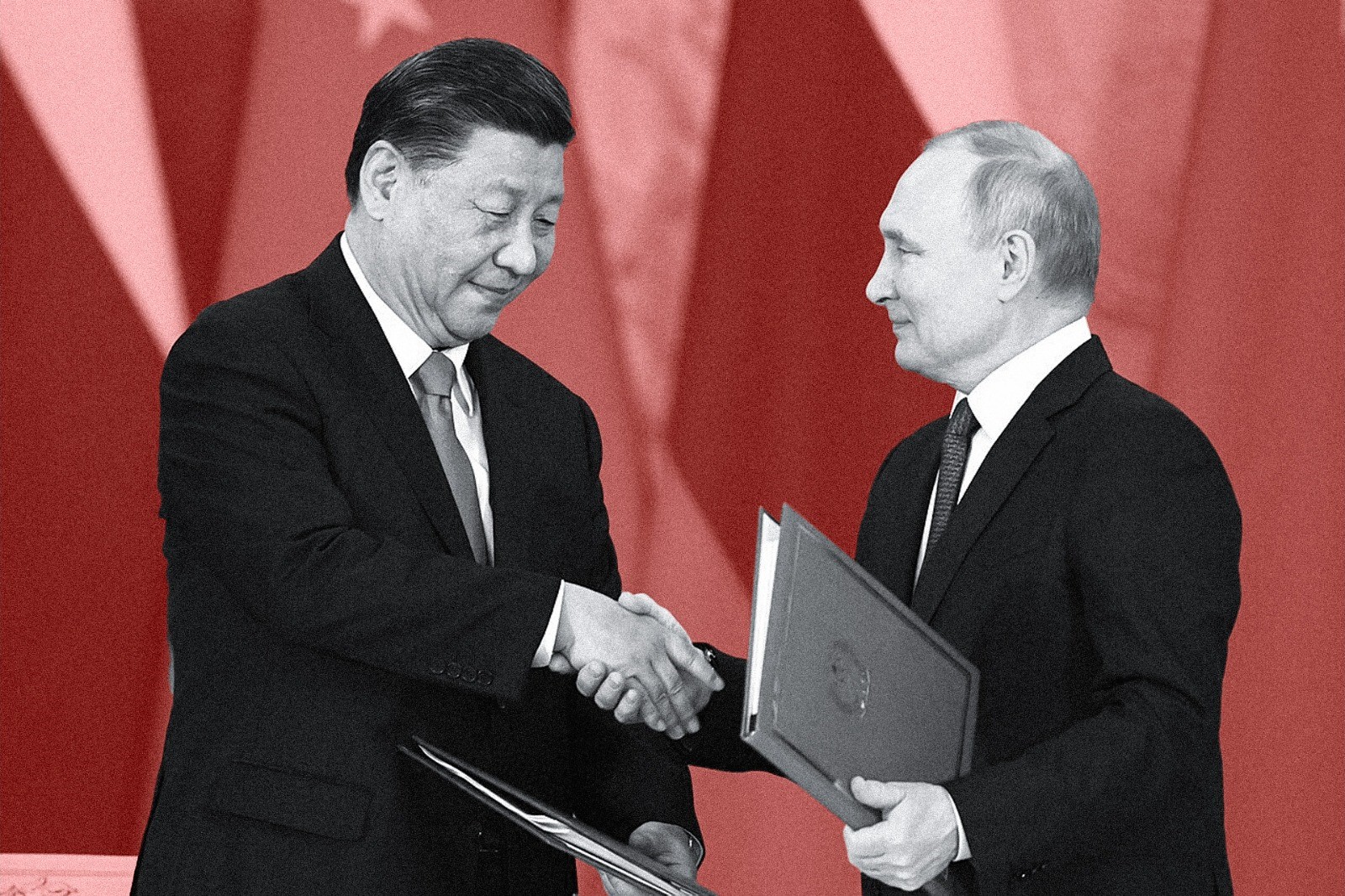
While millions suffer, others profit. Paradoxically, one of the economic beneficiaries of the conflict may be Russia. This is not because Russia initiated the war or is directly involved. Moscow is unlikely to militarily intervene directly on Iran’s behalf, although that is not altogether necessary. The asymmetric nature of the conflict means Iran wins if it does not lose, whilst there is speculation that Russia may be assisting with satellite reconnaissance and economic support. But precisely because Russia remains outside the conflict, it is able to benefit from the global instability that flows from it. The contemporary Russian regime has become adept at navigating global turbulence. Rising oil prices, shifts in trade flows, and disruptions to competing suppliers can all strengthen Russia’s position as a major exporter of raw materials. In this sense, the Middle Eastern conflict may temporarily stabilise the Russian economy. A profound change is underway, driven by the relative decline of US imperialism, which has lost its position of complete supremacy as a world power, along with the organic crisis of capitalism which is leading to a scramble for control of markets, resources, supply chains and spheres of influence, principally between the US and China. And it is precisely in this imperialist carnage that Russia is attempting to establish itself. Oil and the blood of the global economy The role of hydrocarbons in the Russian economy is often exaggerated in the West. The Russian economy is far more sophisticated than mere hydrocarbon extraction, but nevertheless, 17 percent of GDP and 30 percent of federal government revenue come from gas and oil, which make up the lion’s share of Russian exports. When imperialist tensions – such as a war in the Middle East – threaten supply routes like the Strait of Hormuz, global oil prices rise almost immediately. For a major exporter like Russia, higher prices translate directly into increased export revenues, even when its oil is sold at a discount due to sanctions. Trump has temporarily eased sanctions on Russian oil, in order to alleviate rising prices. Furthermore, he has had to abandon his attempts to strongarm India into buying less Russian oil. Indian refiners have already bought 30 million barrels of Russian oil since the start of the US’ war against Iran. Russian production costs are relatively low, which means that a rise in global prices significantly widens profit margins for energy companies and increases tax income for the state. In practical terms, this provides Moscow with additional foreign currency inflows, stabilises the budget, and helps finance government spending, including military expenditures. At the same time, energy disruptions weaken some of Russia’s competitors by increasing volatility in global markets, while forcing major importers – especially in Asia – to secure alternative supplies. As a result, Russia can position itself as a relatively reliable supplier during periods of instability, strengthening its economic leverage and diplomatic bargaining power. In short, an oil crisis does not make the Russian economy healthier, but it does temporarily reinforce its central advantage: control over large-scale energy exports in a world suddenly desperate for stable supply. Yet even this temporary stabilisation would not have been possible without a profound restructuring of Russia’s external economic relations over the course of the war in Ukraine. The sanctions regime imposed after 2022 forced Moscow to rapidly reorient trade, financial flows, and supply chains away from Europe and toward Asian markets. In this transformation, China has played a pivotal role. Over the past few years, Beijing has become Russia’s largest trading partner, absorbing a significant share of its redirected energy exports while simultaneously supplying machinery, electronics, vehicles, and other industrial goods that replaced many western imports. Chinese companies and financial institutions have also facilitated the parallel trade networks that allow Russia to access components and technologies otherwise restricted by sanctions. At the same time, the use of the Chinese yuan in bilateral trade and in Russian financial reserves has expanded dramatically, partially substituting for the role previously played by western currencies. This shift has enabled the Russian economy to avoid the kind of collapse many analysts initially predicted when sanctions were first imposed on Russia. We, on the contrary, argued that Europe would suffer a greater blow as a result of European sanctions. Reality has fully confirmed our predictions. Turn to the East To understand contemporary Russian foreign policy, we must return to the early 2000s. During this period, Russia attempted to integrate into the western economic system following the collapse of the USSR. China, meanwhile, was rapidly developing its economy, using a combination of state centralisation and market mechanisms. Over the course of two decades, the Chinese economy made a colossal leap, and China emerged as the main economic competitor to the United States. Meanwhile, Russia, during this period, attempted to balance between various centres of power. The Russian regime hoped to become part of the western club of imperialist powers, participating in the G8, and sharing spheres of influence with Europe and the United States. But these illusions gradually faded. The turning point came with the global crisis of 2008 and NATO’s continued eastward expansion. The Russian ruling class perceived Ukraine and Georgia’s plans to join NATO as a direct threat to its interests. Following the events of 2014 and the sanctions that followed, Russia began to rapidly pivot its economic strategy to the East. It was then that a real rapprochement with China began. Previously, relations between the countries were ad hoc and region-specific, mostly resulting in declarations of good intentions rather than economic projects. After 2022 and the imposition of western sanctions, Russia was able to avoid economic collapse largely thanks to China. Up to 80 percent of Russian oil exports were redirected to India and China. Of course, this came at the cost of significant discounts – up to $20-$30 per barrel – but given Russia’s huge volumes and high global oil prices, its GDP grew, and the loss of the European market was not catastrophic. China also plays a key role in circumventing sanctions: it supplies electronics, facilitates parallel imports, participates in financing energy projects, and provides loans to large Russian corporations. In Russian aviation, pharmaceuticals, and IT, Chinese supplies fill a significant technological gap. Even the currency structure of Russian reserves has changed: the yuan has become the main reserve currency for the Russian state. A prime example is the MS-21 aircraft, a Russian development that could potentially replace western aircraft in the Russian aviation sector. Russia is the only country in the world that can build an aircraft entirely on its own, albeit using Chinese components. This is very telling. Russia has long been one of the world’s leading arms exporters, and the ongoing war in Ukraine has further strengthened this position in a paradoxical way. Despite sanctions and political isolation, the Russian military-industrial complex continues to play a significant role in the global arms market. The conflict has effectively turned Russia into a large-scale testing ground for modern warfare, where weapons systems, drones, electronic warfare tools, air defence technologies, and battlefield logistics are constantly being adapted and refined. This real combat experience is extremely valuable in the global arms industry, where potential buyers closely observe how weapons perform under real battlefield conditions. As a result, Russia not only maintains its reputation as a major arms supplier – particularly for countries in Asia, Africa, and the Middle East – but also accumulates operational experience that strengthens the competitiveness of its defence sector. The participation of North Korea in supporting Russia during the conflict also carries important implications. Moscow has managed to consolidate a network of allies willing to cooperate economically, militarily, and politically, despite sanctions. From Beijing’s perspective, Russia’s ability to sustain the war effort, deepen ties with non-western partners, and maintain internal stability, suggests that the balance of power in Eurasia is shifting. In this sense, the conflict has not weakened Russia’s geopolitical standing as much as many analysts expected; in some respects it has even reinforced Moscow’s role as a central actor in the emerging multipolar order. It would be a mistake to reduce Russia’s role in the global economy to the cliché of a mere ‘gas station with nuclear weapons’. This description became popular in western political commentary over the past decade, but recent developments have shown how misleading it can be. Europe itself has already paid the price for underestimating the structural importance of Russian energy and raw materials. For similar reasons, the increasingly close relationship between Russia and China should not be interpreted as a simple transformation of Russia into a Chinese colony. Of course, the partnership between the two countries is clearly asymmetric: China’s economy is significantly larger, its industrial base more advanced, and its technological capabilities broader. However, asymmetry does not automatically imply dependency in the colonial sense. A crucial distinction lies in the ownership of productive assets. China does not control the commanding heights of the Russian economy. The major oil and gas companies, energy infrastructure, industrial plants, and natural resources remain under the control of the Russian state or domestic capital. Chinese investments exist, but they are concentrated in specific projects and sectors rather than constituting systemic ownership of Russian means of production. This is an important difference from classical patterns of colonial or semi-colonial dependence. Energy cooperation between the two countries illustrates this relationship particularly well. The planned expansion of pipeline infrastructure, especially through the Power of Siberia 2 project, is expected to dramatically increase Russian gas exports to China. Once operational, the pipeline could deliver volumes approaching the scale that Russia previously supplied to Europe. In other words, while Russia has lost much of its European gas market, it is simultaneously building a long-term alternative in Asia. The strategic significance of this shift is already visible in Russian policy discussions. President Vladimir Putin has even instructed the government to examine the possibility of a full and accelerated withdrawal from the European energy market, arguing that it may be more rational for Russia to consolidate its position in emerging Asian markets rather than wait for additional European restrictions. Imperialist tandem Cooperation between Russia and China is not limited to trade in raw materials or the redirection of energy flows. It also extends into several strategic industrial sectors where both states see long-term geopolitical and economic advantages. Among the most important of these are nuclear energy, Arctic resource extraction, and large-scale liquefied natural gas (LNG) infrastructure. These projects illustrate how the partnership between Moscow and Beijing operates in practice: it combines Russian natural resources, engineering experience, and state energy corporations with Chinese capital, industrial supply chains, and long-term demand for energy. One of the most politically significant areas of cooperation is civilian nuclear energy. Russia’s state corporation Rosatom has been working with China for decades and remains one of the few foreign companies deeply involved in China’s nuclear power expansion. Russian engineers participated in the construction of the large Tianwan Nuclear Power Plant, and more recently the two countries agreed to build additional reactors at the Tianwan and Xudapu sites. In these projects, Russia provides reactor technology, nuclear fuel, and engineering expertise, while China contributes financing, construction capacity, and access to one of the fastest-growing electricity markets in the world. Although the direct commercial volume of nuclear cooperation is smaller than oil or gas trade, its strategic importance is significant. Another major area of collaboration is the development of Arctic energy resources. The Arctic has become one of the most strategically contested regions in the world due to the shipping lanes opening up there, as well as its vast reserves of natural gas, oil, and critical minerals. Russia controls the largest Arctic coastline and possesses significant technical experience in operating in extreme polar conditions. However, developing these fields requires enormous financial resources, specialised infrastructure, and access to global markets. For this reason Moscow has increasingly turned to Asian partners – especially China – to help finance and support large Arctic projects. The best known example is the Yamal LNG project, operated by the Russian company Novatek. Chinese state entities, including the China National Petroleum Corporation (CNPC) and the Silk Road Fund, invested billions of dollars in the project and provided major loans through Chinese banks. This financing helped compensate for the withdrawal of western capital after the introduction of sanctions. The project has since become one of the largest LNG export hubs in the Arctic, sending shipments to Asian and European markets via the Northern Sea Route. Chinese companies have also invested in the follow-up project, Arctic LNG 2, which aims to further expand Russia’s liquefied natural gas capacity in the region. The Arctic partnership also extends to offshore extraction technologies and infrastructure platforms. Russia has developed specialised engineering solutions for operating in Arctic seas, including offshore installations capable of withstanding extreme temperatures and ice pressure. One well-known example is the Prirazlomnaya platform, which operates in the Pechora Sea and represents one of the first Arctic offshore oil production facilities built specifically for polar conditions. Projects of this type require advanced drilling technology, ice-resistant structures, and a complex logistical network involving icebreakers, support vessels, and specialised ports. For China, participation in Arctic energy development provides access not only to resources but also to technological experience and new transport routes. Beijing has increasingly promoted the concept of a ‘Polar Silk Road’, linking Arctic shipping routes with its broader Belt and Road Initiative. The Northern Sea Route along Russia’s Arctic coast can significantly shorten shipping times between Asia and Europe compared to traditional routes through the Suez Canal. As a result, Chinese shipping companies, energy firms, and financial institutions have shown growing interest in Arctic infrastructure projects, LNG terminals, and transport corridors connected to Russian ports. The Russia-China relationship is neither one of colonial dependency nor a perfectly balanced alliance. Rather, it is a pragmatic strategic partnership shaped by the converging interests of two major powers seeking to strengthen their position in a changing global economic system. What began as a cautious relationship in the early 2000s has evolved into a much closer political and economic alignment. Both countries increasingly view the United States as the central obstacle to their strategic ambitions and have found common ground in opposing the dominance of American imperial power in global institutions and trade structures. At the same time, Europe itself has entered a period of internal crisis. Economic stagnation, energy insecurity, political fragmentation, and rising social tensions have weakened the coherence of the European project. Ironically, the European energy transition away from Russia has itself become a source of political conflict inside the European Union. Disagreements between member states over sanctions, transit routes, and energy supplies have exposed significant fractures. One particularly visible example has been the dispute involving Hungary and Ukraine over gas transit and supply arrangements. Most importantly, the loss of cheap Russian gas imports has exposed the uncompetitiveness of European industry on the world market. Therefore, this has helped drive a process of deindustrialisation across the continent. Amidst this crisis, the 27 different European states are scrambling to secure their own national interests. These fractures have made it more difficult for European governments to sustain a unified geopolitical strategy toward Russia and China. The result of this evolving global landscape is a new alignment in which both Russia and China have been able to strengthen their positions. China benefits from access to discounted energy resources, expanded trade routes, and a stable strategic partner in Eurasia. Russia, in turn, gains a massive market for its exports, technological substitutes for western imports, and a powerful ally in the broader confrontation with the United States. The partnership is unequal in many respects, but it is mutually advantageous under current global conditions. In other words, the attempt by the United States and its European allies to isolate Russia has not produced the geopolitical outcome they anticipated. Instead, it has accelerated the consolidation of a Eurasian economic axis centered on Russia and China – an axis that is increasingly capable of challenging western economic and political dominance. Surfing the waves of the global crisis Despite the pressures of war, sanctions, and global economic turbulence, the Russian political system currently demonstrates a considerable degree of internal stability. This stability does not mean the absence of tensions within the ruling class. On the contrary, the past few years have seen visible conflicts, reshuffles, and anti-corruption campaigns among segments of the elite. Several high-ranking officials have been removed from office, including a deputy minister of defence and other senior bureaucrats accused of corruption. However, such episodes should not be interpreted as signs of regime collapse – signs which western commentators are always seeking to invent and magnify. Rather, they reflect a pattern that is typical for Bonapartist political systems, where the central authority maintains its dominance by periodically disciplining rival factions within the elite while presenting these actions as a campaign against ‘corruption’ or ‘inefficiency’. In this sense, internal purges and personnel changes function less as structural reforms and more as mechanisms for preserving the balance of power within the ruling bloc. At the same time, the Russian economy has proven more resilient than many observers in Europe and the United States initially expected. Inflation exists and remains a significant concern for households, but it has not spiraled out of control. In fact, in several periods it has remained even lower than the inflation experienced in parts of Europe. A combination of capital controls, redirected trade flows, high commodity revenues, and state spending has allowed the government to maintain stability despite the war and sanctions. Energy exports, particularly oil, continue to generate large foreign currency inflows, while trade with Asian markets has partially replaced the economic ties lost with Europe. However, the stability of the regime and the resilience of the macroeconomic system should not be confused with a broad improvement in social conditions. The economic benefits generated by high oil prices and geopolitical instability are concentrated primarily within a narrow layer of state-linked corporations and political elites. Energy companies, financial institutions, and large industrial groups tied to the state apparatus capture most of the additional revenue generated by global energy price shocks. A small segment of highly skilled workers in the energy and military-industrial sectors may also see indirect gains through higher wages or increased demand for their labour. The broader population experiences the situation very differently. Public spending has increasingly shifted toward military production, security structures, and strategic industries rather than toward social services and benefits. As a result, the additional revenues generated by high energy prices do not translate into a significant improvement in living standards for most people. In many sectors, real incomes have stagnated or declined once inflation and rising living costs are taken into account. This situation contributes to a broader issue as a crisis in the reproduction of labour power. Stable economic development requires not only production but also the ability of society to reproduce its workforce – through affordable housing, accessible healthcare, education, and family support structures. In Russia, however, many of these conditions remain fragile. Rising living costs, limited long-term career prospects in many civilian sectors, and the growing militarisation of the economy make it difficult for younger generations to envision a stable future. These pressures are already reflected in demographic trends. Russia faces declining birth rates, an ageing population, and increasing regional disparities. For many young workers, the economic incentives to start families remain weak, while the cost of raising children – especially in large urban centres – continues to grow. In other words, the current situation may temporarily strengthen the Russian state and stabilise the political regime, but it does not resolve the deeper structural contradictions within Russian society. The gains produced by high energy prices and geopolitical instability primarily reinforce the existing system of power and wealth distribution. There are contradictions in Russian capitalism, but at this moment they are of a different character to those that we see expressing themselves in the West. In the West, there is a lack of profitable spheres for investment. In Russia, the economy is tending not towards stagnation but towards overheating, there are not enough workers. In the present moment, the crisis in the Middle East has the potential to reduce Russia’s budget deficit, stabilise financial markets, and strengthen Moscow’s diplomatic leverage in global negotiations. But workers will not see the benefits. In the broader context of the ongoing crisis of global capitalism, the underlying contradictions within Russian society are likely to intensify rather than disappear. The gap between labour and capital, between state-centred resource accumulation and the everyday economic conditions of the population, continues to widen. Economic stabilisation achieved through high commodity prices acts as a temporary buffer that delays the manifestation of deeper structural tensions. In this sense, Russia’s current position is strong only because of the instability in the world caused by American imperialism. The crisis has not disappeared. It has only been postponed. And when it arrives, communists in Russia must be prepared. https://marxist.com/how-the-global-crisis-is-strengthening-russia.htm? Back |
|
||||||