 |
|  |

|
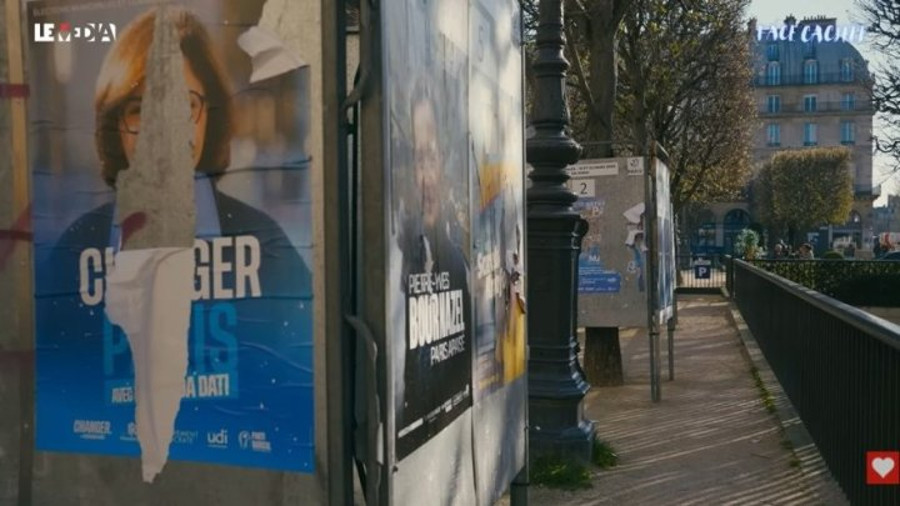
After the vote. Municipal elections in France some lessons from the first round Since Sunday night, this stance has already partially shattered the fantasies of a cordon sanitaire against La France Insoumise (LFI) harbored by the right wing of the Socialist Party. In fact, the results obtained by LFI allow it to lead joint lists, as in Toulouse, impose an alliance and break the "cordon sanitaire," as in Lyon, Limoges, and Tours, or make rejecting an alliance politically very costly for the Socialist Party, as in Marseille and Paris. As Benjamin Morel summarizes: "The situation is hellish for the Socialist Party. Not only is it in a difficult position in many of its strongholds—Nantes, Lille, Marseille, Rennes, Clermont-Ferrand—but, in many cases, it is in the hands of LFI. The Socialists will have to choose between losing some strongholds or allying with La France Insoumise." In the first scenario, Jean-Luc Mélenchon could claim that the sectarianism originates from within the party and that, if a united left is not achieved by 2027, the National Rally will come to power. Since the Socialists reject this union, he could present himself as the only one capable of delivering a victory for the left. If the Socialists accept the alliance at the local level, Jean-Luc Mélenchon will have further weakened and fractured the Socialist Party, paving the way for 2027. In both cases, La France Insoumise wins, and the Socialist Party loses. This situation also reflects the limitations of attempts to criminalize La France Insoumise and the media campaigns aimed at marginalizing it by portraying it as a violent or anti-Semitic movement. This offensive intensified with the death of Quentin Deranque in Lyon during the campaign, but its political cost remained limited. On the contrary, the numerous alliances forged by La France Insoumise throughout France, some of which they had been promoting for months, highlight LFI's structural dependence on the rest of the institutional left, even its most bourgeois and reactionary elements. This demonstrates that, far from being a mere indiscretion now forgotten, the policy of reaching out to the Socialist Party (PS) and Europe Ecology – The Greens (EELV) is an integral part of LFI's electoral strategy, revealing its dead end for those who aspire to seriously challenge the system and big business. Progress of the National Grouping: territorial consolidation and geographical limits. Meanwhile, the National Rally is consolidating its dominance in its historical strongholds. Having governed some twenty municipalities since 2020, almost all of its incumbent mayors were re-elected in the first round, often by very comfortable margins. Louis Aliot, vice-president of the National Rally, was re-elected in Perpignan, the only urban area with more than 100,000 inhabitants governed by the party, with approximately 50.61% of the vote. David Rachline retained Fréjus with 51.33%, while Steeve Briois achieved a landslide victory in Hénin-Beaumont with 77.71%. In smaller municipalities such as Beaucaire and Hayange, victories were secured without major difficulty, often facing limited opposition. At the same time, compared to 2020, the party has strengthened its territorial network in the regions where it is present: it surpassed 10% in 514 municipalities with more than 3,500 inhabitants, compared to 444 in 2014. This result is mainly due to the results obtained in municipalities with fewer than 10,000 inhabitants. Marine Le Pen's party also won in at least 75 municipalities in southern France, compared to only eleven in the first round of 2020. However, these gains remain very uneven [1] and concentrated in the traditional strongholds of the southeast (Var, Bouches-du-Rhône, Alpes-Maritimes, Gard, Pyrénées-Orientales) and Nord/Pas-de-Calais. Outside of these areas, the National Rally achieved some rare symbolic advances in departments such as Gironde (Cagnes-sur-Mer, Vauvert, Laruscade) and Vosges (Nomexy). While the National Rally (RN) confirmed its gains in the smaller cities of its strongholds and consolidated its presence in the municipalities it won in 2014 and 2020, the movement simultaneously experienced a decline compared to 2014 in major metropolitan areas and suffered a resounding defeat in Paris, where Thierry Mariani garnered only 1.6% of the vote. It should be noted that the RN made progress in the southeast, with Laure Lavalette leading by a wide margin in Toulon (42.05%, well ahead of the incumbent mayor), Franck Allisio close behind Benoît Payan in Marseille (35.02%), and Éric Ciotti (backed by the RN) dominating Christian Estrosi in Nice. However, these gains remain relative, and the chances of victory outside Nice are limited. Conversely, the results in major cities are very low, as Jérôme Fourquet points out: “With the exception of southern cities, the National Rally is struggling in large metropolitan areas: 7.3% in Lyon, 6.7% in Strasbourg, 5.2% in Toulouse. For a party that won 30% in the presidential elections, this is laughable.” Thus, despite consolidating and strengthening its presence in smaller cities within its strongholds, the National Rally has yet to make significant local gains on a national scale, revealing the limitations and contradictions of its position in the country. The Socialist Party, the Republicans and the Macronist center: decline and structural crisis. In general, the trends toward fragmentation and polarization are harming the parties in power. Thus, the Macronist center (Renaissance, Horizons, Modem) suffered a crushing defeat, highlighting its almost total lack of local presence, with only 360 lists submitted and a strategy of local coalitions (often with the Republicans or various right-wing parties). In Paris, Pierre-Yves Bournazel (Horizons-Renaissance) barely managed to qualify with 11%, far behind the frontrunners, while in most major cities, the results were marginal. The only exception was Édouard Philippe in Le Havre, whose result mainly reflected a personal boost at the local level. This latest setback illustrates the structural limitations of Macronism, exacerbated at a time of advanced decline and erosion of the center-right bloc. Above all, the Socialist Party and The Republicans, historical pillars of the Fifth Republic, are directly affected by the advances of La France Insoumise (LFI) and the National Rally (RN). In general, the two parties that once dominated local politics have retained some of their key strongholds and limited the damage, especially in major cities. But they are losing ground. In Paris and Marseille, the Socialist Party (PS) recovered some ground, obtaining 38% of the vote compared to Rachida Dati's 25%, and achieving better-than-expected results against the RN. However, it is challenged by the LFI, which is making progress in some of its strongholds, such as Lille and Nantes, and is a force to be reckoned with in others, leading the PS to forge alliances for the second round in Toulouse, Limoges, Clermont-Ferrand, Brest, Nantes, Avignon, and Strasbourg. The Republicans (LR), for their part, managed to retain some ground thanks to their strong presence in cities with more than 9,000 inhabitants, but suffered significant losses in the major metropolitan areas, as Victor Boiteau observed in Libération. LR won or retained several cities in the first round, such as Cannes, Calais, Valence, Châteauroux, and Meaux, and maintained their presence in many medium-sized municipalities. However, the party struggled in Nîmes, Paris, and Nice. LR could even lose Nîmes, the last city with more than 100,000 inhabitants that the party still controlled, as the National Rally (RN) won the elections there. At the same time, the Ciotti-RN alliance in Nice weakens a stronghold of LR and, as Libération points out: "if Ciotti were to win in Nice [...] the exodus of LR leaders and elected officials to the far right, through the Union of the Right for the Republic (UDR), Ciotti's own organization, could accelerate." Strategic lessons and perspectives for the second round The first round of the municipal elections confirms the crisis of Macronism and the trend toward polarization in the country, with gains for La France Insoumise (LFI) and the far right. However, this polarization is far from translating into a surge for LFI or the National Rally (RN), but rather reflects a fragmentation of political forces in a context where local realignment is only just beginning and where these two poles still have little support. In this context, the second round on March 22nd appears particularly uncertain: on the left, the proliferation of alliances between LFI and the Socialist Party (PS) is already underway in the name of the "anti-fascist front," a convenient pretext for reactivating the alliances that LFI has been advocating for weeks. This strategy is becoming widespread, despite exceptions such as Rennes, where the socialist mayor refused to ally with LFI, Marseille, Paris or Lille, where EELV, which came in third place, finally chose to support the Socialist Party at the expense of the candidate who stood firm. These alliances, however, could generate contradictions. Within the Socialist Party (PS) and Europe Ecology – The Greens (EELV), tensions between those who support the alliance with La France Insoumise (LFI) and its detractors could intensify following the defection of hundreds of Green activists during the municipal elections. In Lille, the Young Greens of Nord-Pas-de-Calais have distanced themselves from the leadership's decision. On the other hand, within LFI, these alliances and the decision to add majorities to incumbent mayors with a security-focused record, as in Lyon, highlight the strategic importance of uniting with the bourgeois left in LFI's project, after months of denunciations of the PS's support for Macron and the slander from the Greens. This stagnation underscores the importance of building a revolutionary left, independent of the state, business interests, and their political representatives. From this perspective, without detailing the overall results of the far left or those of the various lists of Révolution Permanente (9 lists and 12,560 votes), Lutte Ouvrière (243 lists and 74,680 votes), or NPA-Révolutionnaires (29 lists and 18,445 votes), which we will analyze later, the fact that the revolutionary left has obtained relatively significant results in several cities, presenting lists in open competition with the incumbent mayors, as well as with La France Insoumise, as in Saint-Denis, with the election of two Révolution Permanente councilors in the second largest city in the Île-de-France region, is good news. These elections must be a starting point for advancing the construction of a revolutionary organization, established in places of production, study and in working-class neighborhoods, with the class struggle and the preparation of a response from below as its center of gravity, the only way to confront the plans of the ruling classes, militarization and the extreme right. [1] As Nicolas Massol summarizes in Libération: “Far from being insignificant, this surge remains uneven and reveals a still weak, or even nonexistent, local presence in certain areas where the RN, nevertheless, achieves significant results in national elections. In Burgundy-Franche-Comté, only one candidate was elected in the first round: in Chevroz, a village of 143 inhabitants in the Doubs department. In the vast majority of large cities outside the Mediterranean region, the party performed worse than in 2014. (...) It also reveals the limitations of the strategy of attracting the urban upper classes that Bardella was supposed to implement: in Lyon, the UDR candidate, Alexandre Dupalais, a lawyer by profession, obtained worse results than in 2014 (12.19% then compared to 7.07% on Sunday, with 3,000 fewer votes). This endemic weakness of the RN is not offset by its presence in its traditional strongholds.” Thus, Pas-de-Calais, despite having six representatives, failed to gain a foothold in Lens, which remained in the hands of the left since the first round, and only managed to win five new and small municipalities; the largest, Houdain, with 7,000 inhabitants. The neighboring department of Nord, despite its six representatives, did not see the National Rally win in any municipality in the first round. https://www.laizquierdadiario.com/Elecciones-municipales-algunas-lecciones-de-la-primera-vuelta? Back |
|
||||||
|
|||||||