 |
|  |

|
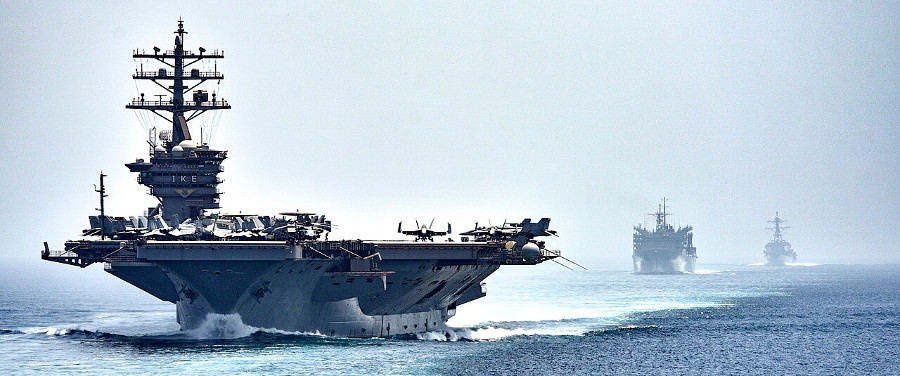
2026 kicks off to the sound of imperialist war drums and class struggle He's obviously threatened Iran. He has moved military assets to the region. In the middle of all this, there's this massive insurrection or uprising in Minneapolis against the very provocative tactics of ICE immigration raids. Obviously, it will be easy to put all of this down to Trump's madness or his own style. Of course, as Marxists, we do not deny the role of the individual in history. It is clear that Trump's style and his character play a big role in events. His provocative manner, his way of thinking, aggravates the conflicts, creates bigger instability than otherwise would be the case. But at the end of the day, we have to say two things. One, Trump is the product of the crisis of capitalism in the United States. Yes, he certainly gives it peculiar features and aggravates it and makes it more turbulent. But he is also the product of a particular time in US history. The second thing to understand is that, there is an element of madness in all of this, but this madness has a certain logic to it. The Crisis of US Imperialism One year ago, we discussed the implications of Trump’s election and the implications for world relations. We explained that we are witnessing shifts in the tectonic plates of world relations. If you look back at what's happened over the last one year, we have been proven right in our analysis. At the bottom of all of these changes in world relations, instability and so on, is the crisis, the relative decline of US imperialism, the recognition by Trump that the United States can no longer be the dominant power everywhere in the world, as it's being challenged by the rise of China and the rise of Russia. Therefore the policy or the strategy that they have decided upon, we said this one year ago, is to attempt to disentangle the United States from places in the world that they do not consider to be of national security importance for the United States. They are attempting to re-establish their power in their own backyard in the Western Hemisphere, in the American continent, in order to then be able to deal with the main rival, which is China, which is located in the Pacific, not in the Atlantic, not in Europe. This obviously has many consequences for everyone. It has many very important consequences for Europe and the relationship between the United States and Europe, which I'll deal with a bit later on. But it doesn't lead to a world of peaceful relations between the big powers. This is what we've seen over the last one year. It leads clearly to conflict and war and instability in world relations. Now, it's been one year since we discussed all of this, since Trump came to power. I think that we have been proven right in our analysis of what the Trump presidency meant, both in terms of world relations and also of internal politics in the United States. But we have to say, one thing is Trump's intentions and another thing is what he can actually carry out. But in the real world, what he intended to do has proven not so easy to achieve. The war in Ukraine is still going on. And yes, allegedly there is a ceasefire in Gaza since October. But first of all, the ceasefire is no such ceasefire. And nothing really has been resolved in the Middle East. So it's one thing for the United States to want to do certain things. It's another thing for them to be able to carry this out. The National Security Strategy Now, in November, the United States issued a little document called the National Security Strategy. It's all in here. It's a short document. It's 29 pages. I really recommend reading it. It's full of very, very interesting stuff. The first thing that it says is what we said one year ago. The United States can no longer be the global hegemon. The first step in dealing with this new situation is recovering control over the Western Hemisphere. There you have it. This explains what's happened at the beginning of this year. A very serious military intervention in Venezuela. And the renewal of the pressure over the question of Greenland. Yes, it is true that one of the reasons for these two interventions is also the fact that Trump was looking a bit weak prior to these events. He was coming unstuck in his foreign policy. But above all, his opinion poll ratings were going down in the United States. Because he had not solved the main problem that he promised to resolve and that he got many votes for. That is the question of the economy. So therefore, an element of this attack on Venezuela was precisely the attempt to project strength, decisiveness, and to have, in his view, a quick and sharp, painful military operation that restores the image of power of Trump and the United States. But there are other reasons. This is one contributing factor. People say, “well, what is this intervention about? It's because the United States wants Venezuela's oil.” This is one reason, yes. But I will say that you need to listen to what Marco Rubio said. Marco Rubio said, “no, we have plenty of oil. We don't need Venezuela's oil.” He said, “what we cannot have is that in our hemisphere, adversaries of the United States have control over these large oil reserves.” This is the key question. US imperialism does not want what they call ‘non-hemispheric actors’ to have control over critical resources and infrastructures in the American continent. The western hemisphere So regardless of Trump's madness, his narcissism, his personal ego, and so on, there are deeper reasons for this intervention. This intervention is also meant to say, “look, when we tell you to do something, you have to do it or else”. The logic of imperialist bullying doesn't work if you threaten someone and then you don't carry out your threats. It's also clearly a warning to others. And immediately after 3 January, at the press conference where they were announcing these things in the afternoon, they already said that this is a warning for Colombia, for Mexico, and for Cuba. It doesn't mean that they are going to militarily attack all these countries, but the threat is there. They like to make a deal with these countries, a deal which is favourable to the United States' interests. But this is the logic of the mafia. US imperialism is revealing itself very openly as a protection racket. ‘You are with us, you pay us protection money, and everything will be nice for everyone. But if you don't, there will be consequences.’ Now, there's been a lot of speculation about the details of the Venezuelan attack, but I think that that's not the most important thing. The most important thing is the end result. And the end result is that in Venezuela today, there is a government that's compliant with US imperialism. Trump has said it himself, he's very happy with Delcy Rodríguez. “She is doing whatever we tell her.” And so she is. Basically, this is a semi-colonial arrangement. The United States controls the sale of Venezuelan oil. The money goes into a bank account that's controlled by the US government. The Venezuelan government presents a budget every month that Marco Rubio approves or not. Then the money is sent over. The degree of the bankruptcy of the Venezuelan leadership is now being shown for everyone to see. But it shouldn't really be a surprise to us. We had said this some time ago. We said, in Venezuela, there's no revolution, there is a Bonapartist regime that's based on the looting of the country's resources. When Delcy Rodríguez says, “no, no, we're not following Marco Rubio's instructions. This is our own sovereign decision”, in fact, she says, “this is the policy we were already implementing before January 3rd.” She's not wrong. There is a qualitative difference, obviously. But she's not completely wrong, because this policy of opening up the oil industry, privatisation, and so on, was already being implemented since 2018. And in fact, when the United States calculated that Delcy Rodríguez would be compliant with such a policy, they based themselves on her previous track record. This is the situation in Venezuela. It's a semi-colonial arrangement. I will say that in the short term, this is already having a beneficial impact on the Venezuelan economy and living standards in Venezuela. Even if it's just from the point of view that previously they couldn't sell oil, and now they are selling oil, even if it's under the control of the United States. But this will not last forever. There will be a point in which this will create a backlash in Venezuela. Never mind the fact that this so-called transition still has to navigate a whole number of obstacles, or very powerful people who have different interests and so on. But you see, from the point of view of the United States, this was a painless surgical operation, which apparently gave them a quick victory. Now they are drunk with success. What happens when one is drunk with success? This person tends to overdo it, overstretch their own limits. So now they want to do the same thing with Cuba. They think they can do the same thing with Iran. Trump is gathering an armada outside of Iran with the aim of what? Of getting a deal from the regime. If not, carrying out some sort of attack to get a deal. But the problem is this: Cuba is not Venezuela, and above all, Iran is not Venezuela. Iran has very powerful means of self-defence, which can create a very difficult situation for the United States in the Middle East, and for Israel as well. So I think that's one of the reasons why Trump is vacillating about actually carrying out this attack or not. The struggle with China in Latin America Nevertheless, there is now quite clearly an open struggle in the American continent between China and the United States. I think it's impossible for the United States to force the South American countries to cut off the trade and commercial links with China, which are very strong and have been established over a period of 20 years. Particularly because the United States cannot provide an alternative. Chile sells copper to China. Bolivia, Brazil, and Argentina sell meat and soybeans. The United States cannot replace this market. But what the national security strategy says is that the United States will not allow China to have control over critical minerals and infrastructure hubs. This is already happening. This week, the Supreme Court in Panama ruled that the contract for a Chinese company to control two key harbours in the Panama Canal was null and void. The United States is clearly on the offensive. Trump has been meddling in the internal elections in Argentina, in Chile, in Honduras. Will certainly meddle in the elections in Brazil and Colombia that are coming up. It has been blackmailing Mexico into submission for a number of years now. There's little details like this. The Chinese had a programme to build an astronomy observation centre in Neuquén in Argentina. The United States said that this was very dangerous because it could have dual use, military and civilian. Now the project has been cancelled and Argentina has been invited into a similar project by NASA. The president of Peru was recently in the United States. There are advanced talks for the establishment of US military bases in Ecuador, which people just voted against, but the plans are going ahead, and in Peru itself. I'm thinking that the next target of the United States will probably be to disable or somehow contain the impact of the Chinese-built Chancay port in Peru. So this is an open struggle. And certainly there are limits to what United States imperialism can do. You can see that if you look at Venezuela. In Venezuela, the United States had to use its most advanced technological and military forces, including a ‘discombobulator’, apparently. Trump said that they have a new weapon that he is not supposed to talk about. They had to use the most advanced military technique. 20% of the Navy, and 150 aircraft in an operation, the aim of which was to take out a man and his wife in their pyjamas in the middle of the night. It's very difficult for them to repeat that in Colombia, in Mexico, or even in Cuba. In fact, I read an article in the US military press saying that the commanders of the South Command, which is in the Caribbean, were saying that they couldn't maintain their deployment for any length of time. It was costing a lot of money. They had been previously in the Mediterranean. This is the longest time ever that they had been deployed at sea. They needed refreshment and so on. There are serious limits to this. One of the limits is the political and class struggle consequences of all these actions. The constant meddling of the United States in Latin America will provoke, sooner or later, a massive backlash. A backlash is being provoked in every single other aspect of the policy of the Trump administration. The state of the world economy Now, we wanted to talk also about another key aspect of the world situation, which we have been discussing in the last few months. This is the very important question of the state of the economy. Because if you look around the world, the European economy is completely stagnant and paralysed. The United States economy is apparently growing. But what is the character of this growth? Which is a big, important part of the world economy, obviously. As we were arriving at this meeting, a massive collapse began in the price of gold and silver, which is continuing today. The price of gold has now gone down by 15 percent And the price of silver, 35 percent. The price of gold and silver went up massively last year. I think the price of gold reached a peak of $5,600 on Thursday before the collapse. But one year ago, it was $2,800. So that's a 100% increase in the course of 12 months. Now it's fallen by 10 percent or 15 percent, but it's still at $4,800, which is massively more than $2,800 one year ago. The increase in the price of silver was even much more than the price of gold. So what does that tell you? Well, I'd say what it tells you is that now is the right time to buy gold. Because it's going to go up again. Because the reason for this rally in what's considered a safe investment, is precisely that the capitalist speculators are very worried about the general state of the economy. The US dollar is going down, which was the safe currency of last resort previously. So people put their money in gold. One part of this massive gold rally was caused by central banks around the world, moving their money from dollars to gold. This is a very important factor. The other thing that this turbulence in the price of gold and silver reveals is precisely the jittery character of the speculators, the stock market, and so on. There is a massive amount of speculation involved in all of this: the massive increase in the stock exchange, the price of the technology companies, and so on. This plays a big role in the so-called growth of the US economy. Because the US economy is still growing at the time when companies are announcing tens of thousands of layoffs. I think Amazon has just announced 16,000 layoffs. And we have written a couple of articles about it. There's a lot of speculation also on the question of AI, which it seems to me is about the future of the economy. It's hype. There's a lot of hype around AI, particularly in the United States. I get the impression that in China, they're concentrating on the practical applications of AI for industrial production, manufacturing, and so on. But in the United States, one would think that all AI is for is so that you can have memes, create very quick fake videos, or I don't know what. Yes, of course, there is actual real investment related to AI, the building of data centres, and so on, which create jobs. But nobody really knows where this industry is going, whether this is going to be useful, whether it's going to be in existence a few years down the line. A bit like the dot-com bubble at the beginning of the century. So some people made a lot of money at the time, but then the whole thing came crashing down. This is the point, now there is a very high percentage of US families and households that have their savings invested in the stock exchange. Why? Because wages are not going up. Apparently, you can get a lot of money just by investing in the stock exchange. But Alan pointed out that in his book on the 1929 crash, Galbraith relates an anecdote in which Kennedy Sr. said that he was getting his shoes shined by a shoeshine boy. The shoeshine boy told him that he had his savings in the stock exchange. Kennedy said, “Okay, now I knew it was the right time to take my money out”. So there's an enormous speculative bubble. People put their money in the stock exchange because the stock exchange is going up, and the stock exchange is going up because people put their money in it. Now there are a lot of tools which make it very easy for the ordinary man on the street to put a little bit of money in there. I think 63% of US households have their savings invested in the stock exchange. This means that when the whole edifice comes crashing down, this will have a massive impact on the real economy and will wipe out the savings of millions of working class families with very serious political effects. Some commentators have described the US so-called recovery as a K-shaped recovery. You know what a K looks like? It's one vertical stick, and there is a line going up. The line going up is the top of society, making a lot of money out of this. The top 1% of households in the United States now accumulate 32 perhaps of the country's wealth. This is the highest percentage, I think, in 60 years, or maybe since after World War II, while the bottom 50% have 2.5% of the wealth. You have to go back to the interwar period for such a colossal inequality of wealth to have accumulated and it continues to grow in the United States. This has obviously very serious political consequences. It goes a long way to explain the election victory of Trump. The decline of the US dollar Now, this situation is leading to a very serious decline in the US dollar and the position of the US dollar in the world economy. This is because of a combination of different factors. One, the enormous accumulation of debt in the US economy. The fiscal deficit continues to increase. And I think now the total debt is, what, $31 trillion? Something like this. This is completely unsustainable. The fact that the United States had the strongest economy in the world meant that they were able to finance their debt. They would produce state treasury bonds, and people would buy them because this was a safe value. But now this is no longer considered in the same way. The policies of Trump have contributed to this to a large degree. His use of tariffs as a weapon, really, has created, on the one hand, enormous uncertainty. Capitalists don't like uncertainty. They don't like a situation where they don't know whether today is going to be 100% tariffs, tomorrow is going to be 10% tariffs, and the day after is going to be 150% tariffs. So they're not very keen on this situation. But also, the weaponisation of trade and tariffs on the part of the Trump administration has led to a backlash on the part of the countries at the receiving end of these policies. India, which was a close ally of the United States, has been pushed into a closer alliance with Russia and China. This is happening everywhere. And it's also having an impact on a whole series of countries now considering in a more serious manner whether they can build an alternative to the role of the dollar in the world economy. We shouldn't exaggerate this. We're still in very early stages. But the incentive is clearly there. You know, when they seized Russian assets in Europe and the United States, they broke a very fundamental element of trust. So other countries, which think that they might be at one point or another at the receiving end of the wrath of the United States, will now be thinking twice about where they keep their assets. Now, in the year 2000, the US dollar represented 70% of the global foreign currency reserves. It's now gone down to 56%. So it's still in a dominant position, but it's not as dominant as it was 20 years ago. In 2025, for the first time, the amount of reserves that the central banks hold in gold was more than what they hold in US dollars. The amount of US treasury bonds held by foreign investors, many of them institutional investors, which used to be 50 percent, is now 30 percent. If you read the National Security Strategy, it does mention specifically that the role of the US dollar must be protected. ‘No alternative must be allowed to be created.’ Europe So if you look at it from this point of view, the policies of Trump are accelerating the decline of US imperialism and its role in the world. As I said before, this has very serious consequences for Europe, which, if you remember, we already discussed this one year ago, because our IEC more or less coincided with the Munich Security Conference, where J.D. Vance came and told the Europeans, ‘we're no longer vouching for you’. We have explained this. I'm not going to repeat it in any detail. For a whole period of time, the United States was overriding the security arrangements of Europe. This was a very nice arrangement for the European powers. But the United States is no longer interested. The main rival is not in Russia. The main rival is in the Pacific, the other side of the world. If you read the National Security Strategy, it's hair-raising what they say there. But if you can say something for Trump, it's that he says things as they are, without any embellishing ‘democracy’ and ‘human rights’ rubbish on top of it. In fact, in the National Security Strategy, it says ‘we will not go around the world imposing democracy’. This is not what they were doing before. But at least now they say it clearly. It's not about democracy. It's about the national security interests of the United States. That's it. Like it or lump it. This is the situation with Europe, as was revealed on the eve of the Davos conference when Trump started sending all these social media posts, humiliating all his friends and allies. There is very little that the European powers can do. In fact, there's nothing that they can do. They are trying to keep the war in Ukraine going so that the United States, they calculate, will still be involved in Europe's defence. But this has a limit, and the limit will be reached at some point. The European powers cannot play a decisive role in the world because of the long-term economic decline. That's the basis of it. Their long-term economic decline has been massively accelerated and aggravated by the completely reckless and irresponsible policies they followed over the Ukrainian war, where they cut themselves off from cheap gas and oil energy resources from Russia. In the process, they became much more dependent on LNG gas from the United States, which is now threatening to take over Greenland, which is part of a country that's a member of NATO. So, Europe is completely subordinated to an imperialist power that's no longer interested in Europe. This crisis in Europe creates leaders which are so pathetic – people like Starmer, Macron, and Merz – extremely unpopular at home, but who think that they can create a coalition of the willing and do this and that. But in reality, at every single stage, it's demonstrated that there's nothing they can do without the United States. This is what determines their completely slavishly servile attitude towards Trump, which was revealed in these text messages that Trump published. What did Macron say? “What you've done in Syria is amazing and we can do great things in Iran. Let's have lunch and sort out the Greenland question”. Then Macron, in his aviator glasses, goes to Davos and makes a speech, and he mentions China. What did he say about China? He said, “we need to have closer relations with China”. That makes sense, because if you're being attacked by your main ally in the United States, you want to play the rivals. But if you listen carefully to what he said, he said, “We need to have a closer relation with China. But this relation cannot just be based on China exporting massive amounts of goods to the European Union. We must have a situation where China transfers some of its technology to Europe.” China is a dynamic, technologically advanced imperialist power, and Europe is lagging behind massively. It's begging China, ‘please give us some of your technology’. The war in Ukraine I won't say much about the war in Ukraine. Just to say that the basic equation that we have described remains. Russia has military superiority on the battlefield in terms of technology, production, and manpower. In the medium term, there's nothing that Ukraine, Europe, or the United States can do about it, for different reasons. In Ukraine, the other day, one of the ministers said that there are 2 million draft dodgers, and 200,000 men who were in the front and have gone AWOL. In December, we saw important advances by Russia in all sectors of the front, the taking over of key cities, and now, through the massive use of missiles and drones, Russia has destroyed Ukraine's energy sector. This is leading to a position where Russia will achieve its aims in this war, either by an agreement, which will mean a capitulation, or by military means, by just advancing. But what I would like to say also is that the European capitalist powers are unable to deal with this new situation that's opened up for them. Because one of the main obstacles is the fact that Europe is not a single country, it's still a collection of different countries, with their own different capital markets, many different regulations still, and so on. But I will say that the most important reason, which also affects the United States and other countries, is the massive accumulation of state debt, which is the consequence of 15 years since the 2008 crisis, of artificially creating money to invest in the economy in order to prevent a bigger social explosion. Spain, France, Italy, Britain, they all have state debt which is over 100% of GDP. The only country that's in a bit of a healthier situation is Germany, where the national debt is about 63% of GDP. But they've just changed the constitution so that they can borrow and spend more, and they're going down the same route. They think that they're going to borrow 1 billion euros, they're going to invest it in the economy, in infrastructure, in defence spending and all that, but that will not have a big impact on the economy. I think it's now either the third or the fourth year of economic stagnation in Germany, which used to be the powerhouse of the European economy. There's no way that they can turn the situation around. This is already happening, but will have even more consequences on the class struggle in Europe. In the last few months, we have seen general strikes in Italy, Greece, Belgium, Portugal, massive explosions of class struggle in France in September. This is what's leading to all this political instability. The conundrum is shown more clearly in the case of France. Where they cannot find a stable parliamentary majority to carry out the necessary cuts and attacks on the working class, the ruling class is required to solve the crisis. This is also the reason for the rise of right-wing populism. But the process that we described, which started in 2008, of a very deep crisis of legitimacy of all bourgeois institutions, is continuing and aggravating. The Gen Z revolutions Also we're now talking about Venezuela, Greenland, Iran. But it's not so long ago, in September and October, we were talking about a completely different thing: the Gen Z wave of revolutions. We shouldn't forget, this happened four or five months ago. And it's not finished. That particular wave came to an end, but it will come back because the conditions that created it have not disappeared at all. Let's think about that. What we saw was a mass movement of the youth in Indonesia. The overthrow of the government in Nepal, in really striking scenes of burning of public buildings and so on. The overthrow of the government in Madagascar, mass demonstrations in Morocco. And we did discuss this at the time. But clearly, the reason for this is not just that the living conditions of the masses in these countries are bad. That in itself doesn't create a revolution. What creates a revolutionary event is the fact that the mass of ordinary people, particularly the youth, can see how the politicians at the top, and the children of the ruling class, are flaunting their wealth, they are accumulating masses of riches while the situation is getting worse. Then it reaches a point where they say ‘we must do something’. Then they see that in Nepal, people have come out on the streets and they fought back against the police and they overthrew the government. They said, ‘Yeah, this is a good idea. We must do the same thing.’ When the bourgeois media talks about the Gen Z Revolution, they're trying to put a label that hides the real class content of what these movements are about. Because when the people in Nepal were raging against these kids of the ruling class that were flaunting their wealth, these kids of the ruling class were also part of Gen Z. There is a generation of people that we have discussed before that has grown and become politically aware in a period of capitalist crisis. They have never seen any period of stability or growth in living standards. They have been further radicalised by the climate crisis, by the genocide in Gaza, the callousness of the leaders towards it. Of course, we need to stress this question. These movements are very revolutionary, very inspiring. But they have very clear limits, which have been shown in practice. After all, this is not the first time that we've seen a revolutionary wave since 2008. There was a wave in 2011 with the Arab Spring, the Occupy movement, Indignados, and so on. There was a wave in 2019, 2020 in Chile, in Ecuador, in the United States with Black Lives Matter, in many other countries, in Sudan, in Sri Lanka. Last year in Bangladesh and so on. We can see that the main feature of all of these movements is precisely the lack of revolutionary leadership. There was a massive vacuum on the left. The Minneapolis uprising and class struggle Now we come to the United States with this mass movement against ICE in Minneapolis, which is spreading to other cities. This is extremely significant. I really recommend the comrades read the articles that have been produced by the US comrades. Watch the two podcasts that they have produced and the Against the Stream episodes. I will also add, read the article in The Atlantic . It's kind of an eyewitness account of what happened in Minneapolis over the last couple of weeks. The movement in Minneapolis is on a higher stage than any others before. It builds from the experience and the lessons of previous movements. From the 2020 uprising against the killing of George Floyd in Minneapolis. From the mass mobilisations in California in the summer last year against ICE raids, the resistance against ICE raids in Chicago in the fall. But here in Minneapolis, what we had was thousands of people, thousands of ordinary working class people and middle class people who never participated in politics before, getting organised in neighbourhood committees, following ICE patrols around, really organising surveillance of ICE operations. They were trying to make it impossible for these immigration raids to be carried out. They were organising to defend their fellow neighbours and people who live in these communities against the armed forces of the capitalist state. If you read the eyewitness accounts some people said, “I used to like the police. I used to think the police was here to protect us, but not anymore.” This is a 70-year-old woman who was receiving legal training on how to deal with an ICE immigration raid. Then the idea of the general strike. Okay, this in Minneapolis on the 27th wasn't really a general strike as such, because the union leaders didn't have the courage to actually break the law and organise it. But it is clear that tens of thousands of people took the day off work, stopped working on that day for political reasons, and they went out and demonstrated in sub-zero temperatures. If these people want to call it a general strike, go ahead. If they then draw the conclusion that what is needed in order to stop ICE is a nationwide shutdown, a general strike, then this is very significant from the point of view of the political conclusions that people are drawing. What people are saying is we have the power through withdrawing our labour, stopping the economy, of facing up to the power of the state. On Friday, there was a repetition of that. Hundreds of thousands in the big cities, massive school student and university student walkouts everywhere. The interesting thing is that Trump was forced to back down. Or rather, Trump was forced to appear as backing down. And this is very significant. Trump was also forced to back down in relation to Greenland. He's not abandoned his plans. But he had a conversation with Mark Rutte and nobody knows what was said in that conversation. They apparently reached a deal that nobody knows the contents of. What I'm saying is that Trump was extremely worried by the reaction of the stock exchange, the markets, to his actions, the threat of tariffs, the threat of counter-tariffs. So he then said, ‘OK, let's fall back a little bit.’ In relation to the United States, what's the meaning of these ICE raids in Minneapolis? Trump clearly wants to provoke the Democratic mayors and governors. In fact, I was looking at some figures and they said that Obama deported more people than Trump, but caused less riots, confrontations. This is not by chance, because Trump's policy is not so much about deporting people, but about instilling fear in people, showing that he is strong, that he is dealing with this problem of migration, that he is hyped up. The consequence of that is that mad men like Gregory Bovino go around provoking everyone in a very provocative manner. This is not by chance, it's by design. This is what they want to do. The consequence of that is a massive backlash, which really threatens the whole edifice of the capitalist state. To the point where all the bourgeois newspapers have editorials calling on Trump to please calm down, deescalate in Minneapolis, including Fox News and the New York Post , which are the two most Trump-supporting propaganda outlets. The MAGA base This is the real situation in the United States. Trump's popularity has gone down significantly at the end of last year. There is now a plurality of US citizens who are in favour of disbanding ICE altogether. So in fact, these actions by Trump do not reveal his strength, but are a show of his weakness. This is increasingly the situation. Any actions that Trump takes at home and abroad are provoking an ever bigger backlash and consequences that are unintended for him and US imperialism. Above all, they are stoking the flames of class struggle. If you read Alan Woods' article from last year, The meaning of Donald Trump: a Marxist analysis , it says there, that the arrival of Trump to the presidency is not the creation of a fascist government or a Bonapartist strong government, or anything like this. Trump, in a distorted and reactionary way, has tapped into a mood of working class anger at the establishment. This is our analysis and we should repeat it to people out there. The article says once people are disappointed because Trump will not be able to make America great again – that is to give people well-paid jobs – people will become demoralised, disappointed, and the pendulum will swing violently in the opposite direction. We shouldn't exaggerate, of course. We are at the beginning of that process. But that process has certainly begun. Even this small detail that spokespersons for the US government were criticising Alex Pretti for having brought a gun to a riot. But he had a legal right to carry that gun concealed. This is a very important point for a lot of Trump supporters who are gun rights advocates or activists. Trump is progressively eroding support from all the different constituencies that voted for him. Many Latino workers voted for Trump. There was a big increase in the Latino vote for Trump. That was one of the keys of his election. And some of them might even have gone along with the idea of ICE deporting convicted criminals and so on. But it's obviously very different when heavily armed ICE agents, masked and so on, come into your neighbourhoods, into your schools, into your churches, to your workplaces and take your neighbours and your work colleagues who have not committed any crime. So, this Trump coalition is unravelling very quickly. And just by looking at it from outside or on the surface, you may not be able to detect the speed at which this is taking place. Minneapolis is a flashpoint that reveals this, but it's part of a deeper process that's going on. So, that's the limits of the Trump presidency. There's a time when you are strong, you've just been elected and everything goes your way. But there also comes a time where everything goes wrong. Even this question of the Epstein files, which they themselves created, is contributing to the discrediting of the ruling class, but also people who are very close to Trump and Trump himself amongst his own rank and file base. So, there are massive changes in consciousness taking place. So, we have a situation where at the same time, the right-wing populists are rising in the opinion polls in many countries and they are likely to take the governments even in some of them. But we see all these other symptoms of radicalisation, potential radicalisation to the left, a deepening of the class struggle. I think we should spend some time, not in my lead off, but in the discussion, talking about the movement in France in September last year, and above all, the movement in Italy in October. Two general strikes and mass demonstrations over a political issue of foreign affairs. It wasn't just about that, of course, but that was the trigger. And, however, this is now gone. If you walk the streets of Italy today, or you read the newspapers, it might seem like it never happened. But this is the advantage of the Marxist analysis of the real situation, the way we see the real situation, not just on the surface, but the processes that are accumulating underneath, which are only revealed in symptomatic questions. You see in Britain, for instance, Reform has been leading in the polls, since April last year, consistently. But at the same time, in the same country, when there's an announcement of the launch of this new left party, Your Party, 800,000 people in the space of a few days registered to join. Okay, the leaders of this formation have completely destroyed their chances, but that still remains a very significant fact. 800,000 people are prepared. This is more than joining the Labour Party at the peak of the Corbyn movement. Or Zack Polanski, he is the new leader of the Green Party in Britain. He's not particularly radical, but he makes radical noises or radical-sounding noises. His party now has gone, since he was elected from, from 50,000 to 150,000 members in just a few weeks. The election of Mamdani is extremely significant from a symptomatic point of view. Not only did he win the election, he won the election against Trump and a large part of the Democratic establishment, but he mobilised tens of thousands of people who volunteered to support his campaign. Someone who calls himself a democratic socialist and is a supporter of Palestine. His politics are very weak, but this is very significant from a symptomatic point of view in New York. The tasks of revolutionaries What all this means is that the conditions for the building of our organisation are tailor-made. There are literally thousands of people out there that can be recruited to our ranks in a quick manner, as we have demonstrated in practice. Yes, they need to be trained and educated, but the possibilities are enormous for the growth of our organisation. I would say the only limit right now is our own ability to train and educate, and integrate more people into the organisation. In the late 1960s, early 1970s in Italy, there were small ultra-left organisations that in a very short space of time went from non-existence, or a few dozen members, to thousands of members. Their papers had a circulation of tens of thousands, and they were leading movements of the youth and the working class involving hundreds of hundreds of thousands of people. Of course, because of their wrong policies, these organisations were then very quickly destroyed. But what I think we're trying to say is that in a period of very sharp political radicalisation, a small organisation with a bold approach, with a clear communist identity in a time when we are, in many places, unique in having that identity, can grow very fast. This is what we want. This is the position that we want to build for ourselves. In one, two, three, half a dozen major countries in the world, to reach a position where we have several thousand trained and educated comrades, before major events break out in the class struggle, which they will. If we do that, then we'll be in business. I'd say that we are well on course to achieving this position. We are still very small. Our forces are very limited. But in a number of countries, we have a certain size and a certain weight in the radical left. The comrades must not be distracted. They should not lose sight of the main question, which is the building of our forces, particularly amongst the youth, with an open communist identity. Where in most countries we have set up parties, these are organisations that people can see and think ‘this is something I can join, I can build, and it can help me transform society’. We can be confident in the future and the building of our own forces. https://marxist.com/2026-kicks-off-to-the-sound-of-imperialist-war-drums-and-class-struggle.htm Back |
|
||||||
|
|||||||