 |
|  |

|
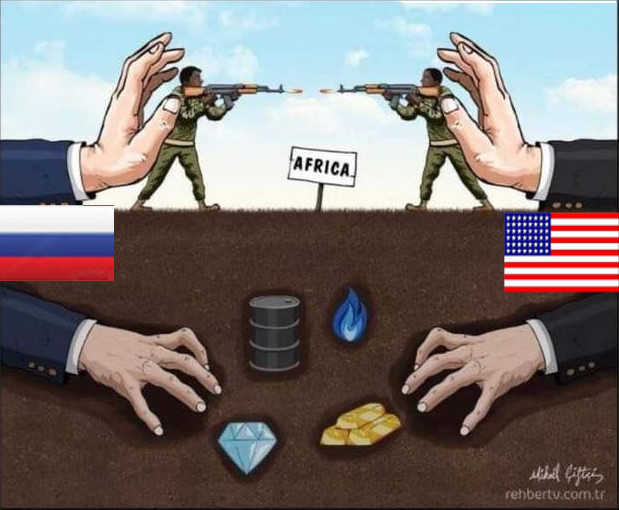
Trump Hosts DRC-Rwanda Peace Deal So, this peace deal seems to have an economic angle. I mean, that’s what some analysts seem to be speculating right about now. But then when you consider the three countries involved, what lies underneath – which I am not saying anything about, or going to be minuteing on. Does it sit down well with you when you look at the terms and conditions that of course brought about brought about this peace deal? Patrick: No. In fact, it’s very good that you start with that healthy skepticism. I might add two other important players, China and South Africa. South Africa because just about a year ago or two years ago there was a commitment to put 2900 army troops into the North Kivu and South Kivu region especially so as to stabilize the situation. they failed, and by February this year they would decisively lost in battles with the M23, a guerilla force that Rwanda is understood to be backing for historic ethnic reasons. but they failed particularly the South African army to not only get peace but to stabilize the terrain for South African investors and there have been plenty. Some of your viewers will remember the name Jacob Zuma his nephew and his lawyer had a $10 billion oil deal about 15 years ago. They couldn’t take it forward. There were many others. Anglo Gold Ashanti, the biggest historic gold mining house, had to back out after being caught working with warlords 20 years ago. There are plenty of other well-connected politicians from South Africa. The Chinese, of course, are the ones really taking most of the valuable minerals, especially the coltan, cobalt, and lithium and gold as well. And there are rare earth minerals. And in fact, the US really has its eye on $4 trillion worth according to Trump. And the State Department has said, well, there may be $25 trillion worth. And as you put it, then the question, can you get Rwanda and the DRC to settle differences so that the US can bring its companies in, displace about 450 Chinese companies in North and South Kivu. And then take the mineral ore, perhaps some of it smelted, to take it out on a train through Lobito, which is just on the Angolan coastline, having come from the Zambian copper belt. That’s the agenda of Donald Trump. He’s known as the greatest conman in world history. Will he succeed or is it just like it was the first time this was announced in June, a scam? And the fighting continues as it was indeed yesterday during the very meeting that they were having in the White House, or in the Institute for Peace, the Donald Trump Institute for Peace renamed. Lekan: Hmmm. Well with DRC’s $25 trillion mineral deposits or wealth, talking about cobalt, gold, copper, tantalum, tin, tungsten, lithium, I mean, it’s a lot in mineral deposits in the country. Some see the US’s involvement as new colonialism. Is that what it is? Patrick: I would say, obviously, in the way Donald Trump very openly – the term that they use is ‘transactional’ deal making – is always looking for a way to say, ‘we’ll put our military forces in’ – and that may happen or there may be mercenaries. Eric Prince, the founder of the famous Blackwater mercenary firm that was very active in Iraq and Afghanistan, has had some discussions with Felix Tshisekedi, the president of the DRC. So there may well be not just US army presence, although Trump is careful because he has a a base that is anti-war at some level, but his friends indeed many of his connections go into this mercenary world of Eric Prince. So I would watch for that space because the M23 is giving no indication it would willingly give up this vast amount of space they’ve taken especially in the January February campaign and especially kicking out South Africans and other southern Africans. So yeah neocolonial and I think the other spin is that Donald Trump is always looking for a personal aggrandizement and so he said yesterday that this is the eighth war he settled. Now, you can look at each one of them and say that’s not true. Hasn’t been settled. And even some of the principles involved, if there was a ceasefire, would say no, it wasn’t Trump. But he’s looking for a Nobel Peace Prize. He didn’t get it this year. And he’s hoping that by the January deadline that he’ll be able to say, ‘No, this is the big one.’ Don’t forget, and I’m sure the viewers know, that about 6 million Congolese have died since the early to mid 1990s, when this struggle for resources got underway. I’d say along with Nigeria and certainly South Africa, there have been more violent incidents and illicit looting of resource wealth, than anywhere, probably in the world. I mean this is an extraordinary site isn’t it? And it means that the areas where copper is more common, in the south, have huge companies including Glencore – the biggest of the mining and commodity companies – or Ivanhoe, or South Africa’s major black-owned firm, where the owner’s name is Patrice Motsepe. He’s the brother-in-law of President Ramaphosa, hence generating questions of conflict of interest. But in the south side of the DRC in the copper belt, they’ve been doing very profitable extraction. There’s in fact even an annual general meeting going on, as we speak, of ARM in Johannesburg today. There were protests there because ARM and Glencore supply coal to Israel. So there’s a lot of conflict over what’s happening in the eastern DRC. And, in general with these companies, and it’s a good thing, I think, that if the US enters, we’ll all be paying a great deal more attention to this crucial area, that along with Sudan and of course Gaza and Ukraine, represent the wars underway that really for humanitarian purposes, and to keep resources for future generations, and for the ordinary person – not the looting companies – we all have to pay much more attention to. Lekan: Okay, so you actually said, that the US president, you described him as a con man. And you talked about the losses that DR Congo has had to suffer, in terms of material, you know resources and money. And we understand that between 1996 and 2005, eastern DRC had expended or lost about $18 billion, processing this war, funding ammunition to fight back the rebels, and still losing, through the back channel, its mineral resources. So don’t you think that this particular peace process is actually needed, to probably stem the tide of losses for DR Congo – and probably when we see investors and companies start coming into a stable region, like the DRC, then it begins to reap the reward either monetarily or economically, don’t you think? Patrick: Oh, one would certainly hope so because the Congolese government in Kinshasa has already identified some of the bigger companies that loot their country through the eastern DRC, particularly by taking the minerals out through Rwanda instead of processing them, smelting and then maybe some light manufacturing based on these minerals. You could, for example, have battery plants. And instead of going to Kinshasa where the tax should be collected, they are being smuggled out through Rwanda and Uganda. And then those raw materials – often dug out from mines with artisan labor, including child labor – the minerals then go to the east coast of China to Foxconn or some of the other companies, where they’re put together by underpaid workers. They end up in our smartphones. And so we’re all very much implicated, aren’t we? And trying to find a way to end the extraordinary suffering and the plundering of the Eastern DRC. Will Donald Trump be a contributor to that, or simply shifting around – bringing US companies and maybe the US military or mercenaries in the coming months? You know, he left this – it’s now December – and he left this from June, when he had the initial meeting of Congolese and Rwandan foreign ministers. And he said, in July there would be a meeting of Tshisekedi and Paul Kagame. That it’s taken that extra six months – and as I said, there is just no indication that M23 will stop trying to gather more land and that the conflicts including with some of the Congolese loyalists will stop. There’s just no indication that this peace deal is anything but a giant ruse. And you could really see that on the faces: smirking by Paul Kagame and very stone-faced by Felix Tshisekedi. I think he sort of knew that nothing will change. His country will continue to lose massive amounts of resources, and people will suffer extraordinarily. There are about 6 million displaced at the moment and that appears to continue. Lekan: And now, given that Rwanda has long denied supporting M23 rebels, we see the country with Rwandan president being part of this peace deal. Is it a cynical for it to be part of the discussions about Congo’s mineral deposits? Patrick: Oh yes, because the real forces are partly under his control, the M23. You never know whether they are moving forward. They’ve certainly taken lots of South African prisoners, killed a couple of dozen of them – to the chagrin of South Africa’s president Ramaphosa, who had some stern words for Kagame. And the Rwandans then did assist the South Africans in escaping, eventually, in April this year: the South African troops and their materiel were brought out, thanks to Rwanda. So Kagame knows how to do deals. He’s been, effectively, in power since the end of the genocide in Rwanda. He has an extraordinary capacity to build that country under dictatorial conditions. But he may then eventually run into the stern hand of Donald Trump saying, ‘You have been working profitably with the Chinese, but we want to get rid of the Chinese.’ The whole point for Donald Trump is a longer-term agenda of displacing China in Africa. And that’s why I think we’ll see a lot more attention to that export route, the railroad that will go from the Zambian copper belt, and a new line going up the eastern side of DRC, and then they will take it out through Lobito. Joe Biden, the former president, had set that up in his last couple of weeks on the job in, I think it was December of 2024, just before Trump came to power. Just a year or so ago. So, we know that the US have very aggressive interests in minerals. And they realize, especially, when the Chinese replied to Donald Trump’s tariffs, they hit back very hard by saying, ‘Well, we’ll put a ban on rare earth minerals and the magnets that are crucial to high-tech US production. We’ll put a ban on that.’ And that means, I think, South Africa – and you know some of the conflicts that go on with the US at the moment – the softening up, of the continent for Donald Trump, and then these performative peace deals. The big question is whether Qatar – a major new force in the continent, both for economic purposes but also for peace purposes – will make any impact because they’ve got a parallel track going on and the Qataris even the Emir visiting Kinshasa, certainly want to have a reputation of doing deals that will be prosperous and bring lasting peace. But Donald Trump has very different interests, which are just really to beat up China and get the raw minerals out. Especially rare earth minerals coltan and cobalt. And get them out to western hands. Lekan: So this probably means that whatever peace deal that has been signed would economically now not favor a war-ravaged Congo. But then when you look at it, you know, beyond security and political reconciliation, and of course economic gains, is it wise for Congo to pursue economic integration and resource partnerships with the US and Rwanda, or probably there are no alternatives to getting out of this? Patrick: Yeah, of course, Tshisekedi has been very clever in playing both sides. He’s certainly gone to China and has good relations. Rwanda is much more leaning to the West. And the question of Tanzania – the crucial link with the Tanzania-Zambia railway which has traditionally allowed for copper to be sent out from that southern region of the DRC, out through Dar es Salaam, being rehabilitated. And that’s been a Chinese project. So we can see it like the Berlin conference of 1884-85 dividing up Africa, according to the five big European colonial powers – the UK, France, Belgium, Portugal and Germany – at the time. But now it’s a very much more complex situation where African natural resources – especially non-renewable resources – are being taken out. And I think that’s why I always look to civil society, the NGOs that are promoting peace in the DRC or some of their solidaristic allies: Friends of the Congo in the US is very reliable. Even in South Africa there are solidarity groups that regularly hold meetings partly, because Congolese refugees come to South Africa, and tragically face xenophobia from the working class. So this need to have a countervailing force of civil society has never been greater. And watch-dogging Donald Trump in Africa, as we’ve seen from the explosions over the G20, and the refusal by Trump to send anyone to the Johannesburg G20 summit, and now refusing South Africa entry into the G20, when they’re having their first meetings even next week. It shows that we really have a long way to go, to get some countervailing power. Lekan: Okay. So I recall that you talked about the fact that there’s a possibility that US companies might just be gaining inroad into the Congo with these peace deals signed and probably foreign boots also on Congo soil. And I’m looking at it from the angle of the possibility of not only US but then global technologies and manufacturing firms also investing you know in Congo’s rare minerals. Of course, it would mean that these minerals in its raw state would be leaving Congo, so to speak. So, should President Tshisekedi probably negotiate ways for this, for these movements to actually transform some sort of – or bring about some sort of – industrial revolution in the country. Is it possible that when we see these companies come, instead of having the raw minerals exit Congo, they build structures, build businesses, you know, build plants. And all that would bring about job creation and fuel some sort of economic growth for the country. Is it possible? Patrick: Well, it’s possible and has been done before. Certainly, South Africa built up a huge smelting complex and processing of minerals. Platinum and gold get produced as bars and ingots in Johannesburg and then are able to be put on an airplane. But for most of the raw materials, after some minor processing, they basically go out the old-fashioned way by train or by truck and they go to the ports and then they go off to usually it’s now China for processing. And that’s the big challenge. Namibia has blocked lithium exports, last year, from its mines to China. And Zimbabwe has had many controversies over raw lithium being exported, and then other raw materials. So that’s the big challenge. Some call that ‘resource nationalism’ – to take your minerals and do more beneficiation more local processing. What you need for that, is energy supplies, of electricity, that are reliable and inexpensive. South Africa lost those over the past 15 years, mainly due to the corruption associated with the building of new coal fired power plants. We could name the Japanese company Hitachi for having bribed the African National Congress leadership, as is well known. However, getting electricity – and there, of course, the biggest source of electricity in the region – could well be a big dam on the Congo River and that dam which would be potentially 42 GigaWatts, not too far from Kinshasa, the Inga Hydropower Project, has been talked about, to get the electricity out to the eastern DRC, to do exactly that processing and manufacturing. But you know, they’re saying, well that’s a hundred billion dollars, and who will invest in a country with such enormous instability. I mentioned civil society. I think some of the civil society instability, Gen Z, in Tanzania the last couple of weeks angry about election abuses, and in Zambia protesting against the leader Hichilema just a couple of weeks ago. And of course, Madagascar and Morocco, Tunisia, Kenya, and many African countries, with the youth furious. And it’s quite logical that, as has happened before in the eastern DRC – perhaps not in Rwanda, which is more tightly controlled – we may see more evidence of political instability. That’s one of the reasons we haven’t seen the African Continental Free Trade Agreement work. And of course, I think we’d all want to see the unity of Africa as a consumption site, to get the economies of scale that would justify more processing and manufacturing. But as it stands, I mean, even South Africa is losing its ferrochrome smelters, its steel, and many other of its base metals to Chinese imports. Because they have such overproductive, overcapacity, they’re just pushing it into the world. The more that Donald Trump puts tariffs on China, the more China sends some of those products to Africa and makes it hard to get up and running the resource nationalism and the industrialization we desperately need. Lekan: Okay, so in 30 seconds, this would actually affect China’s markets in the DRC, or should I just say in the region. How do you think it would react? Patrick: Oh, I think it’s a very open question because they don’t have the military bases, aside from a small one in Djibouti. And they don’t have a major Chinese company or state-owned companies, there’s about 450 small companies. I fear that they will have to let part of this huge source of rare earth minerals go. And the US will come and take over. Maybe that’s a worst-case scenario. The best case would be, if you can get some regularization, get the Chinese companies to compete in a proper legal way, not smuggle out the minerals through Rwanda. And I think that remains to be seen. But Donald Trump doesn’t have a great track record. He’s really just in it for the moment, for the con, for the appearance. I fear that’s the logic here. Lekan: Well it’s quite interesting, that seems as though US will be benefiting more, I mean from this lucrative rare earth minerals, that will probably be shipped out of the Congo. But then I want to hope that there’s going to be a way whereby Congo will be able to economically find its way out, to see that it benefits more if possible and I see that industries are grown, businesses spring up, jobs are created whether or not it’s going to be losing a larger chunk of its mineral deposits. Patrick, Professor Patrick Bond, a political economist at the University of Johannesburg in South Africa, thank you so much for your time on the show. https://www.youtube.com/watch?v=VBWPtfpfgIw Back |
|
||||||
|
|||||||