 |
|  |


|
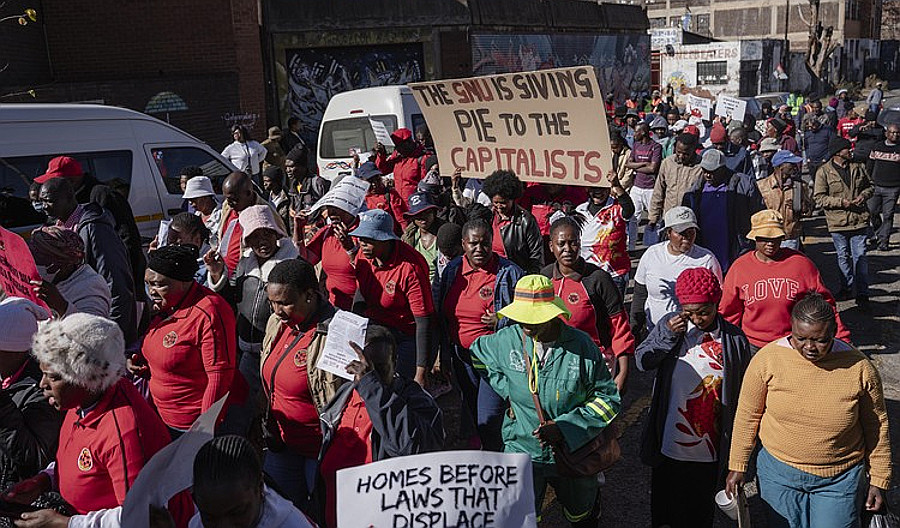
The PIE Amendment Bill: making the poor pay for the housing crisis The PIE Act of 1998 exists to give effect to Section 26(3) of the Constitution. This guarantees that no one may be evicted from their home without a court order that has weighed all relevant circumstances. These include the needs of children, the elderly, people with disabilities, and households headed by women. This is not a technicality. It is the difference between eviction as a narrow legal remedy and eviction as a humane process that takes account of who is actually being displaced and what will happen to them afterwards. Under apartheid, laws like the Prevention of Illegal Squatting Act treated occupation as a crime and enabled forced removals, stripped of any regard for dignity. The Constitution and the PIE Act deliberately broke with that logic, recognising that people occupy land out of necessity, not criminal intent. What the bill gets wrong The new amendment bill puts that hard-won protection at risk in several ways. First, it creates offences for anyone who “incites, arranges, organises or permits” occupation. This is a provision broad enough to sweep in community organisers and activists, and even occupiers themselves. It effectively criminalises landlessness through the back door. In a country where millions occupy land out of necessity, that is not a technical fix. It is a return to a punitive framework the Constitution explicitly rejected. The bill also threatens the judicial discretion that makes the PIE Act work. It is the requirement that they weigh the full circumstances of each case that allows outcomes to be fair, rather than mechanical. Narrowing that discretion risks subjecting occupiers to invasive scrutiny of their finances, health and living conditions. It shifts attention away from the deeper, structural reasons people occupy land in the first place. Most troubling of all are the bill’s provisions on alternative accommodation. It would allow courts to limit how long alternative accommodation must be provided. In some cases, they would be allowed to grant evictions without requiring any alternative accommodation at all. This is at a time when the state is not meeting its existing housing obligations, emergency accommodation is already overstretched, and no transitional housing programme exists to catch people who fall through. Limiting alternative accommodation does not solve the housing crisis. It simply delays its consequences and shifts them onto the people least able to absorb them. The real failure isn’t the law None of this is happening in a vacuum. South Africa’s housing crisis is not an accident of circumstance; it is the result of policy choices: chronic underinvestment in affordable housing, and a land reform process that has moved too slowly to matter. Tools like expropriation in the public interest and the release of state land already exist in our legal framework; they have simply not been used at the scale the crisis demands. The predictable result is that the burden of that systemic failure lands on the poor, who now face the added threat of criminal sanction for the basic act of seeking shelter. What should happen instead? The real question facing this amendment process is whether the law will continue to give meaningful effect to the constitutional rights to dignity, equality and access to housing. Any change that criminalises occupation, narrows judicial discretion, or weakens the guarantee of alternative accommodation is a step backwards from that vision. We are calling for an amendment process grounded in constitutional principle and in the lived realities of the communities this bill will actually affect, with public participation of the people most directly at risk of eviction and homelessness. The legitimacy of this reform depends on nothing less. A society is measured by how it treats those with the least power in it. Right now, the PIE Act is one of the only things standing between millions of poor and working-class South Africans and homelessness. That protection needs to be reaffirmed, not quietly written out of the law. https://www.amandla.org.za/the-pie-amendment-bill-making-the-poor-pay-for-the-housing-crisis/? Back Buhle Booi is Head of Political Organising and Campaigns at Ndifuna Ukwazi. |
|
||||||
Thanks for visting the G20 From Below Website. If you want something published here or other enquiries mailto:Brics-from-below@protonmail.com
|
|||||||