 |
|  |


|
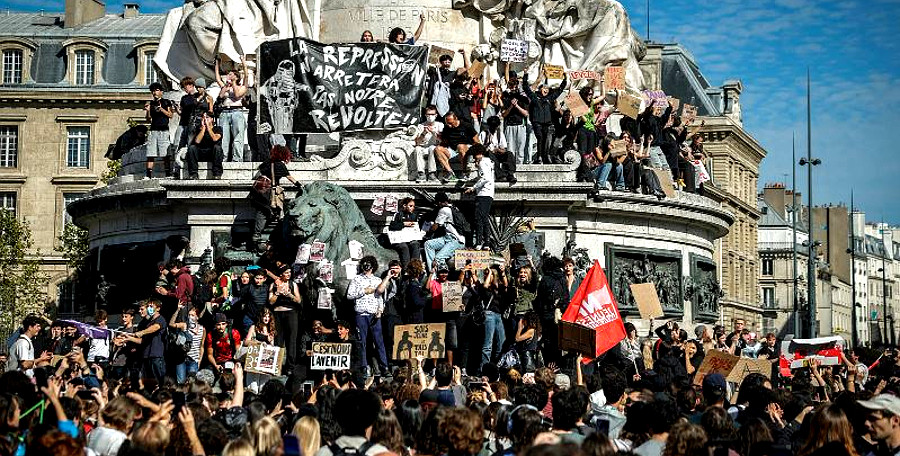
The uprising of the French students The dissatisfaction also extends to the staff shortage. While the Ministry of Education, thanks to a reform that lowered hiring requirements, managed to fill almost all teaching positions offered in this year's recruitment process – compared to 91 to 92 percent in 2025 – some of the new teachers, who only hold a "Bac+3" degree (a three-year bachelor's degree), must first complete two years of training before they are allowed to stand in front of a class. The effects of the reform will therefore not be immediately noticeable. Furthermore, the reassuring figures are dampened by a decrease in the number of positions offered, which is offset by the increased use of teachers on temporary contracts, whose training is often rudimentary. More generally, the teaching profession is experiencinga genuine recruitment crisis, according to the Court of Auditors , and is seeing a "slight but steady" increase in resignations.In the latest OECD survey, published at the end of September, only four percent of French teachers feel that their profession is valued by society – the lowest figure of all the countries surveyed. The main reason for this is low pay, which is below the OECD average; three-quarters of teachers consider their salary too low . The consequence of this low attractiveness is difficulties in delivering all the planned lessons. At the start of the 2026 school year, half of all schools were short at least one teacher . For the 2023–2024 school year, the Court of Auditors estimated that around nine percent of lessons were cancelled in secondary schools, while in priority education zones —disadvantaged areas receiving additional funding—this figure rose to an average of eleven percent. This teacher shortage inevitably impacts the knowledge level of these young people and their professional futures. Despite extensive new hires in recent years, France is experiencing an acute shortage of support staff for students with disabilities, with almost 50,000 students waiting for such a support worker at the start of the 2025 school year . The situation is similar for school nurses: in 2023, only 7,700 positions were available for twelve million students. Despite salary increases for both professions in recent years, the salaries remain unattractive. Steadily growing inequality Beyond these overall figures, the situation varies enormously from school to school. The Académies of Créteil and Versailles, which cover the departments surrounding Paris, have long struggled to recruit teachers. Within each academy, there can also be significant differences between schools in affluent urban neighborhoods and those in working-class suburbs (the banlieues populaires ). Newly qualified teachers are often sent to these disadvantaged areas, where they accumulate points to request a transfer. Students in these middle and upper secondary schools therefore face high teacher turnover among inexperienced staff, which worsens their learning conditions. Data from the Ministry of National Education confirms this assessment: the " Social Status Index," assigned to each school based on the occupations of its students' parents, reveals considerable inequalities and strong social reproduction. The link between social background and academic success is particularly pronounced among French students compared to other OECD countries. While differences exist between public schools, these are even greater between the public and private education systems . In 2022, 40 percent of students in the privately run, state-contracted sector came from highly privileged backgrounds, compared to only 20 percent in the public sector. Conversely, 18 percent of middle school students at private schools came from disadvantaged backgrounds, compared to 42 percent of students in the public sector. These disparities, which have steadily increased since the late 1980s, can be attributed to the selection processes practiced by many private schools, which are based on grades and tuition fees paid by parents. Nevertheless, these state-contracted private schools are predominantly funded with public money: In 2024, a parliamentary report found that the state contributes €8.5 billion annually to this sector, with an additional €1.5 billion coming from local authorities. As a result of a compromise in the long-standing "school war" between the state and the Catholic Church (the vast majority of private schools in France are Catholic), the Debré Law of 1959 stipulates that the state covers the salaries of teachers and 75 percent of the operating costs of contracted schools – in return for their adherence to the official curriculum. Alongside these, there are private schools without a state contract, which operate more freely and receive no public funding, but which educate less than one percent of French pupils. Although this fiscal lever would allow the state to exert pressure on private schools to promote greater social diversity, successive ministers have consistently avoided making such demands. The reason is quite simple: most of them themselves attended the most prestigious schools—the Grandes Écoles , France's highly selective elite institutions—and send their own children to private schools. In 2024, the short-lived Minister of Education, Amélie Oudéa-Castéra, sparked a scandal when she justified her children's enrollment at an extremely elite private school by citing misconduct by public sector teachers. Her predecessor, Gabriel Attal (who later became Prime Minister and is now a presidential candidate), had himself attended the very middle-class École Alsacienne in the same neighborhood. The educational backgrounds of these ministers thus stand as a symbol of a form of social separatism. The government is pouring oil on the fire. Having grown up in a middle-class bubble, Macron's ministers know virtually nothing about the social realities of public schools, often leading them to enact reforms that worsen the sector. At the start of the decade, France had the most overcrowded classrooms in Europe . For the 2026 school year, the average teacher will be responsible for 21 pupils in primary school, 25.3 in middle school, and 30.5 in high school. With such numbers, it is difficult to provide adequate support for every pupil; inevitably, some will disrupt the class and fall behind. However, the declining birth rate could allow for a reduction in the number of pupils per teacher: by 2035, there will be 1.7 million fewer pupils in France , a decrease of 14.2 percent. Teachers' unions, parents, and many politicians see this as an opportunity: if the number of teachers remains stable, the ratio can decrease naturally over the years. But the government has a different priority: saving money. In 2026, 3,256 teaching positions were cut . The same austerity measures also led to the cancellation of €40 million – two-thirds of the budget – from a school renovation program designed to address climate change, right in the middle of a scorching hot summer. Other recent reforms have also fueled anger, particularly those implemented by Gabriel Attal during his tenure at the Ministry of Education (July 2023 to January 2024). One such reform is the " choc des savoirs" ("knowledge shock"), which introduced performance-based groups for core subjects. Teachers, students, and parents widely denounced this as a form of "social selection," and its effectiveness has always been disputed . Attal's flagship reform was ultimately reversed in early 2026 . The second measure, enacted in the name of laïcité —France's strict principle of secularism, which regulates the role of religion in public institutions, including schools—is the ban on wearing the abaya (a long, loose-fitting garment worn by some Muslim women), seen as a religious, Muslim-identifying garment. However, this decree, aimed at appealing to conservative and far-right voters, proved problematic to enforce: how does one distinguish an abaya from a dress? Aside from the French Council of the Muslim Faith pointing out that the abaya was never a religious garment or requirement, the inconsistent enforcement among girls wearing similar clothing (some were required to change, others were not) and the fact that only Muslim girls were targeted sparked considerable controversy. Even though the goal of secularism in national education is of fundamental importance, the question arises whether sending young Muslim girls home because of an article of clothing, instead of allowing them to attend public school, is really the right way to combat Islamic fundamentalism. The mobile phone ban in high schools, in effect since the start of the 2026 school year—it had already been implemented in primary and middle schools—may also have contributed to fueling the anger of high school students. While the measure has clearly had positive effects on student concentration and public health, and helps to curb cheating, mobile phones remain an indispensable tool for many school activities. Teachers sometimes ask students to use their phones in class; grades, timetables, and homework are usually transmitted via the "Pronote" software (the online school management platform used in most French schools), and mobile phones also serve as cafeteria cards. The measure has therefore not been implemented uniformly , as each school is responsible for integrating it into its internal rules, inevitably leading to comparisons between students from different schools. Ultimately, the reform known as Parcoursup , introduced in the early Macron era, was never truly accepted. This selection algorithm for university admissions sparked outrage upon its introduction in 2018, as it effectively eliminated the right to higher education solely through the acquisition of the Baccalauréat. The algorithm's lack of transparency only exacerbated the situation. High school students submit numerous applications for the upcoming academic year without any certainty about the outcome. For some, there is no answer at all: In July 2026, 100,000 students were left without a place and therefore unable to begin their studies. Even though the number decreases as places become available, the stress for these young people and their parents is immense: They apply for all sorts of courses, sometimes far removed from their preferences and where they live, and struggle to prepare for the new academic year. Discouraged, some wait until the following year to apply again. Precursors of the current protests The interplay of these many factors, coupled with a particularly worrying atmosphere—wars, climate change, the rise of the far right, and a struggling economy—has led to extremely poor mental health among many young people. According to Santé publique France , the national public health agency, 20 percent of students experienced suicidal thoughts at some point during the year. While adolescence has always been a challenging phase of life, such figures are unprecedented and particularly alarming. It therefore didn't take much to motivate the students to launch a social movement that also gave some of them hope for the future and a sense of collective enthusiasm that had been denied them by the dominance of screens. Of course, the current wave of school blockades, like any youth movement, is chaotic; its demands are sometimes confused, and its methods don't always meet with consensus. Naturally, there are also young people who don't want to participate in the blockades and are more concerned with passing their exams. The Ministry of Education is therefore planning video conference lessons for the 400 to 500 blocked high schools in the coming days . As a sign of the times, technological means now play a central role – both to weaken the movement and to fuel it with Snapchat videos and Instagram posts. But apart from this novelty and the fear that people might faint in the sweltering temperatures, the high school movement of 2026 has much in common with other historical episodes. Over the past four decades, a major youth movement has emerged roughly every ten years, always centered on the question of resources allocated to education. In 2018, a student movement arose—admittedly smaller than today's—that opposed the "Parcoursup" program and demanded more university places. In 2005, it was the Fillon reform of the high school diploma and budget cuts that drove students to the streets. Although the government at the time did not back down, the following year, faced with outrage over the so-called initial employment contract (which allowed companies to dismiss young employees without giving a reason during their first two years of employment), it was forced to back down. Looking further back, other mobilizations are reminiscent of the current one. As early as October 1998 , students protested for more teachers and smaller classes, as well as against the general feeling that their future was closed off. The movement reached its peak on October 15th with 500,000 demonstrators across France and raised four billion francs (approximately one billion euros in today's money). The movement also began in the Parisian suburbs in 1990 after a young girl was raped at a high school in Saint-Ouen. Besides fighting for safer schools, the young people demanded more teachers and the renovation of their dilapidated schools. The movement led to a 4.5 billion franc (approximately 1.2 billion euro) aid package and the establishment of " conseils de la vie lycéenne" (high school councils) , which allow elected student representatives to participate in certain decisions affecting their schools. Will the movement spread? Can the wave of school blockades of 2026 repeat these successes? While it's too early to say, the answer will depend on whether the alliance can be expanded. After high schools, universities could be the next target— some are already being blockaded . The university students do indeed share common problems with high school students, such as dilapidated buildings and a lack of space, which prevents them from studying under adequate conditions. Average spending per student has been steadily declining since 2010, and every French university ran a budget deficit that year. The same logic of inequality and privatization also applies to higher education. Given the shortage of places at public universities, 26 percent of students opted for private higher education in 2022 – a proportion that is growing year by year. Between 2012 and 2022, the number of students at private universities increased by 63 percent, compared to only three percent growth in the public sector. The market for private universities ranges from top-tier offerings to outright fraudulent practices, but they all share at least one common feature: often substantial tuition fees. However, student life is becoming increasingly expensive, and the precarious situation of students has increased significantly in recent years : for example, 23 percent of students have already skipped a meal for financial reasons. The 2027 budget is unlikely to improve the situation, as it includes a freeze on means-tested housing assistance for rent payments. Always on the lookout for further savings, the government also wanted to introduce fees for students who do not receive means-tested scholarships to attend a Brevet de technicien supérieur (a two-year vocational college program) or Classes préparatoires (the highly selective two-year preparatory courses for the Grandes Écoles ). Faced with outrage from students, the government recently abandoned this idea . In addition to the students, their teachers could also join the pupils, some of whom already went on strike on September 29th to protest years of wage stagnation. Since their demands often coincide, this pooling of resources makes perfect sense. And indeed, it became a reality on October 6, when various unions and youth organizations such as the Union étudiante and the Union syndicale lycéenne took to the streets to organize large-scale blockades at high schools and universities and to demonstrate throughout France . Militant actions and a hostile press In addition to trade unions and youth organizations, La France insoumise (LFI) is another party calling on school and university students to mobilize en masse. The left-wing party, led by Jean-Luc Mélenchon, quickly became the political voice of the students' demands. Some of its most prominent representatives were particularly well-received by the young people during the blockades, such as MP Louis Boyard, who himself was previously active in student government. Many elected LFI representatives sought contact with students from the outset, both to encourage them to blockade their schools and to de-escalate tense situations with law enforcement. This presence drew sharp criticism on television talk shows; the LFI was accused of inciting chaos and blamed for damage in several cities. The mayor of Saint-Denis, Bally Bagayoko, was even accused of setting fire to a trash can, when in reality he had been trying to extinguish the fire. As with any social movement, the issue of violence quickly dominated media coverage. An analysis of the evening news broadcasts on the television channel France 2 over a four-day period shows that 75 percent of the airtime devoted to the student protests focused on violence, 12 percent on accusations against LFI, but only 8 percent on the movement's demands. While most of this violence was limited to setting fire to trash cans and igniting fireworks, there were also some striking scenes, such as the burning of the entrance to a high school in Nantes . As with any social mobilization, the vast majority of participants are behaving peacefully, and the trade unions and political organizations supporting the movement have all called for restraint. However, in television talk shows, LFI is very quickly portrayed as responsible for violence and unrest. Prime Minister Sébastien Lecornu even accused "LFI and its representatives on the extreme left" of being behind the movement, citing a memo from the intelligence service that was immediately leaked to the media . La France Insoumise has dismissed this claim as a "conspiracy theory " that "infantilizes" students and sees it as part of a "strategy of neglect and provocation." However, the government's strategy appears to be partially successful: 55 percent of respondents in a recent poll believe the movement is being manipulated by LFI. Another poll, however, shows that 62 percent of citizens consider the student movement justified. Faced with largely supportive public opinion and budgetary constraints, the government decided to resort to repression. With the exception of the farmers, Emmanuel Macron consistently employs the same tactic against every social movement: cracking down hard on protests to intimidate participants and exploiting violence to discredit the movement. More than 5,000 students were arrested in a single week – an unprecedented number. Police violence was also considerable, for example, when a grenade was fired at close range into the face of a 14-year-old boy in Val-d'Oise, north of Paris. This strategy is risky: in the event of a tragedy – for example, the death of a young person as a result of a police operation – anger could be directed at the police and the government. This is precisely what happened in 1986 in the case of Malik Oussekine , named after a 22-year-old student who was killed by police during protests against the Devaquet reform; this reform introduced a selection process for university admissions. Two days after his death, the reform was withdrawn. The approaching presidential election campaign The mobilization of the students has certainly surprised the entire political class and brought the dissatisfaction of the youth back to the forefront of a presidential election campaign in which this issue had previously played hardly any role. Since they have no real answer, the Marine Le Pen-led National Rally (RN), the traditional right, and the Macron bloc are hoping the movement will lose momentum, in the hope of quickly moving on to another issue. Marine Le Pen also used the opportunity to criticize the allegedly excessive resources allocated to the suburbs—and thus to the people with immigrant backgrounds living there—compared to the “forgotten France” of rural areas. However, the figures contradict this claim and show an average underfunding of 30 percent per pupil in Seine-Saint-Denis compared to the rest of the country, even though rural France is also neglected by the state. For La France Insoumise, the rise of the social movement offers an opportunity to highlight certain points of its platform, such as the abolition of Parcoursup and increased funding for national education. Should the movement gain traction and secure concessions, Jean-Luc Mélenchon will be able to use it as a campaign issue and claim that his strategy of broad mobilization is delivering results. The presidential candidate also hopes that this support will convince young people to vote for him. Since he is particularly popular with young people, he suffers from the low voter turnout in this age group. Conversely, LFI risks being held accountable should the movement degenerate and be characterized by violence. This social movement—which may soon be joined by a call to revive the Gilets jaunes on October 17 to protest rising prices—is in any case a barometer of the general mood in France on the eve of a crucial election. Tension is everywhere, and Macronism, in its twilight, is increasingly being overtaken by events and rejected by the citizens. A very strong polarization is emerging between a left-wing camp dominated by La France insoumise, which wants to build on social struggles, and a far-right bloc dominated by the RN, which is making increasingly martial proposals to restore “order” in the country without offering real answers to the social causes of the anger. https://www.rosalux.de/news/id/55298/der-aufstand-der-franzoesischen-schuelerinnen? Back |
|
||||||
Thanks for visting the G20 From Below Website. If you want something published here or other enquiries mailto:Brics-from-below@protonmail.com
|
|||||||