 |
|  |


|
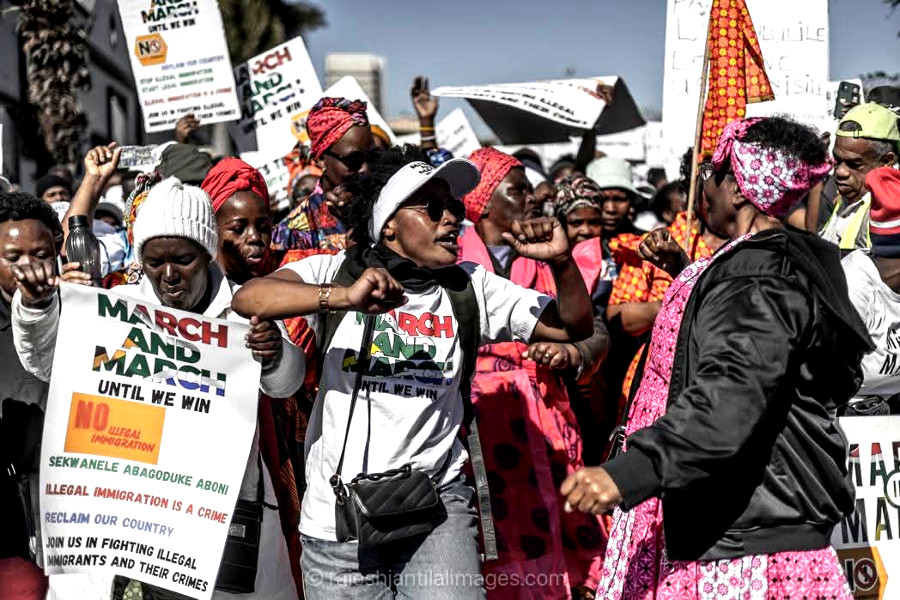
What do we mean by nationalism today? Ideologies do not exist apart from the material world but reflect its economic systems and class relations. African nationalism formed an ideological pillar of the ANC and numerous formations in the broader anti-apartheid movement. It functioned to outline a vision for liberation from all forms of discrimination and oppression in South Africa. (Photo: Creative Commons) The Afrikaner community was shaken by industrialisation, World War 1, the great depression and subsequent urbanisation. It sought to rid itself of British imperial domination. It built an Afrikaner elite class alliance throughout the 1930s in order to solve the ‘Poor White Problem’ and ‘save the volk’. Tapping into the frustrations and prejudice of the Afrikaner white working class, Afrikaner nationalism convinced millions that the ’volk’ were a chosen people of god, who shared a cultural identity and history of struggle. They were blessed by god to be stewards over South Africa, guiding the native population into ‘Christian civilisation’ through a policy of separate development. Most critically, Afrikaner nationalism provided the moral and political justification for racial discrimination, land dispossession and the brutal economic exploitation of non-white people. African nationalism formed an ideological pillar of the ANC and numerous formations in the broader anti-apartheid movement. It functioned to outline a vision for liberation from all forms of discrimination and oppression in South Africa. It evolved in response to pre-1948 settler-colonialism and the post-1948 ‘Volkskapitalisme’ (i.e the ‘people’s capitalism’) of the National Party. Like all forms of ideology, African nationalism’s evolution (within and outside of the ANC) was shaped by strategic decisions, such as the alliances between organised labour formations, women’s movements and socialist organisations like the South African Communist Party. African nationalism proposed unity on the basis of shared oppression and the forging of a non-racist, non-sexist, multi-cultural, democratic society upon the defeat of white supremacy. The dawn of democracy saw the post-apartheid government place emphasis on the non-racial pillar of African nationalism, through the idea of a ‘rainbow nation’. It was believed that the transition into a capitalist democracy would lay the basis for promoting unity through diversity and overcoming decades of racial division. New to the direction of African nationalism was the attempt to use the neoliberal state to build what former president Thabo Mbeki called a “patriotic black bourgeoisie”. It expressed the hope that this class of capitalist Black nationalists would prioritise the country’s national welfare and invest in social development. The proceeds from their capital accumulation would trickle downwards, raising the standard of living for the poor Black majority. The failure of rainbow nation nationalism The fundamental flaw in this attempt was that the racist oppression of apartheid died, but capitalism endured and continued to dispossess and exploit the vast majority of South Africans, most of whom were Black. Not only did capitalism endure upon the establishment of liberal democracy, but it also evolved into a neoliberal form that has nourished the triple crises of inequality, poverty and unemployment. Jobs are scarce, and the economy’s growth has been stunted for more than a decade. The basic necessities of life — electricity, water, food, healthcare — have become luxuries beyond the reach of millions. Communities are haunted by the terror of violent crime and surrounded by decaying infrastructure. Public institutions, whether it be police services, local clinics or schools, lack the financial resources and capacity to respond to people’s needs and issues. Those elected to govern the state have violated the public’s trust, habitually demonstrating they lack the political will, imagination or material interest to intervene and confront these crises. These conditions are a fertile ground for political opportunists to exploit genuine discontent and accrue destructive power. New methods and mediums of political propaganda For most of the 20th century, the means of spreading political propaganda rested largely with structures inaccessible to the majority of the public. The apartheid regime relied on the Dutch Reformed Church; the Nazi Party of Hitler’s Germany utilised mass media such as newspapers, or institutions such as schools; Hutu extremists who orchestrated the Rwandan Genocide used radio broadcasts to spread messages of potent hate. The machinery of propaganda has been forever transformed by the internet. Print, radio and television are no longer the mainstream means through which people receive news, information and political analysis. Social media has been pivotal to the increasingly sophisticated organisation and mobilisation of xenophobic nationalist movements like March and March. Online ecosystems across platforms like X and Facebook are utilised by anonymous popular users and politicians alike. They have enabled the rapid dissemination of xenophobic sentiment and nationalist rhetoric over the past several years. Importantly, the algorithms on platforms such as X are driven by a prioritisation of quick user engagement and the elevation of posts which produce strong emotional reactions — rage, disgust or shock. This encourages the spreading of sensationalised or completely fabricated news reports, inflammatory headlines, videos and pictures. Moreover, with billionaire Elon Musk taking over X and introducing the monetisation of social media activity, the platform gives popular accounts a direct financial incentive to post controversial, incendiary or completely misleading political information for money. The seemingly unstoppable use of artificial intelligence only compounds this. Recent studies demonstrate that a growing number of people are losing the ability to distinguish between AI (whether it be pictures or videos) and content made by human beings. Exploiting a disillusioned and disempowered working class It is neither fair nor accurate to say that South Africans are apathetic. Rather, the government’s failure to respond to the country’s crises has undermined public trust in the formal institutions of democracy. It has made millions disillusioned with the idea that electoral politics or the conventional means of democratic engagement are viable pathways to address the country’s issues. Movements such as March and March are compelling to some because they appear to challenge the status quo of a dysfunctional democratic order. They utilise rhetoric that speaks to a sense of powerlessness in the face of one’s life and community disintegrating. They brand themselves as “working on the ground”, challenging the legitimacy of the government through, at times, taking the law into their own hands by demanding people reveal their passports, work permits or identification documents. The weakness of the Left One of the most significant factors in the rise of right-wing nationalism around the world and in South Africa is the absence of militant mass movements, organisations and political parties of the Left. There is no movement of the working class, poor and unemployed armed with a positive political vision that not only critiques the capitalist status quo but also calls for a world beyond it. Political opportunists are able to easily fill the void, as more people grow frustrated and disillusioned with capitalist democracy. It is crucial we recognise and remember what happens when the Left is not present to act when capitalism is in crisis. Perhaps the greatest lesson is the violent defeat of the German revolution of 1918 to 1919. A right-wing, hyper-nationalist paramilitary group known as the Freikorps collaborated with the Social Democratic Party of Germany to brutally suppress the communist uprising. This hyper-nationalist paramilitary group, which would murder Rosa Luxemburg, eventually dissolved, but many of its foot soldiers and prominent members would go on to join the Nazi Party of Adolf Hitler and eventually orchestrate a devastating world war and horrifying genocide. With 12.5 million people unemployed and half the country’s population in poverty, the temptation of xenophobic nationalism is amplified, and its strategies are adapting to the new means and methods of political organisation. Rosa Luxemburg’s observation, made more than a century ago, applies to post-apartheid South Africa now more than ever: “Bourgeois society stands at the crossroads, either transition to socialism or regression into barbarism”. https://www.amandla.org.za/what-do-we-mean-by-nationalism-today/? Back |
|
||||||
Thanks for visting the G20 From Below Website. If you want something published here or other enquiries mailto:Brics-from-below@protonmail.com
|
|||||||