 |
|  |


|
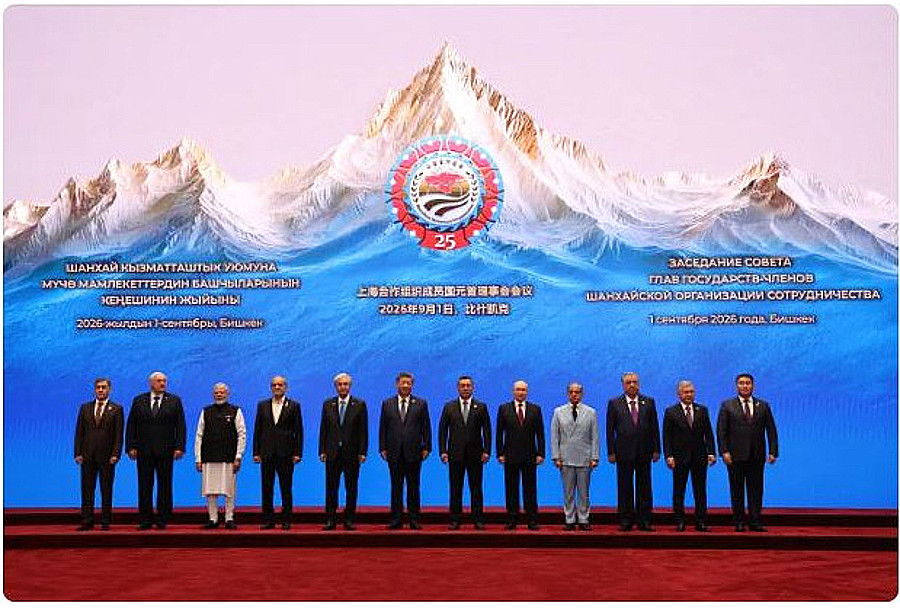
Multipolarity gives middle powers more choices but fewer guarantees For middle powers, this may be one of the defining characteristics of the emerging order: more room for manoeuvre, but less certainty about who will stand beside them when their security is threatened. Turkiye provides a particularly revealing example. It has been a member of NATO for more than seven decades and remains embedded in the Western security architecture. Yet Ankara has increasingly demonstrated that alliance membership does not require automatic political alignment with Washington. Turkiye has maintained relations with Russia despite the war in Ukraine, expanded its engagement with China and participated in the SCO as a dialogue partner. At the same time, its differences with the US and Israel over the future regional order in the Middle East have become increasingly visible. This does not mean Turkiye is abandoning NATO or moving into a Chinese- or Russian-led bloc. Quite the opposite. Ankara’s strategy depends precisely on avoiding such a binary choice. Its NATO membership provides security benefits that the SCO could not replicate. Its relationships with Russia, China, Iran, the Gulf states and other regional actors, meanwhile, expand its diplomatic and economic options. Brazil represents another good example. Unlike Turkiye, Brazil is not bound to the US through a formal military alliance. But it has traditionally operated within a US-dominated hemisphere where Washington has expected considerable political alignment from regional governments. Brazil’s refusal to join the US-led Americas Counter-Cartel Coalition (ACCC), together with its positions on the Iran war and other recent international crises, reflects its reluctance to accept that regional proximity should translate into automatic strategic alignment. Yet Brazil is not simply switching sides. Its participation in BRICS, its extensive economic relationship with China and its calls for reform of the international system coexist with important political and economic relations with the US and Europe. Brasília’s objective is not to exchange dependence on Washington for dependence on Beijing, but to preserve the ability to cooperate with both, and disagree with either. This may be one of the most consequential opportunities that multipolarity offers middle powers. The rise of alternative centres of economic and political influence reduces the cost of saying no. For decades, weaker states often confronted a difficult choice when facing pressure from a dominant power: comply, resist and risk isolation, or seek protection from a rival bloc. The proliferation of partners and institutions complicates that calculation. A government that disagrees with Washington may deepen relations with Beijing without becoming a Chinese ally. A state dependent on China economically may strengthen security ties with the US without fully aligning with Washington. Membership in BRICS does not prevent cooperation with Western institutions, just as membership in a US-led security framework does not necessarily preclude engagement with China or Russia. India has made this logic almost an organising principle of its foreign policy. New Delhi participates in the Quad with the US, Japan and Australia while simultaneously belonging to both BRICS and the SCO. At Bishkek, India supported the SCO declaration defending Iranian sovereignty while Prime Minister Narendra Modi also stressed to Pezeshkian the importance of preserving freedom of navigation and commerce through the Strait of Hormuz. The Gulf Cooperation Council member states are pursuing their own version of this diversification. Saudi Arabia, Qatar and the United Arab Emirates, for example, continue to depend heavily on their relationships with the US for security, while simultaneously expanding economic and diplomatic ties with China, India and other Asian powers and participating in new regional and international arrangements. None appears eager to replace Washington with Beijing. They want relationships with both. This suggests that the most significant consequence of multipolarity for middle and smaller powers may not be the emergence of a new bloc to which they can attach themselves. It may be the declining necessity of attaching themselves exclusively to any bloc at all. But greater autonomy comes with a cost. The same flexible arrangements that allow states to avoid choosing sides also provide fewer guarantees when crises become existential. BRICS does not have an Article 5. Neither does the SCO, which explicitly defines itself as a non-military organisation. Strategic partnerships can provide weapons, investment, diplomatic backing and political support without obligating partners to go to war for one another. The emerging international system is therefore unlikely to resemble a simple transition from a US-led order to a Chinese-led one, or even a confrontation between two clearly defined blocs. The older alliance system is not disappearing. NATO remains central to European and Turkish security, while US security relationships remain indispensable across much of Asia and the Gulf. What is emerging alongside it is another layer, a more fluid landscape of overlapping institutions, selective partnerships and transactional relationships. Multipolarity, in other words, may not require states to choose a new camp. That gives middle and smaller powers greater agency. But it also places greater responsibility for their own security upon them. The world they are entering may offer more partners, more bargaining power and more freedom to say no. What it may offer less frequently is certainty about who will say yes when they ask for protection. https://www.aljazeera.com/opinions/2026/9/5/multipolarity-gives-middle-powers-more-choices-but-fewer-guarantees? Back |
|
||||||
Thanks for visting the G20 From Below Website. If you want something published here or other enquiries mailto:Brics-from-below@protonmail.com
|
|||||||