 |
|  |


|
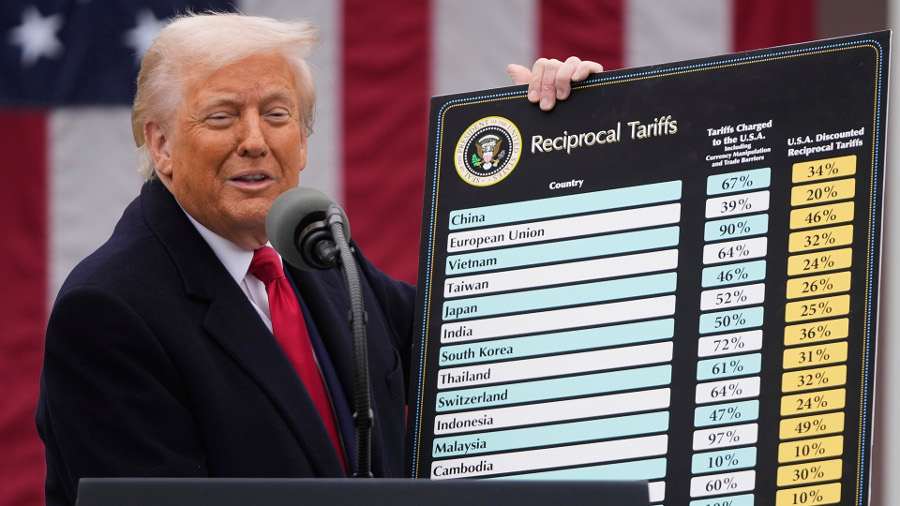
US Senate Extends AGOA for Two Years, Boosting Prospects for African Exporters Patrick: Actually, there’s a metaphor for what happens in the US, where I used to be a journalist covering the Congress. And that metaphor is a Christmas tree: we put everything onto it and little shiny things here and there. One of them this year for a spending bill that is to keep the government going – in about six weeks, they would have run out of funds – and so they need to avoid that emergency because, as you recall, Trump has on a couple of occasions run the government out of money. And then for weeks at a time, nothing happens except emergency activity. So they had to put something together and clever senators did put it in. They got this very strong vote of confidence, but more indirectly. And then it goes now to the House of Representatives, where it probably will also be passed, with Republicans in charge, and then to Donald Trump. Now, if it had just gone by itself, that would have been in question. And of course, the big problem for South African and United States relations are the tensions that remain over foreign policy. And, you know, Donald Trump won’t allow South Africa to come to the G20 meeting in December in Miami that he’s hosting. It’s just one of the reflections of those tensions. So there are 17 countries not in AGOA, and about 32 that are. And so we’ll see if South Africa actually goes onto that list of 17 when Trump reviews it. I know that there was a sense that Donald Trump was using it almost as a threat, that ‘if you don’t come on my team, if you don’t see the world the way I see it, we’re going to cut you off.’ SAfm: Could he still derail this? Patrick: For sure. And, you know, the other two factors that we have to be aware of is that Trump and Marco Rubio, his secretary of state, a neoconservative, they use aid and they use trade and all of the power that the U.S. brings to these to manipulate. And they, for example, give health aid, PEPFAR, the Presidential Executive Program for AIDS Review, so long as countries give up their data on health care. And that’s sort of the data that companies like Palantir like to have for security purposes. A second huge factor is access to minerals. And the U.S. government is quite notorious for trading aid for access to especially the rare earth minerals. And those are the sorts of things, Peter, that I would be very worried about. The other big factor is whether there is a relationship between African countries and United States foreign policy. And that’s again where, especially on the question of Israel and possible trade with Israel, the coal trade is subject to this. There is pressure from the U.S. because AGOA does have a provision that says that the foreign policy must be conducted, quote, in a spirit that upholds partnership and shared strategic interests. And that means, you have to do what the State Department and the Pentagon want you to do. SAfm: You started by explaining that it’s caught up in this whole funding bill that keeps the government running for a while. And as we’ve seen in the past, they really go to the edge of time. And there’s last-minute brinkmanship that often happens over these bills. Is there a risk that AGOA could get caught up in a shutdown even before it reaches the president’s desk? Patrick: That is a danger because President Trump is so erratic. But don’t forget he has an election on November 3. And it’s going to be quite likely, I think, that he loses the House of Representatives, the lower body in their Congress. But there’s a chance he can still retain the Senate. But I think that would be harder if suddenly government services are not available from October. This is an election on November 3. So I doubt there’s any problem in actually getting this bill to him for signature, and he’ll sign it in the next month. You know, the really interesting question, he’s only got another two and a half years. This bill goes through the end of his term, end of 2028. And, you know, then there may be a Democrat who wants to do much more with Africa-U.S. relations. But Donald Trump has again and again expressed disgust, and I’d say, frankly, racism when it comes to the African continent. So you don’t know what he’s going to do early next year if they do this eligibility test. So right now, countries that are not allowed to take advantage of these benefits, a 0% tariff on many exports include Burundi, Burkina Faso, Cameroon, Central African Republic, Equatorial Guinea, Eritrea, Gabon, Guinea, Mali, Niger, Seychelles, Somalia, South Sudan, and Sudan. SAfm: Will South Africa be added to that list? Patrick: You know, there’s a fairly good chance, given Trump’s extraordinary hostility. SAfm: For those that don’t really know or understand AGOA all that well, how much of a game-changer or difference-maker is it for African exporters? Patrick: Well, I can tell you that South African exporters are highly dependent if they’re automobile manufacturers, and it’s particularly Mercedes. That’s the number one beneficiary of that low tariff. However, that did change in February of last year when Trump came to power because he immediately put the tariffs up on automobiles as well as steel and aluminium, some of the other exports from South Africa. So that benefit went away. For citrus, important AGOA benefits continue. Interestingly, for vineyard products, for wine and for grapes from South Africa, there was this 30% tariff. It was ruled unconstitutional by the U.S. Supreme Court in February, but it’s still a high tariff of 12.5%. And, you know, Peter, it’s ironic because at the same time we’re still hearing from Trump, and he was egged on by Elon Musk, born here in Pretoria, raised a bit here in Johannesburg, that there was an Afrikaner genocide, that white farmers were being indiscriminately killed. And, of course, that’s not true, but it did mean that Trump and Musk have been just extraordinarily hostile, and yet the vineyards, the wine, the grapes are Afrikaner-owned, the main vineyards that are exported to the U.S., so he’s actually making more harm for his friends, the Afrikaners. He’s, by the way, increased the amount of Afrikaner immigration to the U.S. that’s allowed, but there aren’t that many takers. He’s already got about 6,500, and I think they’ve just said we’ll take another 10,000, and these are the only immigrants that are being allowed into the U.S., no political refugees from other countries that are under pressure. So it’s quite an extraordinary problem. The hypocrisy is screaming out, isn’t it? SAfm: Are there a number of African countries who are so dependent on AGOA that they’ve literally fallen at the feet of the president and just said, yes, sir, yes, sir, whatever you’d like, sir? Patrick: Well, we felt that, didn’t we, in South Africa in May last year when President Ramaphosa brought his delegation, not just the trade minister, Parks Tau, but he brought the richest white South African resident in South Africa, Johann Rupert, who was an old friend of Trump, and also two golfers, Ernie Elst and Retief Goossen, who loved going out and playing golf with Trump. Had Gary Player, the 80-plus-year-old, been in good shape, he would have been there as well. But that was a sort of sequel, in a sense. We saw it again with five West African leaders, and one of them, the Senegalese president, actually offered to build a special new Trump golf course. So I think that degree of bending over backwards, as you say, partly to get AGOA benefits, is a serious problem for African sovereignty. I think the country most affected was Lesotho. And it’s interesting, Peter, the reason that some of these tariffs were put onto countries is because they have trade surpluses, and many do, because African countries are exporting a lot of raw materials. But the imports to Africa are much more from China, the manufactured goods. So there’s a trade deficit, and that’s why Trump has come to his own working class to say, I’m going to stop the jobs hemorrhaging, I’m going to stop the trade deficit by putting on tariffs. It’s a sort of blunt hammer, and he’s been using this hammer and making quite a big mess. He has not succeeded in the US in creating new manufacturing jobs by compelling companies to come back because of the tariffs. And that’s partly because it’s been shaky. The Supreme Court is saying you don’t really have the right to call an emergency and put these on. You have to do it in a much more careful way. And so the new way, ironically, is that Trump says, because you are not protecting your own markets from imported Chinese labor-abusive products, especially from the west of China, and where there are labor abuses that go into your products, and then they come to the US, we’re going to put sanctions on those. That’s the section 301 that he’s been trying the last few weeks. So they’re sort of desperate and grappling with anything, and that’s why I don’t feel AGOA is all that strong a basis for planning your export if you’re an African economy, planning to have US relations that’s very, very, you could even say frivolous or transactional or based on the degree to which Donald Trump wakes up on one side of the bed or the other. SAfm: Yeah, I was just about to ask, actually. You know, we learned with the Ukraine-Russia situation and even Iran-US-Israel that you have to have a plan B, and often when the plan B is found, you don’t quite go back to how things were before. Could it be that the last AGOA suspension should have been a warning sign for Africa, for us to say, actually, do you know what? We need to think of other ways of doing things. Yes, absolutely, Peter. And the Pax Silicon, which is Trump’s attempt to lock in mineral supplies, would be exactly that. And South Africa, for example, having over 80% of the world’s platinum just north of here in Johannesburg and 5% more in Zimbabwe, or coltan and cobalt, high concentrations, over 40% of the world’s supply in th eastern DRC. And that would be the way forward, wouldn’t it? It would be to follow the OPEC, the oil producers’ exporting cartel, model from the early 1970s in which those exporters of valuable goods, oil in that case, could actually work and raise prices or use their own geopolitical clout against Trump, so that if he does try the kinds of tricks that he’s played on South Africa again and again, well, there’s some basis for coming back. Now, the big problem, they could be talking about that right now in Durban at the Southern African Development Community Conference, but I think the trust between South Africa and the rest of the continent, tragically, has broken down because of about 170,000 Southern Africans, especially Zimbabweans, Malawians, as well as Congolese and others from the continent feeling that they have to leave South Africa because of the Afrophobia. And until Ramaphosa, who can give a nice speech, as he did on Friday, but until he really develops the trust again and to open up much better channels of labour migration, along with a free trade, continental free trade area, especially the financing of South Africa as being the main laggard, until all of that changes, I’m a bit pessimistic. I’m very sad to say that we’re not going to be able to stand up to Donald Trump as a unified continent using things like minerals. Votes in the United Nations, another good example, as a countervailing force, we’re just too divided. SAfm: We’re going to have to leave it there. Always great getting your insights. Thank you so much indeed for your time. Patrick: Thank you. SAfm: That was Professor Patrick Bond, political economist and distinguished professor of sociology at the University of Johannesburg, speaking to us about the extension of AGOA. https://omny.fm/shows/africa-rise-shine/us-senate-extends-agoa-for-two-years-boosting-prospects-for-african-exporters? Back |
|
||||||
Thanks for visting the G20 From Below Website. If you want something published here or other enquiries mailto:Brics-from-below@protonmail.com
|
|||||||