 |
|  |


|
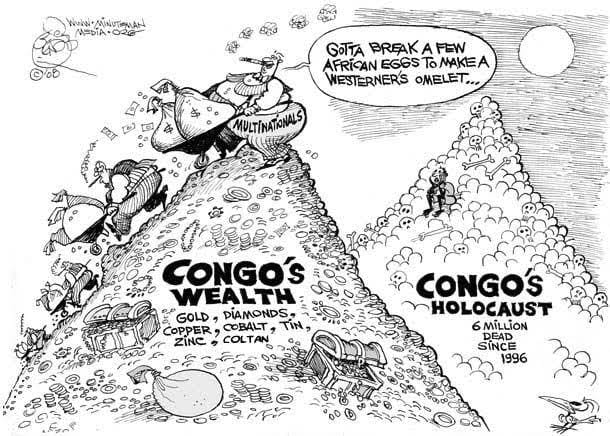
How neoliberalism, extractivism and dictatorship drives migration to SA Patrick Bond: Salaam alaikum, thank you, it’s nice to be here. Radio Islam International: A pleasure chatting to you, Professor, thank you so much for your time. You know, just on the level of narrative and the way this is being reported, we know not everything is necessarily, everything is not necessarily organic, perhaps there’s lots of bots around and that may seem to give an inflated kind of sense of which narrative is presiding on this particular matter. But, you know, do you share an assessment that, you know, while there may be the cause of justice on one side, the issue of capturing the public imagination is something else and perhaps the likes of the Afrophobes might seem to be gaining the edge in this regard? Patrick: It’s certainly gained the edge by virtue of how little has been done to, you know, kind of address the grievances, the genuine grievances that people have about unemployment and about housing, about kind of chaotic retail markets, seeing many, many immigrants fled in and there’s no explanation coming from the state or even civil society groups about the material factors. So it tends to be, especially from what I would call a well-meaning liberal intervention, that is Kumbaya, you know, “you’re viewing things the wrong way, you’re not understanding, you’re not being solidaristic, you’ve forgotten your Ubuntu.” That’s the sort of line of argument I think that isn’t serving the society well, it comes from the privileged and comforted. And it doesn’t really get to these material problems, nor does it get to the bigger question I think that we have to ask, which is: is South Africa an exceptionally destructive force in terms of our capitalist economy and our climate damage, that is the emissions that are coming from this country, the highest level in the world per person per unit of GDP historically, because of the huge minerals energy complex, coal addiction, the smelting, all of these things that have created the climate crisis. And now, as we’ve just heard last Thursday in Durban from the Malawian Consul General, the major force that is forcing especially a push factor from Malawi is the extraordinary climate damage, that is, they’ve had cyclones hit the east and southeast parts of the country, but they’ve also seen their main site of fishing, Lake Malawi, ruined, I mean 35% cut just in the period 2010 to 2020 in per capita fishing, and that’s where 73% of the country gets their proteins. Of course, they’re coming, as the Consul General pointed out, because we’ve had so little education in a society and so little solidarity, and of course, as you say, so little real attention to the grievances of ordinary people. This right wing xenophobic and Afrophobic narrative, and it’s also a South Asian phobic, there’s also attacks on Pakistanis, Bangladeshis, Indians, and probably we’ll see attacks on Chinese merchants as well. So it’s not just Afrophobic. But typically those of us, like myself, an immigrant from 1990, who have white skin, we’re comfortable and we can just say in a liberal way, you know, Kumbaya, you’ve got to change your attitude, and I think we’ve got to get much deeper than that way of thinking. Radio Islam International: So Professor, I want to start off, you know, there’s a lot to unpack, and I think you’ve done a great deal of interesting trailblazing, perhaps in the sense of the discussion that’s panning itself out in South Africa, you know, currently, I think trailblazing perspective in terms of what pushes people from Malawi, for example, to come to South Africa and perhaps some of the other countries. So I want to go into that in a bit, but a starting point of this discussion has often been that if a person has to stand by the migrants, and even just the basic humanity of the migrant, looking at their day-to-day needs now as they’re pushed out of communities, as they are holed up in halls and, you know, these sites, whether it is in Durban, whether it is outside the embassy, whether it is now going to be in, you know, Messina, just if anybody stands up just for the basic humanity, the allegation is, you know, lampooned against one that you are not recognizing the pain of South Africans and standing with migrants, the humanity of migrants equates to, you know, trivializing of South African pain. And I’m asking the question, we definitely had multiple crises in South Africa, but the way this particular crisis is being marketed, I mean, are we, if a person does not express pain with ordinary South Africans in the way that the Afrophobes seek to channel that, I mean, is that something unpatriotic and anti-South African? Patrick: The obvious aspect of humanity we all have to embrace is if you see an emergency, you know, if you see a baby floating down a river – as a famous metaphor – well you have to jump in and grab the baby, prevent that baby from drowning, and the next one, and the next one, and the next one. You have to do that. And we’ve got fantastic emergency response groups. I always think of Gift of the Givers as being one of the world’s greatest assets for emergency relief. But we’ve also got to look around the bend in the river and ask who’s throwing the babies in the river? Can we stop that at the source? Can we go to the roots? That’s very difficult in a society where we basically found sort of a micro and emergency and humanitarian narrative as the only narrative that immediately applies. And I think that’s where you’re getting at the question. Well, we all know that there are some problems in South African capitalism. It’s the most unequal capitalism on earth. In fact, according to Price Waterhouse Cooper’s, our corporate capitalism is the most corrupt. Their economic crime and fraud surveys every two years always had Sandton and Stellenbosch and central Cape Town and Umhlanga as the most corrupt sites in the world. Corporate corruption, economic crime and fraud, by the way, to compare to the government in Pretoria or the provincial capitals, the transparency international surveys every year show South Africa is only ranked about 101st out of 180 in this last one. So we’re pretty mediocre for our politicians and bureaucrats. But our corporates, and you know, often you can tell these guys by the color of their skin, it’s white monopoly capital. They’re number one for corruption. These are the big questions that the African National Congress in making compromises. In the 1990s, I happened to work in President Mandela’s office as his first policy drafter. I saw that first hand, and wrote a book called Elite Transition about these compromises. And I think that’s where we have to actually go back and see if we can undo some of them and tax the corporates more and hire more people, build houses so there isn’t a housing shortage that also contributes to the xenophobia and really, you know, get at the roots of the problem. Radio Islam International: And then the discussion, and I’m still building up and want to hear more about, you know, extractivism and the climate and the push factors from Malawi. We’re going to get to that, Professor. But in terms of the allegation, again, that has very often pointed fingers at NGOs and saying that liberal forces, so-called NGOs, are just simply siding with the migrant because this is a trendy thing to do. And this is an area where people who are already living in middle-class lives or upper-class lives find the activism to be cost-free. Whereas you have, the allegation is that you have a total disconnect from conditions on the ground. If you really knew, that’s the migrants on the ground in townships, you would not be siding with migrants in such a way. Patrick: I think those class politics are crucial. Civil society sometimes takes the form of civilized society where the NGO leader puts on a suit and tie and begins to speak language of neoliberalism. It sort of supports the general shrinkage of the state that gives more resources to the NGOs. And this is a common problem. But I mean, I think what we’ve learned roughly 15, maybe 20 years as researchers of why people are so aggrieved, that we’ve had the highest protest rates in the world. We’ve had, according to the World Economic Forum’s Global Competitiveness Report, the most militant and angry and uncooperative working class of workers in sites of employment. Why is that? And why then, did we fail to solve that. And I must confess on the left side of the spectrum where I like to hang out, the fragmentation, and we’ve just seen it in the last month with the Conference of the Left, picking up the center-left – and then the independent left, not wanting to be part of that. One reason is, of course, xenophobia, because the MK Party is part of this Conference of the Left. And there’s been no attempt to really get beyond it. And I think that’s a search for votes in the November 4 election, maybe a coalition of MK Party, EFF, and SACP, maybe some others, as an alternative pole within African National Congress politics, against the pole that would instead go to Patrice Motsepe as a successor to Ramaphosa. That’s the broader context. But because we haven’t done much on getting water and electricity, getting good schools and clinics, partly because of the International Monetary Fund’s 2020 loan, which carried all these conditionality. Even my own students going hungry at UJ and many other universities because NSFAS has been cut at the explicit direction of the IMF. So that’s our context. And in those service delivery protests, it’s not unusual for that heat, you know, let me call it a popcorn protest, it pops up, there’s some hot wind in the air, it might blow to the right and the activists there might say, well, you know, there’s a Somali guy and let’s loot his little spaza shop, because they took over the business of our friend who had it in his spaza shop in his back garden. This is a sort of dilemma, right, that we all see, that the working class can go right wing. We’ve seen all over the world, the US with MAGA, Britain with Reform Party and before that Brexit, Germany with AfD, France with their National Rally, the Brazilians may elect another Bolsonaro in October, lots of right wing forces, and that’s because the working class hasn’t found yet a left alternative. When it does occasionally, you know, it’s spectacular. So Zohran Mamdani in New York City, this is the kind of thing that suggests, well, you can put together class and identity and actually move forward in a progressive way, but it takes a lot of work, doesn’t it? Radio Islam International: Talking about around the world, you know, I just saw an article a couple of days ago, which was titled, From Belfast to Washington. A familiar script of the dangerous migrant has emerged. And I’m curious to, you know, just look at your own, you know, personal background and, you know, the anti-migrant activity, obviously spiking very much at the same time, as it has in South Africa, in Belfast as well. You know, are you suggesting that very much the same type of factors, perhaps with different actors, as impacted South Africa is what could be stoking the pot out in Belfast? Patrick: Yes, and it’s a very interesting case. I happen to have been born in Belfast. I can put on my Belfast twang if you want the authenticity of the Protestant, bigoted society that I came from. And that’s exactly where this racism has emerged - even though it was in a Catholic area, where one African refugee had attempted a beheading of an Irish Catholic - but It was in a Protestant working class areas where, again, like many parts of Britain, you’re seeing Reform surging in the last municipal election there, across Britain. And I’d say one of the sources, I would say, petrol on the flames is Elon Musk, our own Gauteng homeboy. And the reason is, he decided to take to Twitter and encourage and, you know, blew up and with the algorithms he can shift, really blew up that incident in a way. It was one mentally disturbed man who attacked somebody, but it became the basis for the Belfast Protestants, as I say, my people, becoming absolutely savage, right? And so, luckily, we saw in Belfast, 20,000 people marching against this racism. And I hope that’s what we’re going to see, not necessarily marches on Tuesday, we’ll see here in Gauteng, at least three marches, one in Midrand, and there’s one in Hillbrow. That could be a very dangerous one, because the people of Hillbrow, I think, are going to probably resist that sort of oppressive force in their neighborhood, as they did back in 2021, and 2019. And I think these are the moments where we’re going to sort of see the frictions within the working class, ethnicity, and national conflicts between peoples blow up. And it’s such a tragedy that we don’t have a good strong left. I would say, though, that not only do I mention Gift of the Givers, but there’s also plenty of other fantastic groups going not only to do the humanitarian work, but to try to do organizing. Siyafana Sonke is the broader umbrella name. And if anyone would like to, you know, figure out how to get involved, I’m sure you’re going to find Siyafana, if you just Google S-I-Y-A-F-A-N-A, it’s a broad umbrella group across the country, but particularly in Gauteng, KwaZulu-Natal, to try to get some counter pressure so that the working class interests are not just going to go right wing, but can be understood as an internationalist response that acknowledges South African subimperialism in the region, a failure of housing markets and employment markets and retail markets so that we can address this in a structural way. Radio Islam International: And now to some of the research that you’ve done in terms of the push factor, you suggest that people moving from countries such as Malawi, such as Mozambique, Zimbabwe, to South Africa because of South African sub-imperialism, you mention extractivism, and you also mention alliances between regional dictatorships. So again, the narrative emerging would be that every country perhaps has its problems, but even in the spirit of Ubuntu, why should South Africa take such a big burden of migrants? That’s one line of argumentation. Just explain to us why people gravitate to South Africa and how South Africa directly and indirectly has a role in your argument to play in some of the problems in the wider region that create this flight? Yes, well, for obviously 150 years or so since Cecil Rhodes and Rand Lortz began to start thinking about moving from the Kimberley to the Joburg, and then they started moving up to Zimbabwe, Zambia, Malawi. So we’ve seen an extractivism, a desire to pull out the wealth of the region and leave nothing, loot the place. And they really did that, didn’t they? I think the most recent and really tragic example was AngloGold Ashanti. We should call out its CEO, Bobby Godsell, often thought to be a rational, reasonable humanitarian businessman. No doubt he is, according to the logic. But he definitely, his company, was in league with warlords. Now, what were the warlords doing in the Eastern DRC? They were killing six million Congolese. That’s a general estimate of what we lost as the African continent by failing to help the Congolese in the period 1995 to the present, so about 30 years. And the South African National Defense Force went in there. But who were they defending? I mean, Bobby Godsell and AngloGold Ashanti were looting the place, but they weren’t alone. Khulubusi Zuma and Michael Hulley, Hulley was the lawyer. Khulubusi, the nephew of Jacob Zuma. And the then leader, Joseph Kabila, wanted to do the deal and gave them a $10 billion concession of oil. They never took advantage of it, but that was just one. I mean, we mentioned the late Tito Mboweni and his South African Congo oil company, SACOIL, were still looting the place. Tokyo Sexwale and his late colleague, his name was Mark Willcox. And then you’ve got a woman called Andrea Brown, who’s Divine Inspiration Group here in Johannesburg, looted the DRC for hundreds of millions of dollars through legal means. And then you’ve got the Moseneki brothers, and you’ve got Patrice Motsepe. I could just go on with South African extractivist industries just in that one place. We could expand to all sorts of other sites, SASOL in Mozambique, or the SANDF being deployed in Cabo Delgado, where there’s an Islamic insurgency, mostly against Total Energies. And the other ways that big capital, and it’s not just Western, there’s Chinese capital, looting northern Mozambique. If you go to Zimbabwe, all over the show, we’re seeing the worst form of Wild West digging and looting, and basically not paying any taxes, not recycling any of the resources back into the society. It’s getting worse with the rare earth minerals, the new economy. In South Africa, we’re seeing a bit of a tug of war with the Trump regime. And Chinese buyers, we’re seeing more Special Economic Zone deals, lots of frenetic extractivism. So yeah, I think that is a big problem in the region. And South African capital has been looting Africa for eons. And well, since 1870s, 80s, 90s. And then the next question is whether, especially the ruling class, especially in the liberation tradition, supporting dictators like Emerson Mnangagwa in Zimbabwe, and before him, Robert Mugabe, or King Mswati in Swaziland. These are the sorts of dictators who naturally generate lots and lots of political refugees. Economic refugees coming through because South Africa has its dominance in retail and mining and banking, tourism and so forth. But really sucking up the region’s elites. They come here and they buy nice stands and houses in Sandhurst or Camps Bay. And I think this is the kind of problem that in the United States, imperialism has this sort of backlash. And it creates this sort of xenophobia that you’re seeing in the US, the isolationism and protectionism in the MAGA Make America Great Again. And so that’s why we’re going to find some stronger voting and support of Make South Africa Great Again, from the likes of Gayton McKenzie and Herman Mashaba’s parties. And that’s a sort of natural way in which the right wing will mobilize, even though the right wing and corporates have caused some problems to begin with. It’s quite tragic, and it reflects the need for much stronger left-wing counterbalance and a force that will speak to African, pan-African interests and working-class interests more generally. Radio Islam International: Professor, you’ve outlined the factors that cause climate factors as well as extractivism, that’s related to the climate and imperialism, as well as dictatorships and the role of the International Monetary Fund and so forth in all of these countries that leads to these tensions amongst the working class. The question, though, is it’s still very much easier for anybody going through genuine difficulty on the ground to be able to pin their grievances based on a populist campaign on a tangible target that’s closest to them instead of, you know, considering these very loaded issues that often, you know, are very hidden in the way they operate and in the impacts that they have. And we’re talking now about a very well-oiled narrative that is serving this Afrophobic narrative. How do we, how do people who understand the impact of all of these factors try to convey them to the public and really, you know, link the dots between the present state of South African impoverishment and inequality with these wider factors that you’ve sketched? Patrick:Well, certainly one of the two big factors in resistance has got to be addressing local and global together. And the second has to be finding solidaristic ways, and especially Pan-Africanist solidaristic ways. So I hope that as we do the humanitarian work, we’re not simply facilitating the, let’s say, the eviction orders from the tsotsis, right, from the hardcore right-wing forces, that we’re not simply saying, okay, we’ll help with getting the immigrants who desperately fear for their lives a quick exit. There must be some better way to forge resistance and to get solidarity within the country. And I think on the continent, one of the biggest challenges is to get a more surgical approach to weakening the forces of reaction. And I do think those are corporates. I do think companies like MTN, which is in Nigeria, for example, and didn’t pay its taxes and was fined and has been doing illicit financial flows from all over the continent, bribed the Iranian government, all kinds of problems with MTN. And that’s been the target of the Nigerian parliament. And they’ve taken on board the challenge to put sanctions on South Africa. Now, that sounds appalling, doesn’t it? A free South Africa - South Africa going to the International Court of Justice against Israeli genocide - would now be the target of human rights critics saying we need to do some BDS, boycott, divestment sanctions against South Africa. But that’s happening all over. It’s not the first time, even. In 2008, there were murmurs. In 2010, after our World Cup, there was, again, a bout of xenophobia. By 2015, the big xenophobic upsurge in Durban led to reactions across Africa, protests against South African high commissions, or protests against the companies. And I think that’ll be heightened, especially if Tuesday, South African police are continuing to be, themselves, xenophobic, if the army is not deployed in a sensitive way, if it gets out of hand in places like Hillbrow. And then you’ll probably see, just as we’ve begun to see from African diplomats based here, a real anger at the subimperial, the Yankees of Africa, that is South Africa. And that means the companies, some of them doing enormous damage in the region, will also be the targets. I think that actually might be a healthy development, when it means Africans are saying, we know it’s not the ordinary South African ultimately to blame. It’s your 1%, it’s your corporates, it’s Cyril Ramaphosa for being so weak, it’s your health minister, your Limpopo provincial premier, it’s your sports minister, who are open xenophobes. And those guys have to actually be disciplined through a non-violent strategy, BDS. I hope that’s the kind of pressure, that’s certainly what ended apartheid. Along with local protests, it was pressure on the ruling class through Boycott, Divestment, Sanctions: the big financial crash in September 1985, to be precise. Those are the sorts of things I hope we’ll see more creative discussion about, rather than just letting it become, you know, an ethnicist and nationalist approach. And also, on those defending the immigrants, merely, you know, a Kumbaya liberal approach, failing to look into the kinds of capitalist crises and the subimperial role South Africa plays. I’m hoping for much more social conscientization and a better politics to emerge from this terrible time. Radio Islam International: Indeed, Professor Bond, with some very important perspectives this evening, Professor Patrick Bond is the Distinguished Professor at the University of Johannesburg, Department of Sociology, where he directs the Centre for Social Change. Thank you once again, Professor, as always, for joining us here on Radio Islam this evening, and have a great week. Patrick: Thank you very much. https://soundcloud.com/radioislam/how-neoliberalism-extractivism Back |
|
||||||
Thanks for visting the G20 From Below Website. If you want something published here or other enquiries mailto:Brics-from-below@protonmail.com
|
|||||||